+852 5394 6901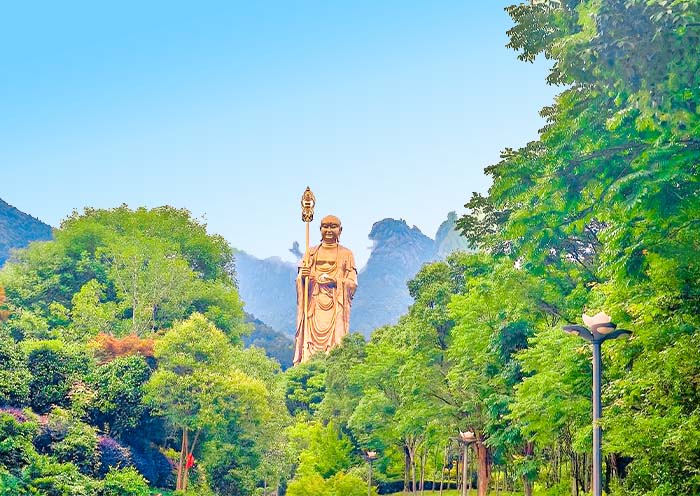


My wife and I chose Yangzi Explorer because we wanted a quieter and more upscale Yangtze cruise. Asia Odyssey Travel recommended it, and their advice was spot on.
The ship felt refined rather than flashy. There were fewer passengers than on many big cruise ships, which made the experience more personal. Our suite was large, clean, and had a proper balcony. Sitting there with tea while passing through Wu Gorge was a real highlight.
The guides spoke good English and gave useful background without talking too much. Shore excursions were well organized. We also appreciated that the pace was not rushed.
The only small downside was that some evening entertainment was simple, but honestly, we came for the scenery and comfort. Overall, a wonderful experience and a very smooth booking with Asia Odyssey Travel.
 Take China Group Tours in 2026/2027 to enjoy 30% discount compared to private tour. Same Experience & Lowest Price! Check China Group Deals >>
2 Days Jiuhuashan Buddhism Tour: Top China Buddha Mountain

Private tour

Lowest Price Guarantee

Recommended Rating: 5 Star

4.7 (13 reviews)

- Highlights
- Itinerary
- Price
- Trip Notes
- Accommodation
- Photos
- Reviews
Spiritual Pilgrimage in Mount Jiuhua
Looking for a peaceful place to slow down, breathe deeply, and reconnect with something greater? Located in Anhui province, Jiuhuashan(Mount Jiuhua) is one of the Four Sacred Mountains of Chinese Buddhism and the spiritual home of Ksitigarbha Bodhisattva. For centuries, pilgrims have come here to pray for protection, guidance, and inner clarity—and today, travelers from around the world visit for the same reason.
On this 2-day Jiuhuashan Buddhism tour, you will walk the ancient stone steps of devout monks, explore magnificent temple architecture, and witness the incredible mystery of the mountain's preserved "flesh body"(mummified) monks. Whether you're interested in Buddhist culture, light hiking, or simply finding a moment of peace, this journey is perfect for you.
We manage the hassles: train tickets, mountain transport, and temple lodging. Let's embark on this journey and immerse ourselves in the spiritual depth and natural wonders of Jiuhuashan.
You Can Experience “Must-see & Must-do” with This Tour

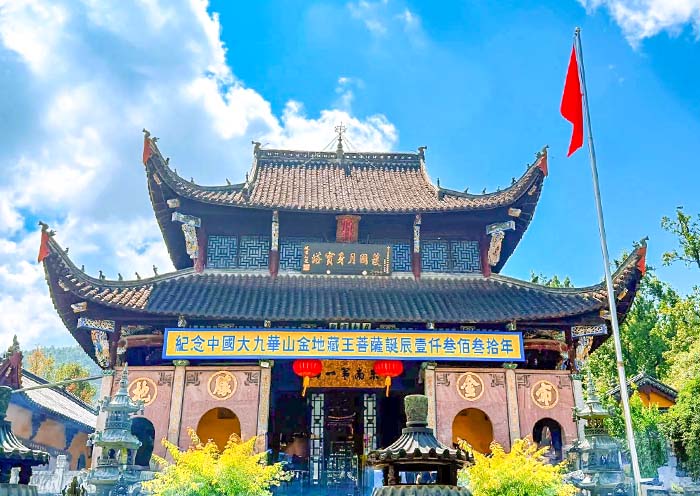
Highlight 1: Visit the Incarnation Grand Hall (月身宝殿), where the preserved body (known as a ro-shen) of the Korean prince-monk Kim Gyo-gak is venerated.
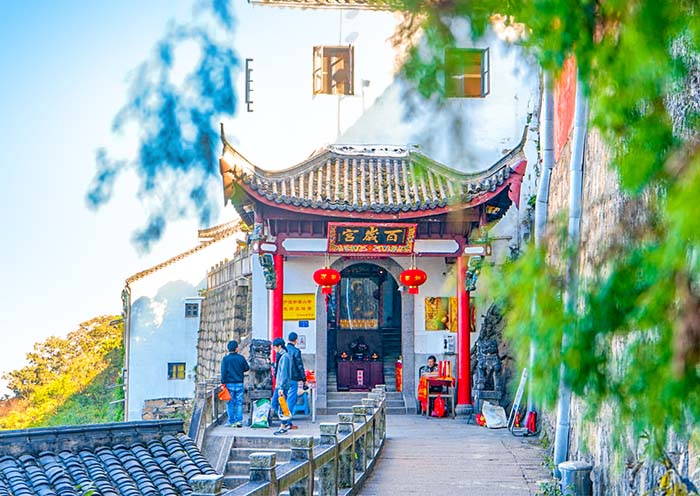
Highlight 2: Visit Longevity Palace(百岁宫), the home to the preserved body of Monk Wu Xia, whose life story perfectly illustrates the perseverance and dedication of Jiuhuashan‘s monks.
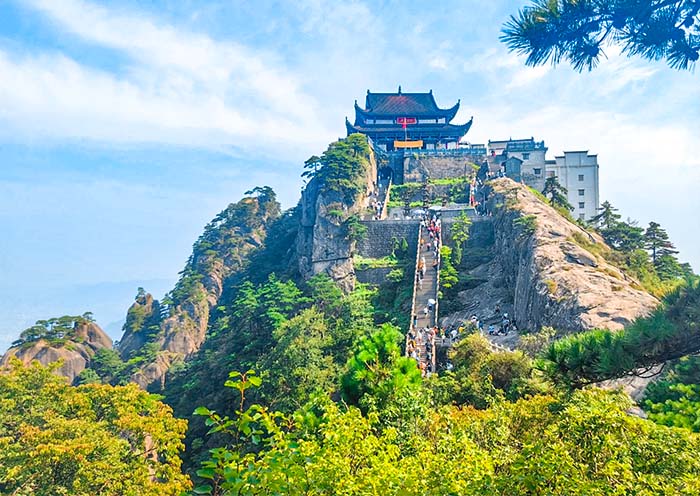
Highlight 3: Hiking the highest point of the mountainTian Tai Peak(天台峰) , offering panoramic views and housing the ancient Tiantai Temple, the most important site for the traditional Nine-Chapter pilgrimage route.
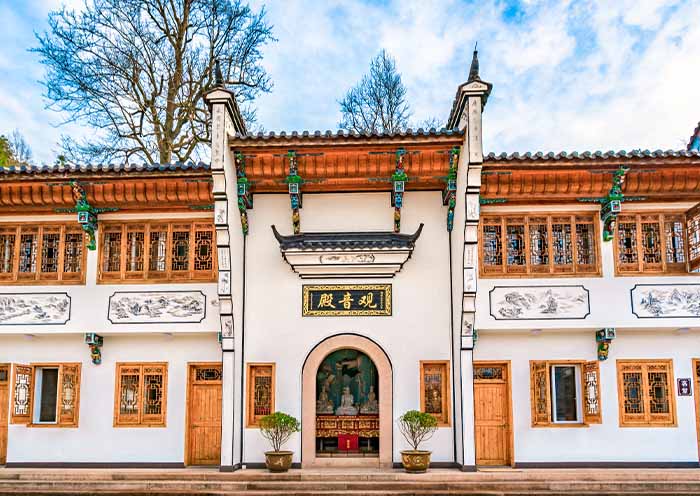
Highlight 4: Explore key monasteries like Qiyuan Temple(祁园寺) and Huacheng Temple(化城寺), marveling at the unique blend of Ming and Qing Dynasty styles built into the rugged mountainside.
Highlight 5: We take care of all logistics, including tickets and mountain transfers, allowing you to focus on finding your inner peace.
Show More
Itinerary at a Glance
 View Destinations
More Options
Click to Enlarge for Details

Jiuhuashan (2 Days)
Qiyuan Temple, Longevity Palace, Incarnation Grand Hall Huacheng Temple, Tiantai Peak, Ancient Prayer Platform, Phoenix Pine.
Itinerary Day by Day
Collapse All
Day 1 Arrival & Mount Jiuhua Buddhist Temple Tour
Route: Qiyuan Temple - Longevity Palace (cable car up) - Dongya Temple - Tonghui Zen Forest - Incarnation Grand Hall- Huacheng Temple
Welcome to Jiuhuashan! Your Jiuhuashan Mountain journey begins the moment your driver greets you at your chosen railway station or airport. We handle the smooth transfer to the mountain base, ensuring you feel relaxed and cared for from the start.
Once on the mountain, we will begin our exploration at Qiyuan Temple (祇园寺), a working monastery that feels like an oasis of calm right in the center of the Jiuhua Street area. Stroll through its serene courtyards, where you can hear the faint sound of monks chanting, a perfect introduction to the spiritual rhythm of the mountain.
Next, we ascend to the Longevity Palace (百岁宫) to witness one of Jiuhuashan’s most profound miracles: the incorruptible body of Monk Wu Xia. Having lived to the age of 126, Wu Xia spent decades in a nearby cave, subsisting on wild fruits and dedicating every breath to Ksitigarbha Bodhisattva. His body, which has remained naturally intact for centuries, is revered as a physical sign of his extreme devotion and spiritual achievement. Standing before this sacred relic, you can feel the quiet, powerful energy of a life entirely dedicated to faith—a deeply moving highlight of any Buddhism tour.
From Longevity Palace, we walk to Dongya Chan Temple (东崖禅寺) , a quiet monastery perched on a cliff with open views of the surrounding peaks. The temple's wooden corridors creak softly underfoot, and the only sounds are wind through pine trees and distant chants. It's a perfect spot to sit for a few minutes, breathe in the fresh mountain air, and let your mind settle.
We then head to Tonghui Chan Monastery (通惠禅林), a lesser-known gem with serene courtyards and ancient ginkgo trees. The temple is known for its strict Buddhist practices – you may spot monks meditating or copying scriptures, their focus unshakable. The simplicity of the grounds – stone paths, lotus ponds, and plain wooden halls – reflects the essence of Chan (Zen) Buddhism.
The afternoon takes us to the most sacred site: the Incarnation Grand Hall (月身宝殿). Here you will find the preserved body of the Korean monk Kim Gyo-gak. His body did not decay after he passed away in the Tang Dynasty. Because of his deep devotion, many believe he is the incarnation of Ksitigarbha Bodhisattva. Seeing his ro-shen (preserved body) is one of the most important moments of a Jiuhuashan pilgrimage.
We conclude the day at Huacheng Temple (化城寺), the original, ancient temple from the Tang Dynasty, feeling the weight of over a thousand years of history settled within its walls. You'll check into your accommodation in Jiuhua Street for a peaceful night's rest, with the mountain silence settling around you.
Best time to visit? The most beautiful times are during Spring (April-May) when colorful azaleas bloom across the slopes, and Autumn (September-October) for crisp air and panoramic views. For the most intense spiritual experience, visit around Ksitigarbha Bodhisattva's Memorial Day (Lunar July 30th) and immerse yourself in a truly unforgettable wave of ceremonial chanting.
 Dining:
None
 Accommodation:
Jiuhuashan
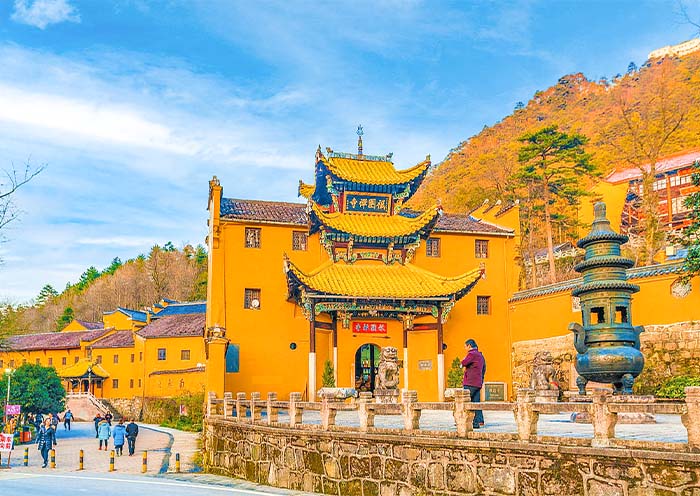
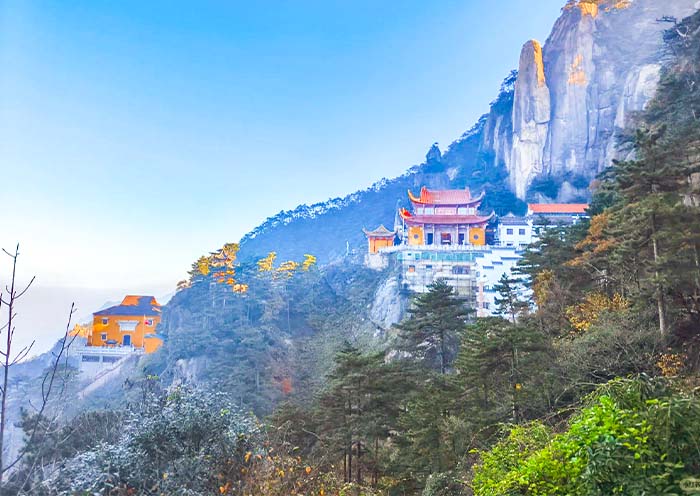
Autumn Scenery of Qiyuan Temple
Jiuhua Mountain Longevity Palace
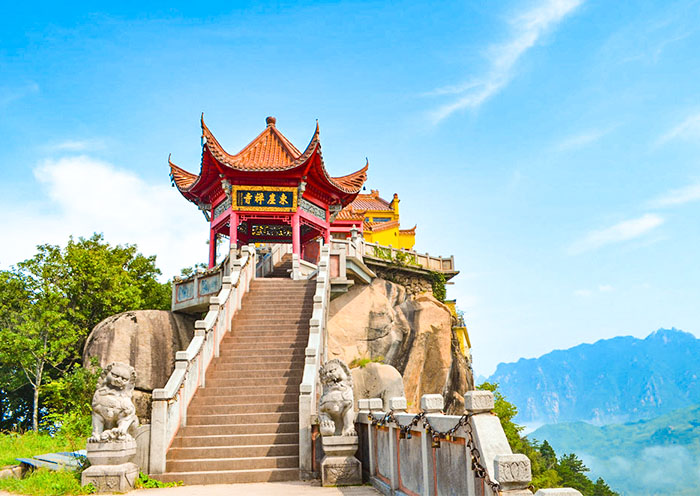
Jiuhuashan Dongya Temple
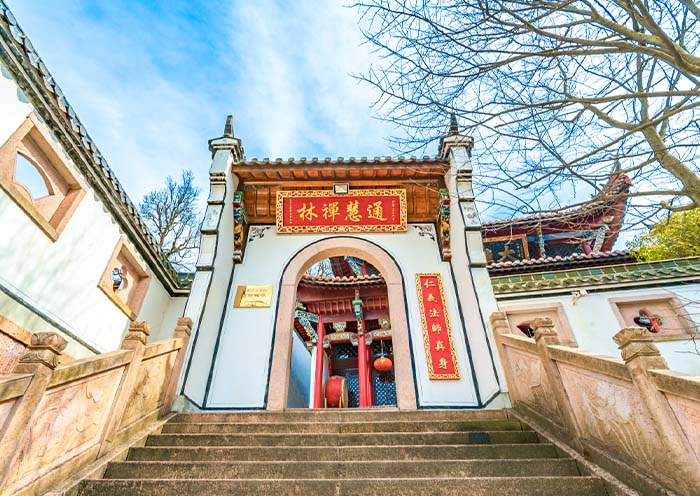
Mount Jiuhua Huitong Temple
Day 2 Mountain Jiuhua | Tiantai Scenic Area, Phoenix Ancient Pine
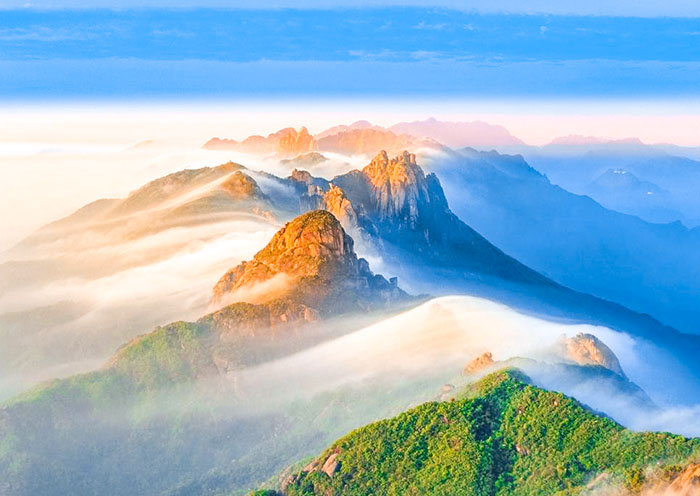
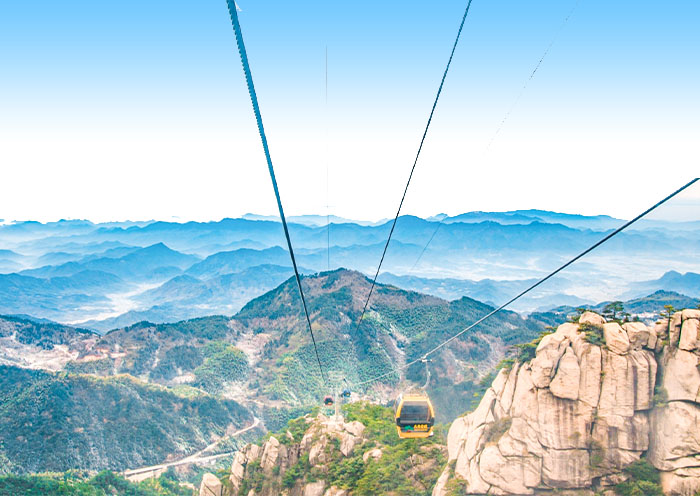
Start your day with breakfast before we board a shuttle bus to Fenghuang Pine Station. From here, we take a 15-minute cable car up to Tiantai Scenic Area – Jiuhuashan's "roof", where heaven and earth seem to meet. The cable car ride offers sweeping views of misty mountains and valleys, and on clear mornings, you may see the sunrise painting the peaks pink.
Once off the cable car, we hike 800-900 stone steps up to Tiantai Temple (天台寺) – the highest temple on Jiuhuashan, perched at 1,306 meters above sea level. The path winds through pine forests and past stone inscriptions of Buddhist sutras, and pilgrims often climb the steps on their knees as an act of devotion. At the top, the view is worth the effort: rolling mountains stretch as far as the eye can see, and the temple's red walls and golden roof stand out against the blue sky. Inside, the main hall houses a statue of Ksitigarbha Bodhisattva, and many visitors sit in the courtyard to meditate, absorbing the temple's calm energy.
On the way down, we stop at Ancient Prayer Platform (古拜经台), where Ksitigarbha Bodhisattva is said to have prayed for sentient beings. The platform overlooks a steep valley, and the wind carries the sound of distant temple bells – a moment of pure serenity.
Next, we ride the cable car back down and visit the Phoenix Ancient Pine (凤凰古松). This 1,400-year-old tree is a symbol of Jiuhuashan, with its gnarled trunk and spreading branches resembling a phoenix spreading its wings. According to legend, the tree grew from a branch Ksitigarbha Bodhisattva carried to the mountain, and touching its bark is said to bring good fortune. Pilgrims often tie red ribbons to its branches, making wishes for peace and happiness.
Afterward, we head to the scenic area exit, where our driver will transfer you to the nearby airport or high-speed rail station for your next journey. Though this 2-day Jiuhuashan Buddhism tour is short, the peace and wisdom you'll take away will stay with you long after you leave – a reminder of the sacred mountain's enduring power to soothe the soul.
Dining:Breakfast
Accommodation:None
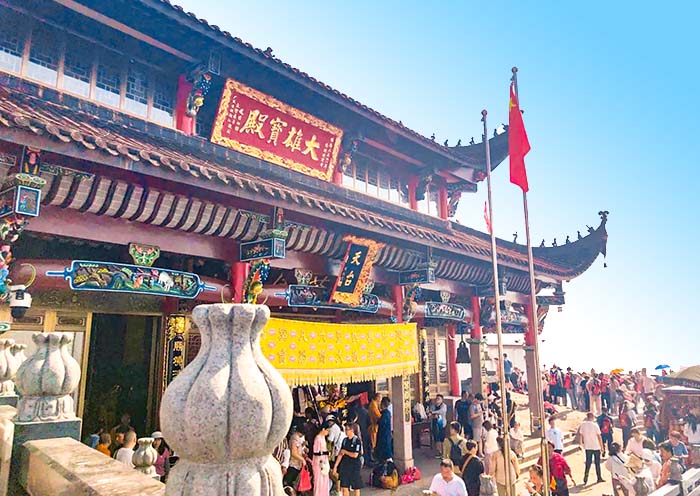
Tiantai Temple in Jiuhuashan
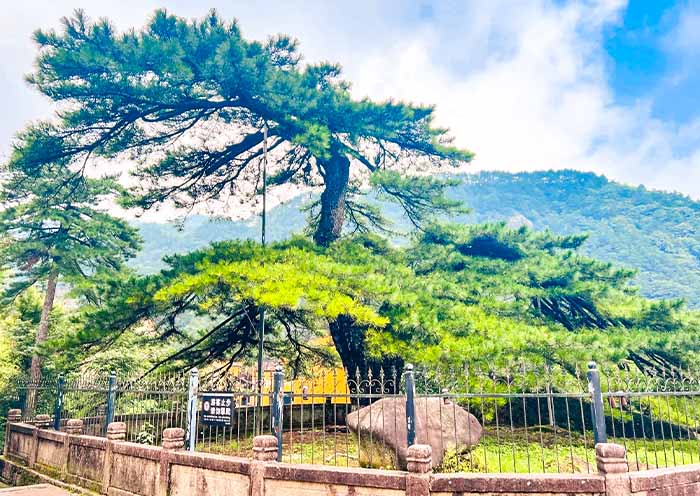
Jiuhuashan Ancient Pine
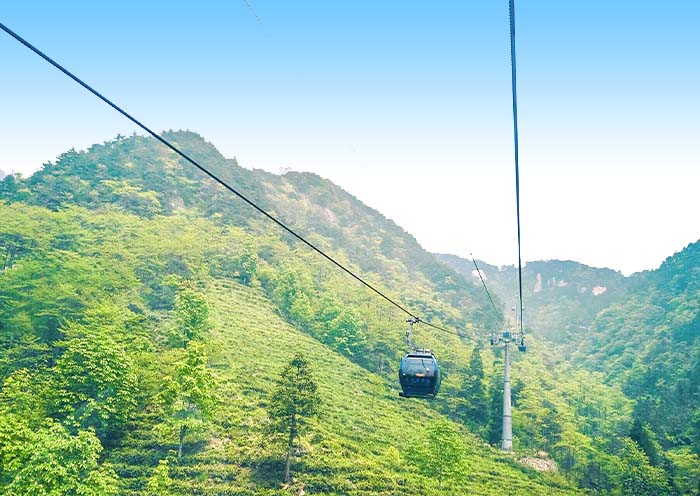
Cable Car in Mount Jiuhua
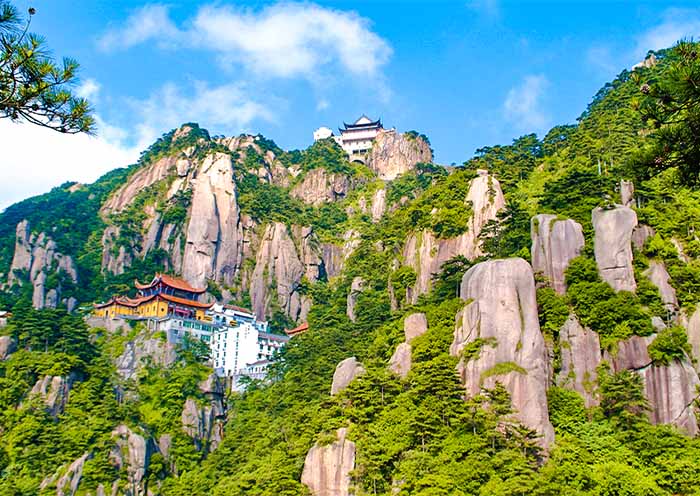
Spring scenery of Jiuhua Mountain
Make an Enquiry for Free 
Download PDF 
Price: What’s Included & What’s Excluded
The above price is based on a private tour for 2 people. Price varies depending on travel date, group size, hotel class, program in your itinerary and possible fluctuation of currency exchange rate.
What’s Included?

Experienced drivers & air-conditioned vehicles
Professional licensed English-speaking local guide
Hotel accommodation with breakfasts
Domestic flights (economy class) or high-speed trains (second class) listed in the itinerary
Admission tickets, activities, meals listed in the itinerary
Accident insurance
Our service from tour planning, handling, operational and finishing your trip
What’s Excluded?

International airfares
Entry visa fees
Personal expenses
Single room supplement
Recommended optional activities
Arrival/departure flights or train on the first and last day
Tips or gratuities for guides and drivers
Important Trip Notes for Booking Private Mount Jiuhua Tour
How do I book private Mount Jiuhua tour?
It is very simple to book a private Mount Jiuhua tour. Select the tour you are interested, and click “Make an Enquiry for Free”. Tell us your demands and likes while submitting the form. During this process, you don’t need to pay immediately. After sending us your requirements, one of our professional travel experts will get back to you within 0.5 to 24 hours. When all the information have confirmed, then you make the deposit. Please feel free to contact the travel expert directly if you have any questions prior to booking.
Extend Your Mount Jiuhua Tour
The above itinerary is the sample one that most travelers would go like that. The tour can be customized based on your likes, interests and budget. At the same time, if you want to extend this tour, just tell us your favored destinations and things to do. Our professional travel experts will redesign the trip totally for you and your group at the best price. Tell us your ideas now >>
Transportation
In a private tour, it means you will transfer to the tourist attractions in one city by private vehicle. The private car we selected is spacious, comfortable and air-conditioned. And the driver we use are very experienced. As for traveling between two destinations, we use domestic flights (economy seat) or high speed trains (second class seat, usually less than 6 hours). The local guides and drivers will pick you up at the airport/train stations, and escort you to the hotel.
Meals
“B” stands for breakfast. You will have it at your hotel in the morning.
“L” stands for lunch. The restaurants we will arrange for you are all designated tourist restaurants approved by local tourist administration bureau. All are in good sanitary conditions. Your guide will assist you with ordering the dishes.
“D” means dinner. All dinners are excluded in the itinerary. You have the chance to taste some authentic Chinese food and local snacks.
If you have special dietary requirements (vegetarian, halal, kosher, Indian, or gluten-free), please let us know before your booking. We will try our best to take care of you.
Accommodation & Hotel Condition for Your China Mount Jiuhua Tour
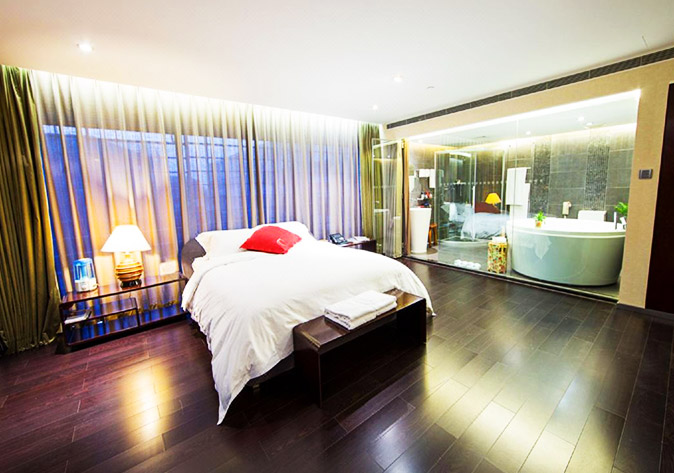


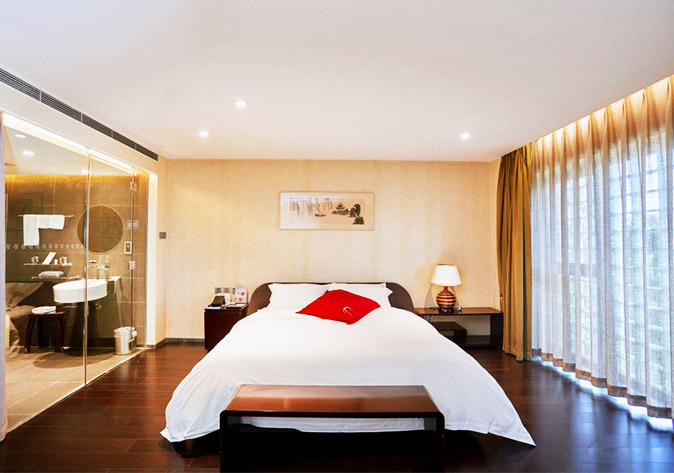
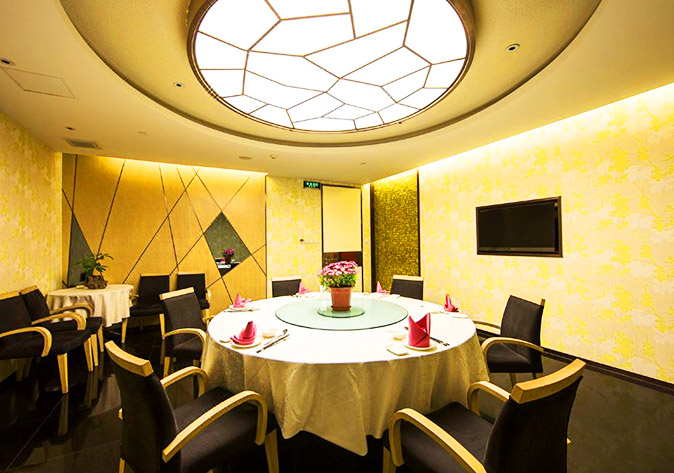
Have a good sleep everyday is very important during your China Mount Jiuhua tour. In a private tour, you can
decide on your own which hotel class you want - luxury 5 star, comfortable
4-star or economic 3-star.
All the hotels in each destination we selected are at good location, close to commercial street or
tourist attractions. And, all the hotels we use have a business relationship for many years and they
have windows, air-conditioners, hot water, showers, wifi to ensure you luxury and comfortable sleep experience. The
staff can speak English and they will provide you the high quality service. If you have any
requirements, you can ask them to help.
Photo Gallery for This Itinerary
Latest Mount Jiuhua Tours Reviews from Our Customers
Discover what our customers are saying about the latest Mount Jiuhua Tours. Browse through their recent reviews and feedback on tour arrangements, guides, transportation, attractions, dining, hotels, and detailed itineraries to plan your own unforgettable China tour. View All Customers Reviews >>

David
United Kingdom
Elegant ship, peaceful river views, excellent planning
read more
 Gallery
Destination(s): Shanghai, Zhangjiajie, Huangshan, YangtzeRiver
Date of Experience: Sep 14, 2025
Tour Customized by: Kyle
You May be Interested in This Tour: Yangzi Explorer
Larry Wong
Huangshan Landscapes and History
Asia Odyssey Travel was the first company to reply to my inquiry regarding a private 4 day tour to Huangshan. My wife and I were travelling to Chongqing and Chengdu with friends for 7 days and wanted to extend our time in China to see the famed Yellow Mountains.
I contacted AOT with a short list of places we wanted to visit, and Catherine Wang at AOT responded with an itinerary and price quote. After a little back and forth and a few tweaks, we were ready to go. I'm glad that we were able to upgrade our hotels in Huangshan City (Crowne Plaza) and on the mountain (Baiyun).
Our local guide, Gary, was knowledgeable about the history, culture, resources, economy, and everything else a tourist might ask about the places he showed us. He paced our hikes on the mountain to our ability and despite rain, showed us breathtaking landscapes. In the ancient villages of Xidi and Hongcun, we got a feel for life in the Ming and Qing dynasties and independent time to wander the back alleys where life continues in present day.
To sum up, AOT gave us a great experience from planning to pick up and departure.
I contacted AOT with a short list of places we wanted to visit, and Catherine Wang at AOT responded with an itinerary and price quote. After a little back and forth and a few tweaks, we were ready to go. I'm glad that we were able to upgrade our hotels in Huangshan City (Crowne Plaza) and on the mountain (Baiyun).
Our local guide, Gary, was knowledgeable about the history, culture, resources, economy, and everything else a tourist might ask about the places he showed us. He paced our hikes on the mountain to our ability and despite rain, showed us breathtaking landscapes. In the ancient villages of Xidi and Hongcun, we got a feel for life in the Ming and Qing dynasties and independent time to wander the back alleys where life continues in present day.
To sum up, AOT gave us a great experience from planning to pick up and departure.
read more
Destination(s): Huangshan
Date of Experience: May 14, 2025
Tour Customized by: Catherine
You May be Interested in This Tour: Customized Tour

Janice
Singapore
Agency helped plan an itinerary to Jiuzhaigou, Zhangjiajie and Huangshan in China
Agency helped plan an itinerary to Jiuzhaigou, Zhangjiajie and Huangshan in mid to end sep 2024. Rachel is efficient and prompt in addressing queries and concerns. Guides are helpful and kind, patient, efficient and go the extra mile to assist to make the tour meaningful sweet and memorable. The guides are very professional and knowledgeable too. Highly recommended to anyone who wishes to plan a trip to these beautiful places in China. Just to add, it would be good to provide screenshot of High Speed Train stations... as the names of station are not visible at the train station.. So that the journey can be more visible and smooth. Nonetheless, overall 5 star services, well done all !! Really appreciate it :)
read more
Destination(s): Chengdu/Sichuan, Zhangjiajie, Huangshan
Date of Experience: Sep 16, 2024
Tour Customized by: Ashley
You May be Interested in This Tour: Customized Tour


Trip Style: Private Tour (flexible travel dates & numbers of travelers)

Tour Code: AOT-TJH-001

Travel Route: Jiuhuashan (Mount Jiuhua)

Features: Spiritual Pilgrimage, Mountain Hiking, Buddhist Culture, Temple Architecture, Ksitigarbha Worship, Vegetarian Food, Meditation
Craft a journey with us!


- United States (+1)
- Australia (+61)
- Singapore (+65)
- Malaysia (+60)
- Philippines (+63)
- Canada (+1)
- Italy (+39)
- Indonesia (+62)
- United Kingdom (+44)
- Spain (+34)
- Mexico (+52)
- Hong Kong (+852)
- Thailand (+66)
- United Arab Emirates (+971)
- New Zealand (+64)
- South Africa (+27)
- Germany (+49)
- Brazil (+55)
- India (+91)
- France (+33)
- Vietnam (+84)
- The Netherlands (+31)
- Saudi Arabia (+966)
- Ireland (+353)
- Argentina (+54)
- Switzerland (+41)
- Romania (+40)
- Pakistan (+92)
- Japan (+81)
- Portugal (+351)
- Bangladesh (+880)
- South Korea (+82)
- Puerto Rico (+1)
- Türkiye (+90)
- China (+86)
- Belgium (+32)
- Qatar (+974)
- Greece (+30)
- Taiwan (+886)
- Austria (+43)
- Poland (+48)
- Israel (+972)
- Chile (+56)
- Sri Lanka (+94)
- Nigeria (+234)
- Peru (+51)
- Colombia (+57)
- Hungary (+36)
- Nepal (+977)
- Denmark (+45)
- Bulgaria (+359)
- Norway (+47)
- Slovenia (+386)
- Sweden (+46)
- Kuwait (+965)
- Costa Rica (+506)
- Ecuador (+593)
- Venezuela (+58)
- Malta (+356)
- Croatia (+385)
- Tunisia (+216)
- Czechia (+420)
- Mongolia (+976)
- Bahrain (+973)
- Mauritius (+230)
- Papua New Guinea (+675)
- Cambodia (+855)
- Dominican Republic (+1)
- Luxembourg (+352)
- Finland (+358)
- Guatemala (+502)
- Myanmar (+95)
- Maldives (+960)
- Slovakia (+421)
- Laos (+856)
- Serbia (+381)
- Brunei (+673)
- Oman (+968)
- Macao (+853)
- Panama (+507)
- Morocco (+212)
- Jordan (+962)
- Georgia (+995)
- Fiji (+679)
- Bolivia (+591)
- Lithuania (+370)
- Bahamas (+1)
- Cyprus (+357)
- Latvia (+371)
- Bhutan (+975)
- Iraq (+964)
- Iran (+98)
- Kenya (+254)
- Jamaica (+1)
- Zimbabwe (+263)
- Azerbaijan (+994)
- Uruguay (+598)
- Estonia (+372)
- Andorra (+376)
- Cameroon (+237)
- Ghana (+233)
- Kazakhstan (+7)
- Nicaragua (+505)
- Egypt (+20)
- Russia (+7)
- Albania (+355)
- Réunion (+262)
- Montenegro (+382)
- Algeria (+213)
- Afghanistan (+93)
- Martinique (+596)
- Uganda (+256)
- Honduras (+504)
- North Macedonia (+389)
- Trinidad and Tobago (+1)
- Suriname (+597)
- Antigua and Barbuda (+1)
- Zambia (+260)
- Ukraine (+380)
- Armenia (+374)
- Barbados (+1)
- Belarus (+375)
- Palestine (+970)
- Lesotho (+266)
- Moldova (+373)
- Ethiopia (+251)
- French Polynesia (+689)
- Gambia (+220)
- Guam (+1)
- Gibraltar (+350)
- Isle of Man (+44)
- New Caledonia (+687)
- El Salvador (+503)
- Comoros (+269)
- Seychelles (+248)
- Chad (+235)
- Samoa (+685)
- Cook Islands (+682)
- Palau (+680)
- Paraguay (+595)
- DR Congo (+243)
- Solomon Islands (+677)
- American Samoa (+1)
- Angola (+244)
- Anguilla (+1)
- Aruba (+297)
- Belize (+501)
- Benin (+229)
- Bermuda (+1)
- Bosnia and Herzegovina (+387)
- Botswana (+267)
- British Virgin Islands (+1)
- Burkina Faso (+226)
- Burundi (+257)
- Cape Verde (+238)
- Cayman Islands (+1)
- Central African Republic (+236)
- Congo (+242)
- Côte d'Ivoire (+225)
- Cuba (+53)
- Curaçao (+599)
- Djibouti (+253)
- Dominica (+1)
- Equatorial Guinea (+240)
- Eritrea (+291)
- Eswatini (+268)
- Falkland Islands (+500)
- Faroe Islands (+298)
- French Guiana (+594)
- Gabon (+241)
- Greenland (+299)
- Grenada (+1)
- Guadeloupe (+590)
- Guinea (+224)
- Guinea-Bissau (+245)
- Guyana (+592)
- Haiti (+509)
- Iceland (+354)
- Guernsey (+44)
- Jersey (+44)
- Kiribati (+686)
- Kyrgyzstan (+996)
- Kosovo (+383)
- Lebanon (+961)
- Liberia (+231)
- Libya (+218)
- Liechtenstein (+423)
- Madagascar (+261)
- Malawi (+265)
- Mali (+223)
- Marshall Islands (+692)
- Mauritania (+222)
- Mayotte (+262)
- Micronesia (+691)
- Monaco (+377)
- Montserrat (+1)
- Mozambique (+258)
- Namibia (+264)
- Nauru (+674)
- Niger (+227)
- Niue (+683)
- Norfolk Island (+672)
- North Korea (+850)
- Northern Mariana Islands (+1)
- Rwanda (+250)
- Saint Kitts and Nevis (+1)
- Saint Lucia (+1)
- Saint Pierre and Miquelon (+508)
- Saint Vincent and the Grenadines (+1)
- San Marino (+378)
- São Tomé and Príncipe (+239)
- Senegal (+221)
- Sierra Leone (+232)
- Sint Maarten (+1)
- Somalia (+252)
- South Sudan (+211)
- Sudan (+249)
- Syria (+963)
- Tajikistan (+992)
- Tanzania (+255)
- Timor-Leste (+670)
- Togo (+228)
- Tokelau (+690)
- Tonga (+676)
- Turkmenistan (+993)
- Turks and Caicos Islands (+1)
- Tuvalu (+688)
- U.S. Virgin Islands (+1)
- Uzbekistan (+998)
- Vanuatu (+678)
- Vatican City (+379)
- Wallis and Futuna (+681)
- Yemen (+967)

 Data in submission...


Close
Destinations
 Jiuhuashan
Make an Enquiry for Free
Tour Information

Highly Recommended Tours in 2026



Please "click" to switch the language