+852 5394 6901
 Take China Group Tours in 2026/2027 to enjoy 30% discount compared to private tour. Same Experience & Lowest Price!
Part 1: Ancient Wonders & Imperial Grandeur
In this part, you'll meet Asia's layered history. These five sites aren't just "old and impressive"; they represent turning points in Asian civilization - from the Great Wall stretching across China's northern frontier to the Terracotta Army guarding Qin Shi Huang's afterlife, from the vast Forbidden City that shaped centuries of court life to Angkor Wat's unmatched Khmer engineering, all the way to the Taj Mahal, the Mughal Empire's most breathtaking legacy. If you want history you can actually feel under your feet, start here.
#1. The Great Wall of China – The Dragon That Never Sleeps
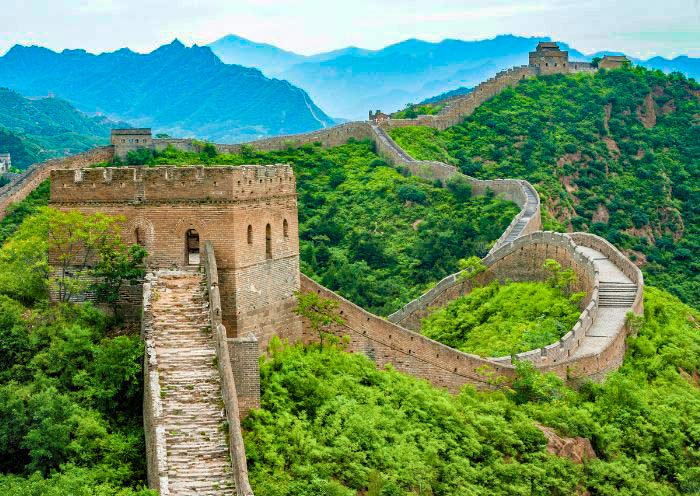
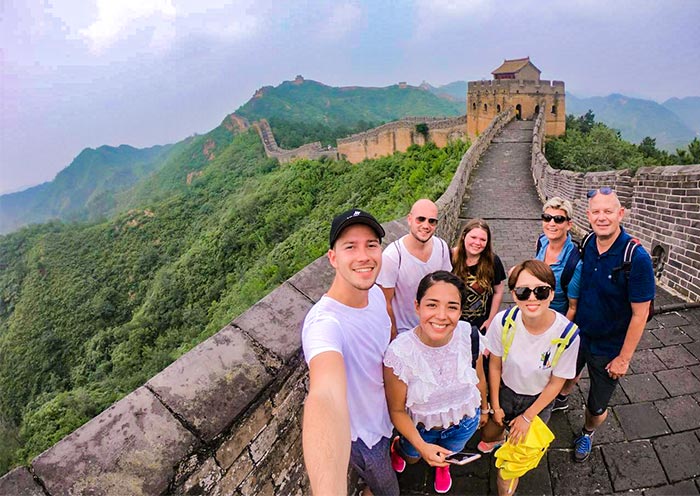
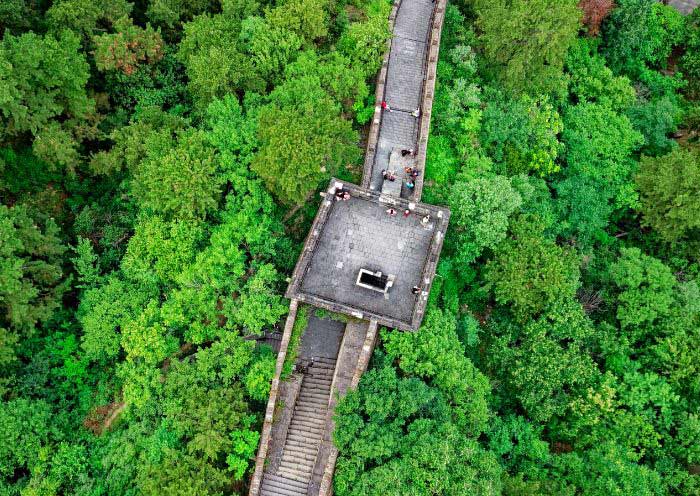
If you're looking for iconic places to visit in Asia, the Great Wall sits right at the top.
Stretching over 21,000 kilometers, it's not just a wall of history, it's about that feeling of standing somewhere built thousands of years ago and realizing… humans did this.
The best part? You can explore it easily from Beijing with just a 1–2 hour drive.
There're several sections of the Great Wall. Which section fits your style?
- Mutianyu (慕田峪) – Great for first-timers and families. A cable car makes going up easy, and you can zoom down on a fun toboggan ride.
- Badaling (八达岭) – The most famous and most developed. Expect big scenery and big crowds.
- Jinshanling (金山岭) – Perfect for photos and history lovers. The mix of restored and wild sections feels cinematic.
- Simatai (司马台) – Rare night-time visits available. Romantic and dramatic.
- Jiankou (箭扣) – Wild, rugged, and only for experienced hikers with a guide.

Asia Odyssey Travel Tip:
Join a private day trip from Beijing that hits both the Great Wall and a local countryside village for lunch — no crowds, no rush, just pure "wow."
Mutianyu Great Wall: Facts, Hiking, Best Time, Map & Travel Tips
Jiankou Great Wall - The Wild Beauty of China's Great Wall
Jinshanling Great Wall - A Paradise for Photographers and Hikers
Unraveling the Mystery: 25 Facts You should Know About the Great Wall of China
#2. The Terracotta Army (China) – The Silent Guardians of Xi'an
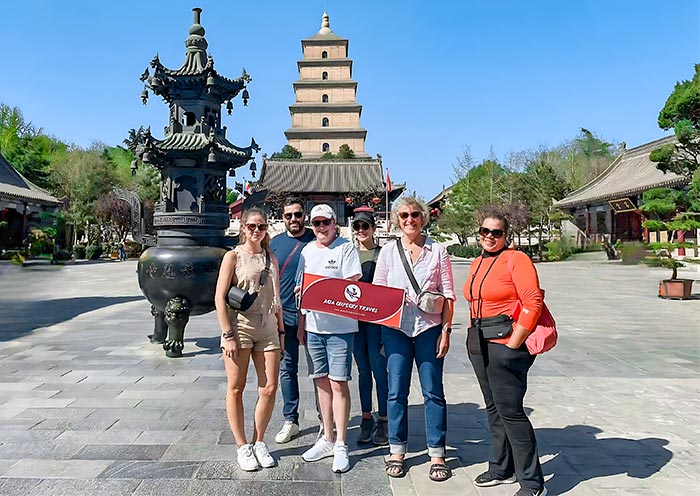

One of the most unforgettable Top Places to Visit in Asia, the Terracotta Army is jaw-dropping in scale. Thousands of life-sized soldiers — each with a unique face — have guarded Emperor Qin Shi Huang's tomb for over 2,000 years.
Seeing them in person is surreal — not just because of their scale, but the craftsmanship. The sheer detail in their armor, hair, and expressions will make you forget these warriors are made of clay.
Inside the museum, you'll explore three main pits:
Pit 1 – The iconic battle-ready formation.
Pit 2 – Cavalry, archers, and more specialized troops.
Pit 3 – The "command center" of the army.
Asia Odyssey Travel Tip:
Go early morning for fewer crowds. Pair your Terracotta Army visit with a walk or bike ride around Xi'an's ancient city wall — the contrast between old defenses and living city life is unforgettable.
#3. The Forbidden City (China) – Where Emperors Once Dreamed
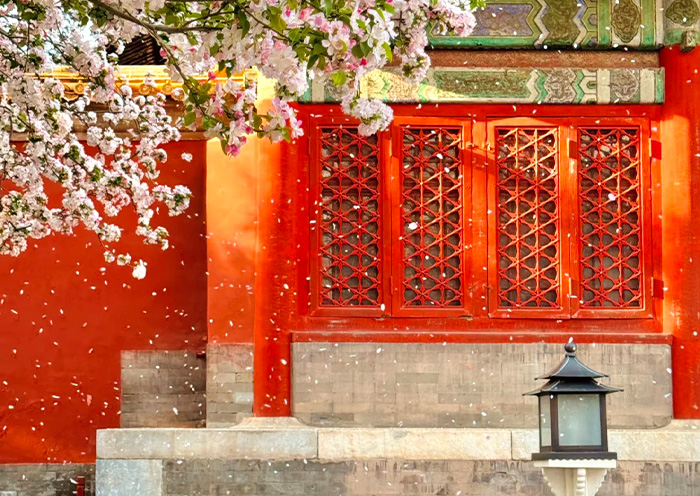
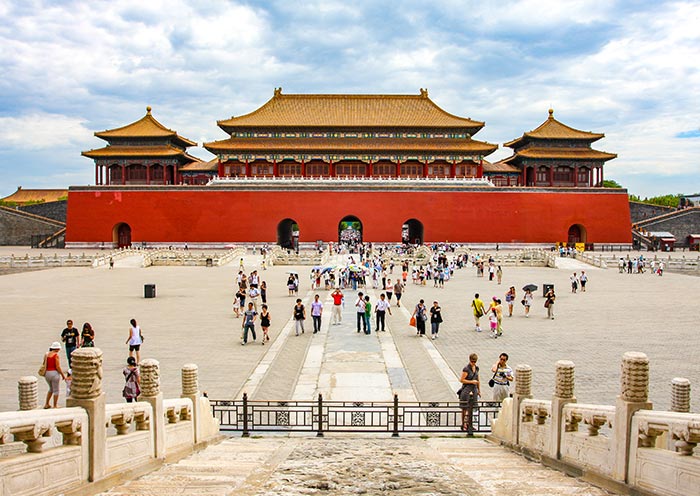
Right in the center of Beijing sits one of the most important places to visit in Asia. For over 500 years, the Forbidden City was the palace of 24 emperors and remains the world's largest imperial complex.
With nearly 1,000 buildings, golden roofs glinting under the sun, and a symmetry that would make perfectionists weep, it's the ultimate symbol of imperial power.
The deeper you go, the quieter it gets — a place where every courtyard whispers stories of politics, poetry, and palace intrigue.
Asia Odyssey Travel Tip:
Book tickets in advance and allow 3–4 hours. Visit early in the morning or late afternoon for fewer crowds and softer light. Combine it with nearby Tiananmen Square and Jingshan Park for a full royal day out.
How to Visit Forbidden City | Ultimate Beijing Forbidden City Guide
#4. Angkor Wat (Cambodia) – The Kingdom of Stone and Sunrise
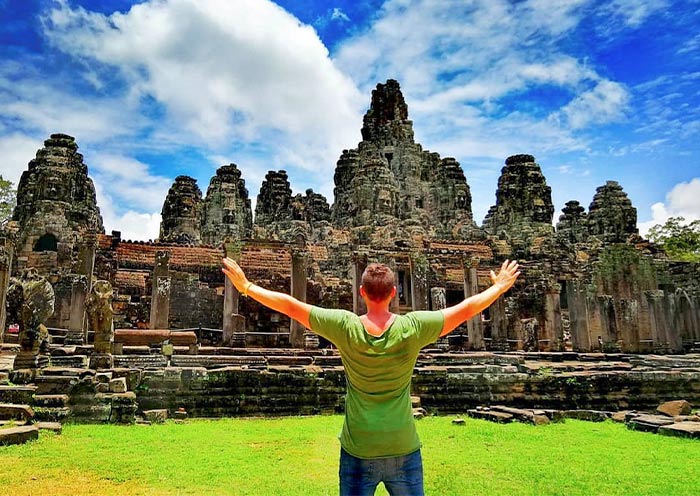
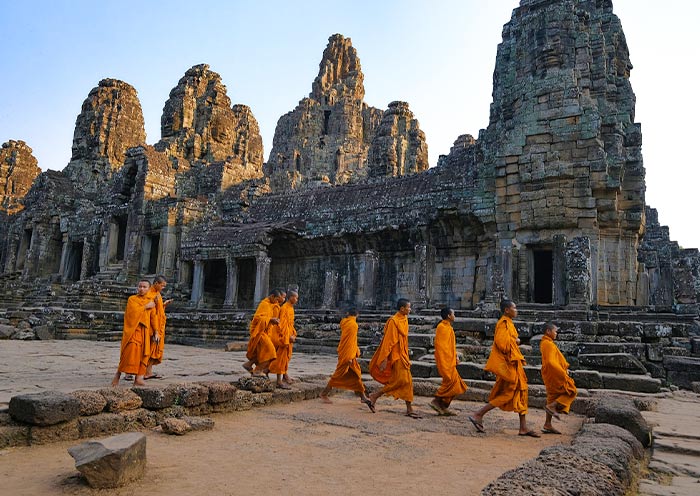
If there's one image that defines Southeast Asia, it's the sunrise over Angkor Wat.
This UNESCO masterpiece is the world's largest religious monument and Cambodia's crown jewel, a surreal mix of ancient engineering and jungle mystique.
Beyond Angkor Wat itself, explore the mysterious faces of Bayon Temple (famous for its mysterious smiling stone faces) and the tree-wrapped ruins of Ta Prohm (yes, the "Tomb Raider" one).
Asia Odyssey Travel Tip:
Get the 1-day or 3-day pass depending on your pace. Sunrise is stunning, but crowds are huge. For a quieter moment, try sunset at Pre Rup or Phnom Bakheng.
Angkor Wat Maps: Tourist Map of Angkor Wat Temples
Best Time to Visit Angkor Wat: Weather & Tips 2026
How to Visit Angkor Wat: Angkor Wat Visiting Guide 2026
How Many Days in Angkor Wat: Siem Reap Itinerary 1,2,3 Days
#5. Taj Mahal (India) – The Eternal Love Story in Marble
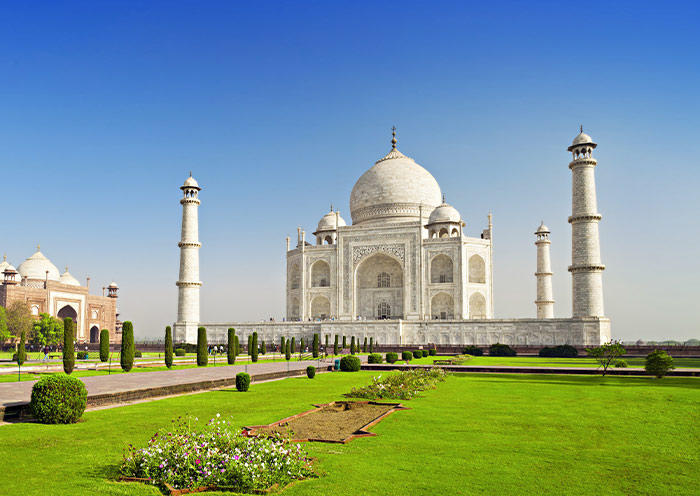
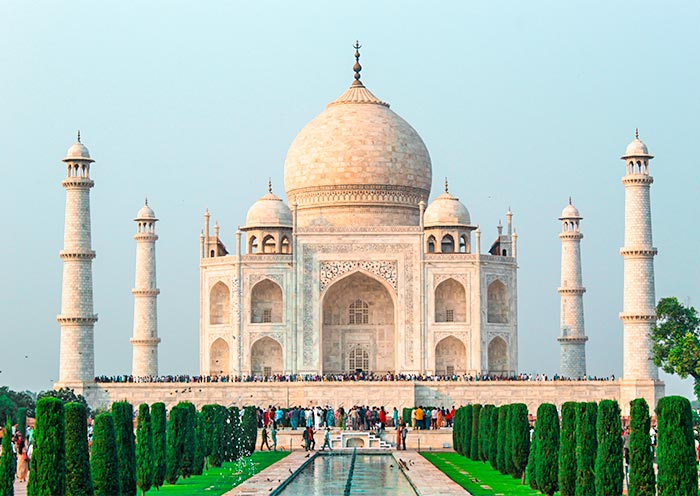
They say love can move mountains — or in this case, build a masterpiece. The Taj Mahal in Agra was built by Emperor Shah Jahan for his beloved wife Mumtaz Mahal, and it still stands as one of the most beautiful expressions of love on Earth.
By sunrise, the white marble glows pink; by sunset, it turns gold. Every detail — the inlaid gemstones, perfect symmetry, the reflecting pool — feels designed to make your heart skip a beat.
Asia Odyssey Travel Tip:
Arrive at dawn for that dreamlike glow (and fewer crowds). Pair it with a visit to Agra Fort for a fuller picture of Mughal grandeur.
Part 2: Awe-Inspiring Natural Landscapes
In this part, you'll dive in Asia's wildly varied nature scenery. These eight places will take you from Zhangjiajie's sky-high spires to Guilin's karst mountains, from Halong Bay's limestone towers to Jiuzhaigou's crystal lakes, all the way to Bali's volcanic ridges, Jeju's lava fields, Chitwan's dense forests, and Tiger Leaping Gorge's thunderous cliffs. If you want nature that stops you in your tracks, start here.
This is Asia at its most dramatic — towering cliffs, candy-colored lakes, emerald valleys, islands straight out of your screensaver, and jungles where wildlife still rules. If you want scenery that makes you whisper "wow" every five minutes, start here.
#6. Zhangjiajie National Forest Park (China) – The Real-Life "Avatar" Mountains
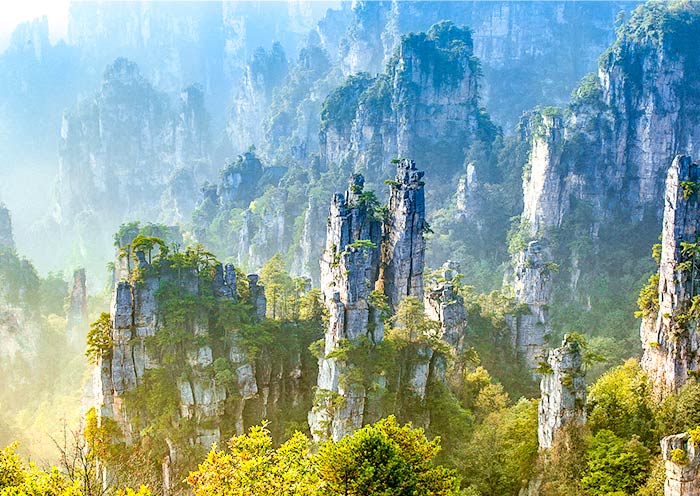
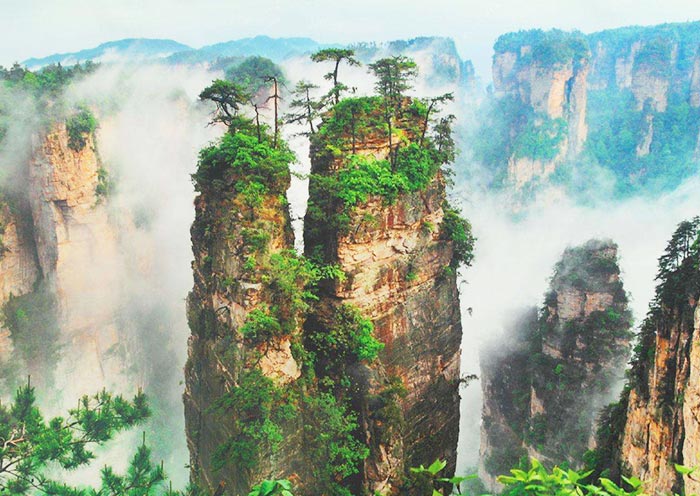
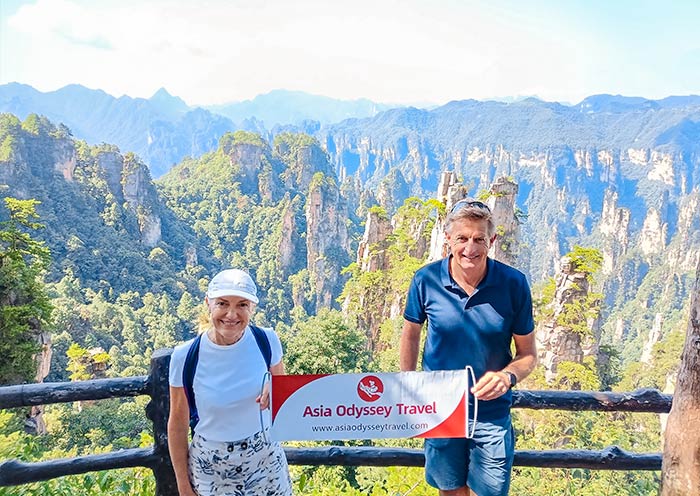
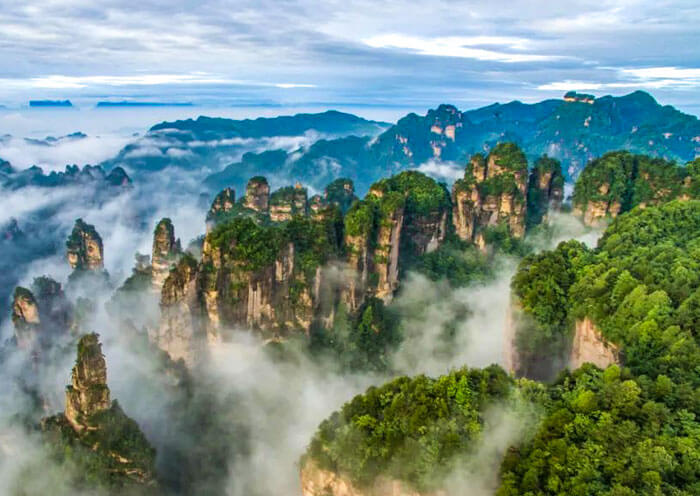
You might not know Zhangjiajie by name, but you've definitely seen it—especially if you've watched Avatar and wondered, "Where on earth do mountains float?" Well, this is the place that inspired them.
Thousands of skinny sandstone pillars shoot straight up from the ground like nature's skyscrapers, and when the mist rolls in, the peaks really do look like they're hanging in mid-air.
The park is huge, so plan to use the elevators, cable cars, buses, and walking trails to hop between viewpoints.
Don't miss the Bailong Elevator (the world's highest outdoor lift), the Tianzi Mountain viewpoints, and the iconic Avatar Hallelujah Mountain.
Asia Odyssey Travel Tip:
Combine Avatar Mountains with Tianmen Mountain nearby Zhangjiajie City in 2-3 days. Furong Ancient Town (the town on waterfall with dreamlike night view) is just 2 hours away!
Best Time to Visit Zhangjiajie (Avatar Mountains): Zhangjiajie Weather 2026
How to Plan a Trip to Zhangjiajie: Where to Go, Cost & Plans
Zhangjiajie Attractions: 15 Things to Do in Zhangjiajie
Zhangjiajie Itineraries: How to Spend 2,3,4,5 Days in Zhangjiajie
#7. Guilin & Yangshuo (China) – Karst Mountains, Bamboo Boats, and Pure Chill
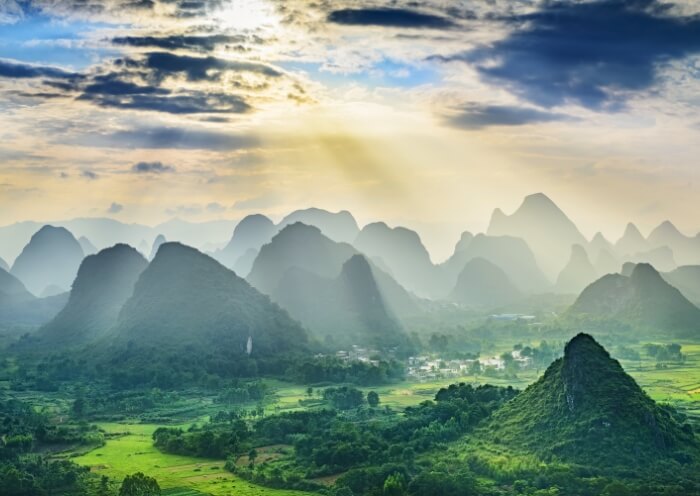
If Zhangjiajie is drama, Guilin and Yangshuo are the laid-back cousins who prefer bikes, bamboo boats, and rice noodles.
The star of the show here is the otherworldly karst scenery—rounded green peaks rising from peaceful fields and winding rivers. It's so iconic that it appears on China's 20-yuan banknote.
Start with the Li River Cruise from Guilin to Yangshuo, a smooth 4-hour ride past landscapes that feel like a painting.
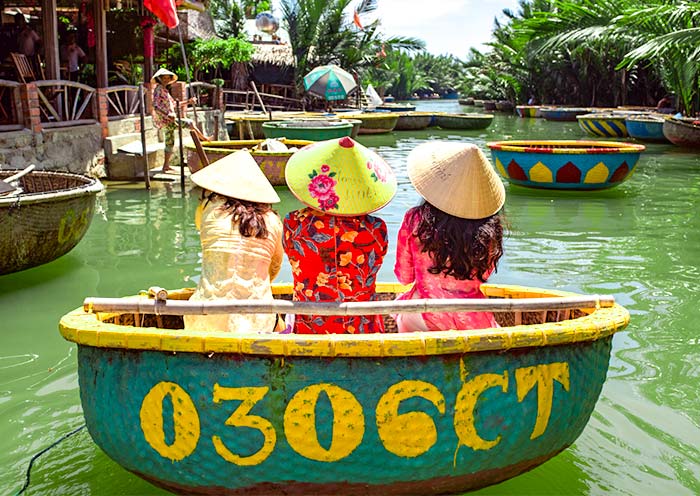
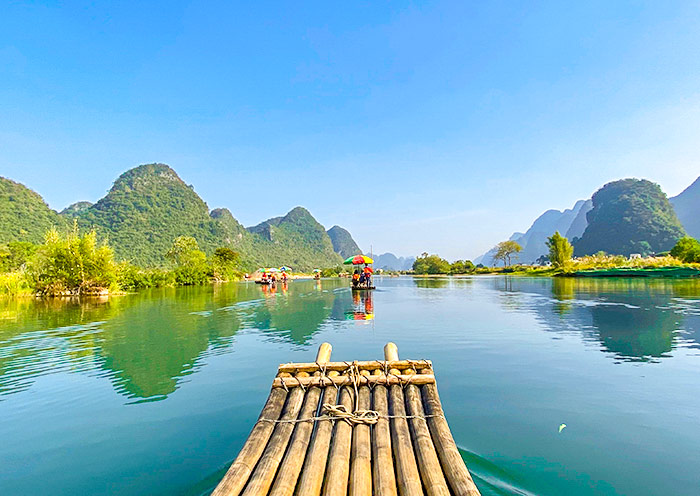
In Yangshuo, ditch cars and explore by bike or electric scooter—Moon Hill, Yulong River, and endless rice paddies make the perfect open-air playground. You can even hop on a bamboo raft for a slow, breezy float.
Asia Odyssey Travel Tip:
Guilin & Yangshuo are perfect for families, photographers, couples, and anyone who wants scenery without sweat. Visit during April to October.
When is The Best Time to Go to Guilin? (2026 Guilin Weather Guide)
How to Plan A Guilin Tour | Useful Guilin Planning Guide
#8. Halong Bay (Vietnam) – The World's Most Famous Sea Karst Playground
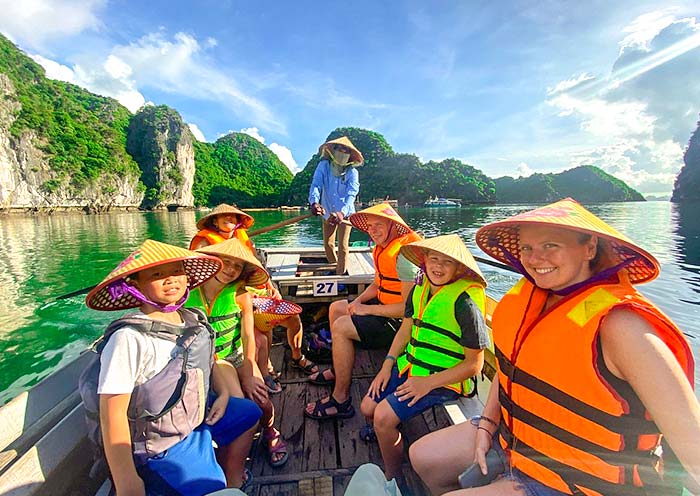
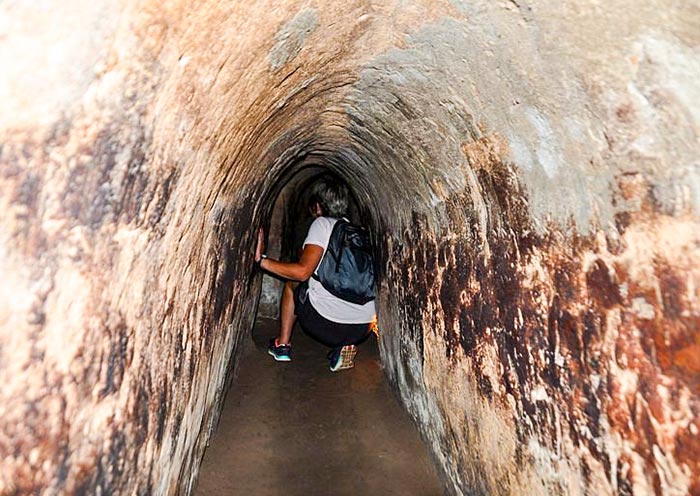
Halong Bay looks like someone scattered giant limestone towers across the sea and said, "Perfect—don't touch it."
Cruising here is the best way to soak it all in, and luckily, boats run from simple overnight junks to full-on floating hotels with jacuzzis.
A typical day in Halong Bay involves kayaking through quiet coves, climbing up to panoramic viewpoints, visiting caves with jaw-dropping chambers, and eating way too much fresh seafood on board.
Halong Bay is one of Southeast Asia's easiest, most satisfying natural wonders to experience—no trekking required, just step on the boat and enjoy the floating magic.
Asia Odyssey Travel Tip:
Overnight cruise > day trip. Day trips rush everything. The overnight lets you kayak at sunset, visit quieter spots, and wake up to misty peaks outside your window.
Ha Long Bay Map: Ha Long Bay Cruise Map & Tourist Map
#9. Jiuzhaigou Valley (China) – Rainbow Lakes and Fairytale Forests
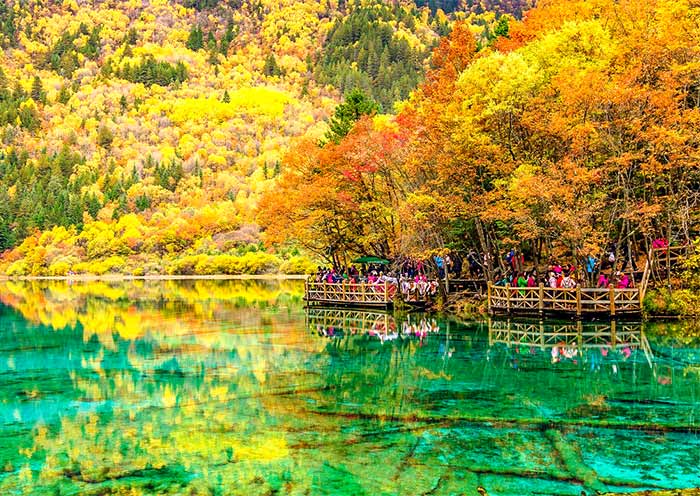
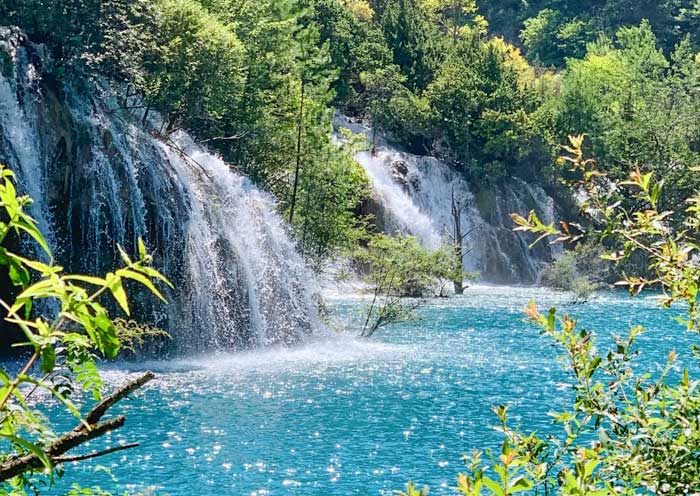
Jiuzhaigou is China's most colorful national park—literally. The lakes look Photoshopped even when you're standing right in front of them.
Expect shades of turquoise, sapphire, and emerald layered over mirror-still water, all surrounded by alpine forests and waterfalls that just keep going.
The park is huge but super organized, with shuttle buses connecting all major viewpoints.
You'll spend the day hopping off at lakes like Five-Flower Lake, Panda Lake, and Long Lake—each one with its own "wait… how is this water so blue?" moment.
The walking boardwalks are easy, making Jiuzhaigou suitable for all ages.
Asia Odyssey Travel Tip:
Go in autumn (mid October to mid Nvember ) if you can—the mix of fiery leaves and rainbow lakes is unbeatable. Just note that Jiuzhaigou is remote, so most travelers fly into Jiuzhai Huanglong Airport or take the Chengdu to Jiuzhaigou High Speed Train.
Jiuzhaigou Map: Jiuzhaigou Park Map & Huanglong Map (2026)
How to Plan A Trip to Jiuzhaigou National Park 2026
#10. Bali (Indonesia) – Island of Gods, Temples, and Epic Sunsets
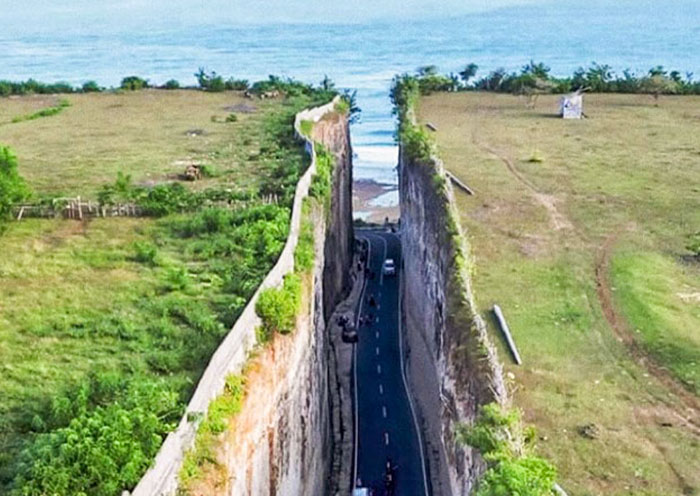
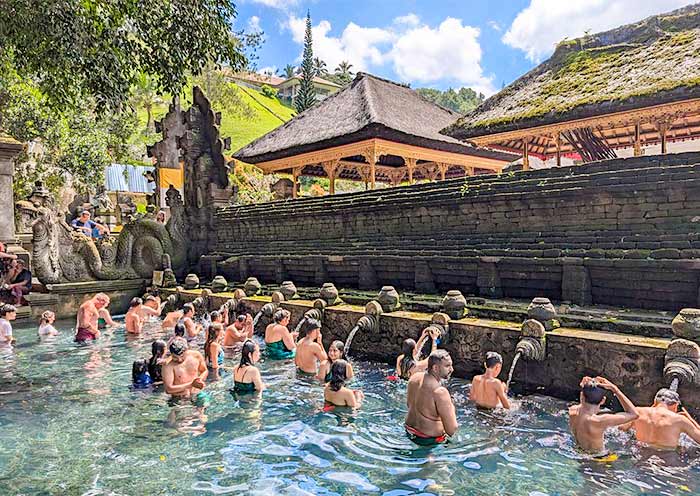
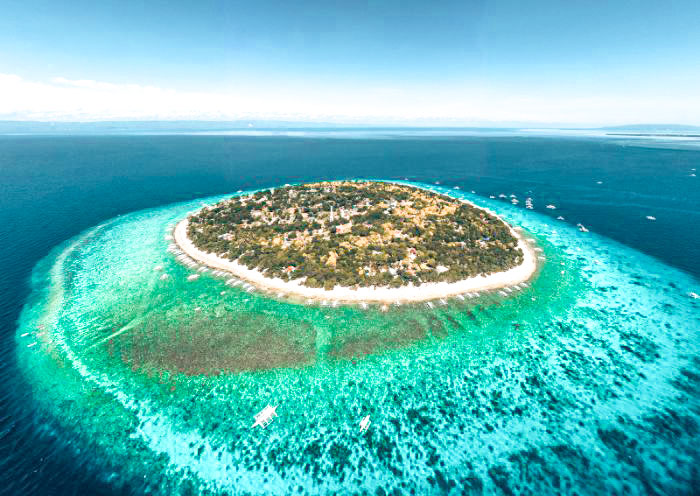
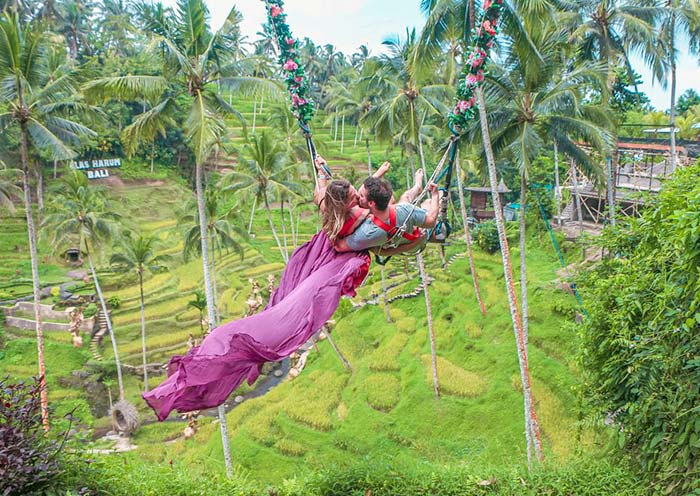
Bali is the choose-your-own-adventure island of Asia. Want beaches? You've got dozens. Want jungles and waterfalls? Head to Ubud. Want sunrises above the clouds? Hike Mount Batur. Want to do absolutely nothing? That's considered a proper itinerary here.
The island's landscapes are ridiculously varied: emerald rice terraces in Tegallalang, cliffs dropping into turquoise water in Uluwatu, lush mountains, hidden canyons, and black-sand volcanic beaches.
Everything is close and easy to reach, and the island caters to every budget—from backpacker hostels to luxury villas with infinity pools. Food is excellent, weather is tropical, and the general mood is "life is good."
#11. Jeju Island (South Korea) – Lava Tubes, Beaches, and Hallasan
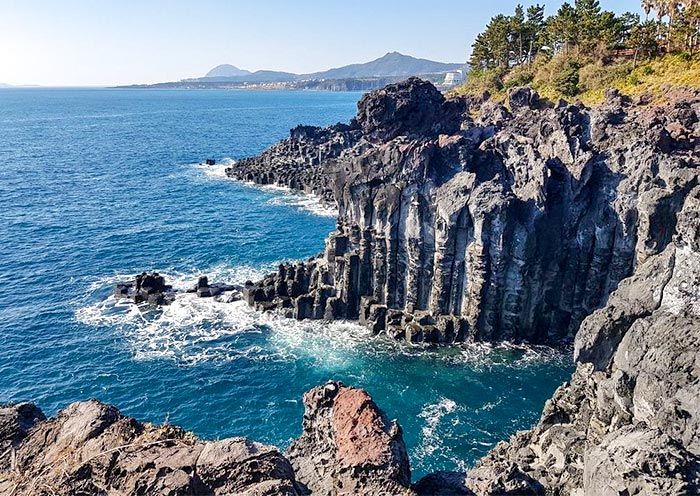
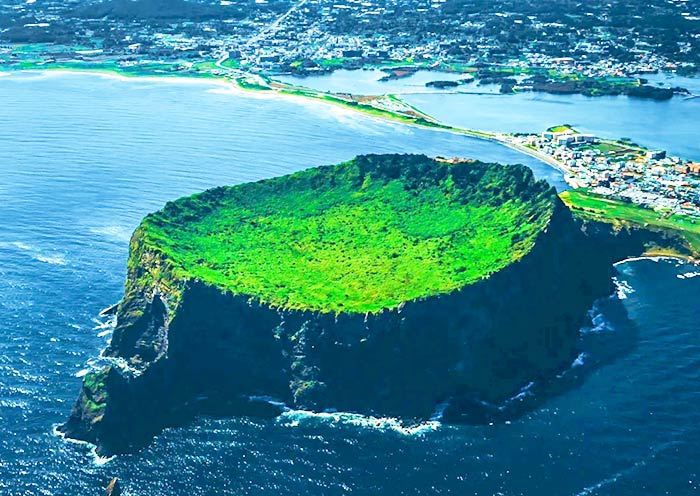
Jeju is South Korea's answer to the perfect natural getaway.
It's got beaches, waterfalls, lava tubes, a massive dormant volcano, and fresh seafood everywhere you go—plus a super chill atmosphere that makes you forget city life instantly.
The star attraction is Hallasan, the volcano at the island's center, with hiking trails that take you all the way to the crater rim.
Not into hiking? No problem—Jeju has plenty of easy wins: Manjanggul Lava Cave, Oedolgae Cliff, Jeongbang Waterfall, and picture-perfect beaches like Hamdeok
With its mix of nature, culture, and coastal scenery, Jeju is great for families, couples, and anyone who wants a refreshing, friendly island escape.
#12. Chitwan National Park (Nepal) – Jungle Wildlife at Its Best
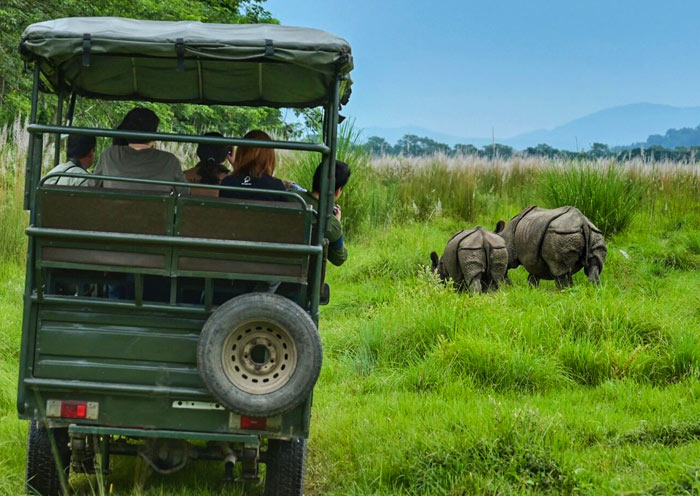
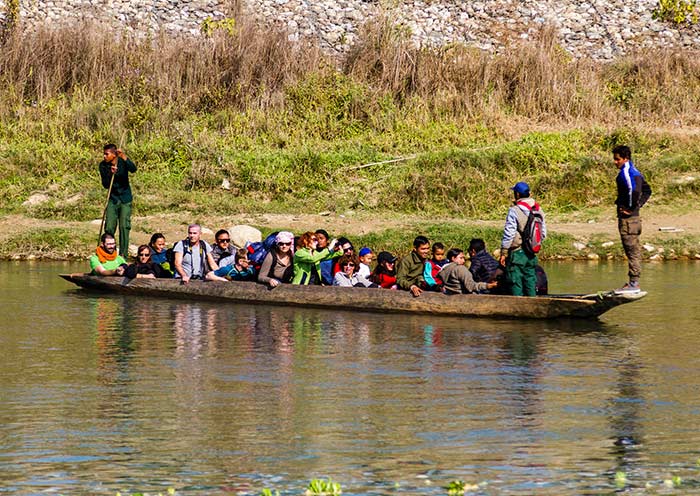
If you think Nepal is only about Himalayas and mountains, Chitwan will surprise you.
This lowland national park is full-on jungle—tall elephant grass, lazy rivers, and wildlife hiding around every corner.
It's one of the best places in Asia to see one-horned rhinos up close, plus crocodiles, deer, hundreds of bird species, and—if luck is ridiculously on your side—a Bengal tiger.
Safaris are smooth and beginner-friendly.
You'll canoe past sunbathing crocodiles, ride jeeps through open grasslands, and visit Tharu villages to learn about local culture.
It's adventurous but not intimidating—perfect for families or first-time wildlife travelers.
#13. Tiger Leaping Gorge (China) – Epic Hiking in Yunnan
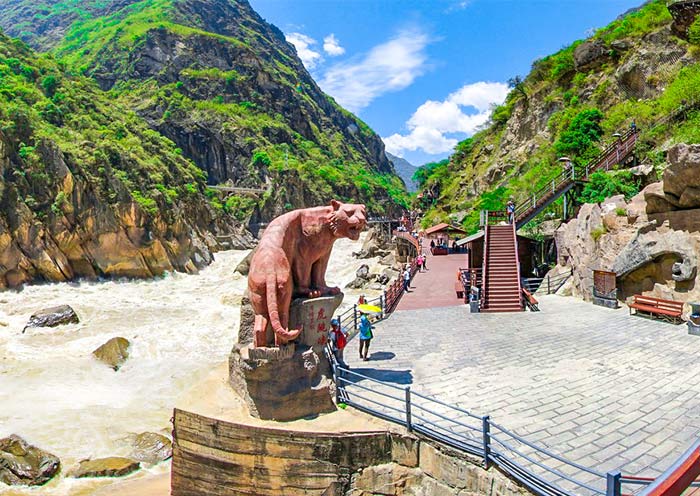
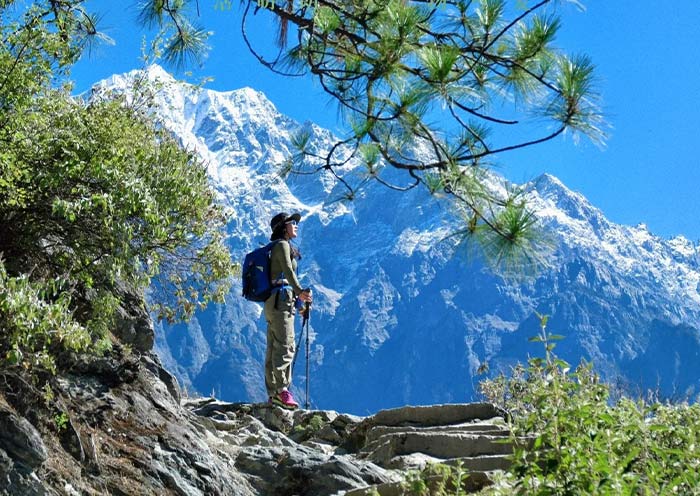
Tiger Leaping Gorge is for people who want an epic hike without needing to be a hardcore mountaineer.
The famous "High Trail" takes 1–2 days depending on your pace. You walk along cliff edges (wide and safe, don't worry), pass through villages, and stay in cozy guesthouses with million-dollar views.
The scenery constantly changes—one moment you're looking at snow-capped peaks, the next you're just inches above swirling whitewater.
The hike is well-marked, and food, beds, and snacks are available along the way, so you can travel light. Even if you don't do the whole trail, the lower gorge platforms get you right next to the Jinsha River's wild energy.
Tiger Leaping Gorge is adventurous, scenic, and surprisingly doable for regular travelers—not just hiking pros.
Hiking Tiger Leaping Gorge (Hu Tiao Xia): Map & Itinerary
Part 3: Vibrant Cities & Cultural Hubs
In this section, you'll jump from Tokyo's hyper-efficient neon maze to Bangkok's temple-lined chaos, from Shanghai's futuristic skyline to George Town's colorful streets packed with heritage and hawker food. These four urban icons showcase Asia's modern energy, cultural mash-ups, and legendary food scenes. If you want cities that never sit still, start here.
#14. Tokyo (Japan) – Organized Chaos You'll Instantly Love
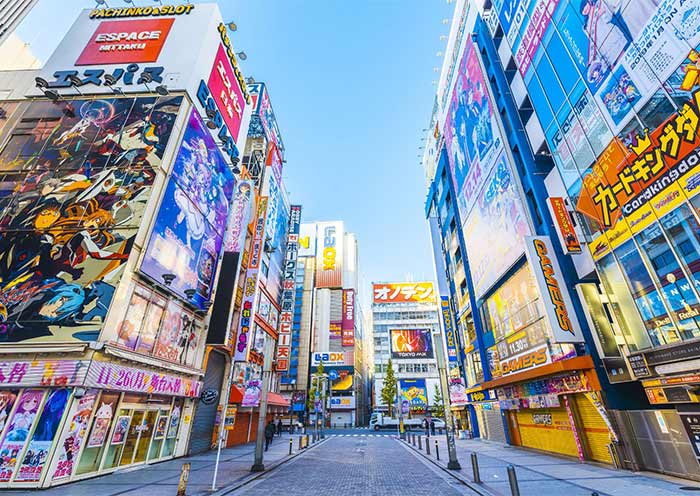
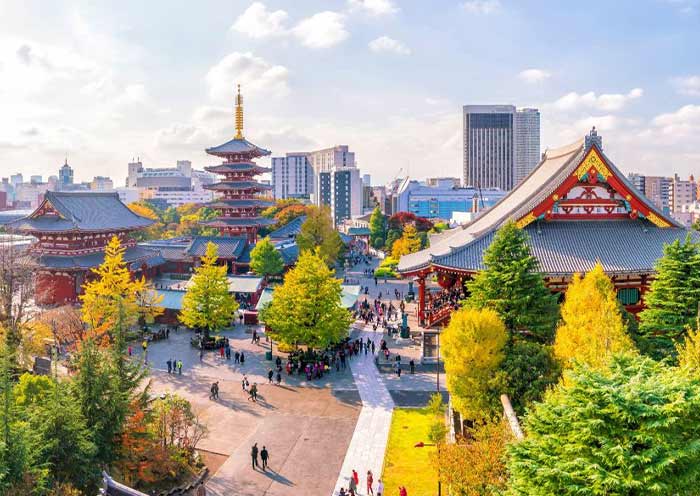
Tokyo is a city where you can slurp ramen at a tiny counter one minute and shop for anime merch or luxury fashion the next.
The train system is spotless and extremely efficient, making it simple to explore top districts like Shibuya, Asakusa, Shinjuku, and Harajuku in a single day.
Don't miss the iconic Shibuya Crossing, Senso-ji Temple, and the endless food halls in department store basements (depachika).
Asia Odyssey Travel Tip: Buy a Suica/PASMO card for seamless subway rides, and plan your day around neighborhoods—Tokyo rewards a smart route.
Tokyo Itineraries | Spend 1 Day, 2 Days, 3 Days, 4 Days in Tokyo Japan
Tokyo Tourist Attractions | Things to Do & Places to Visit in Tokyo
#15. Bangkok (Thailand) – Street Food Heaven with a Dash of Chaos
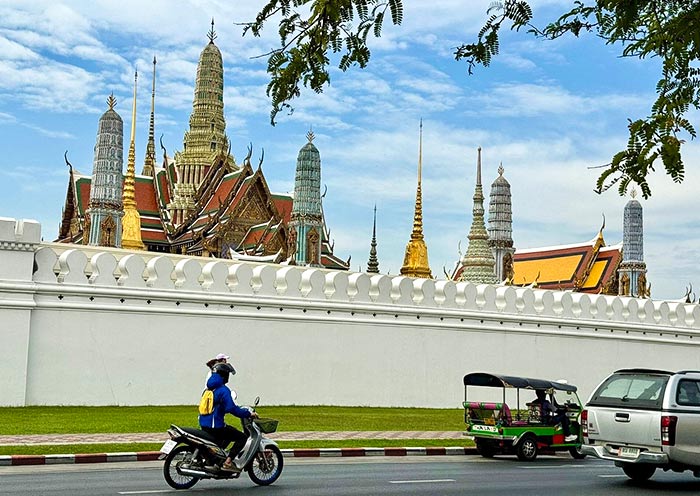
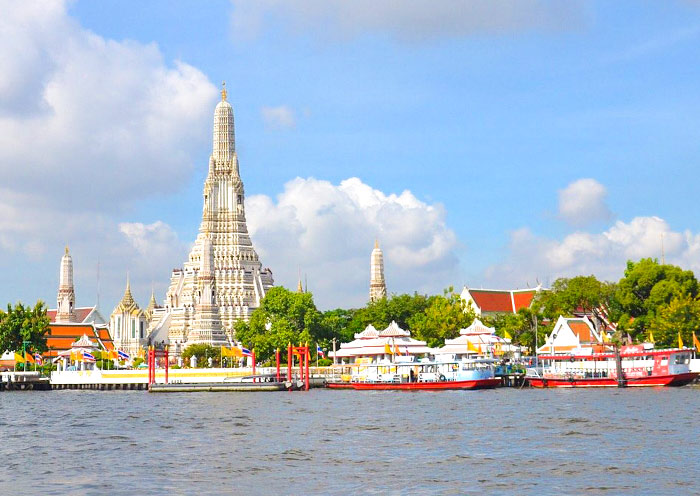
Bangkok hits you with color, flavor, and fun the moment you arrive.
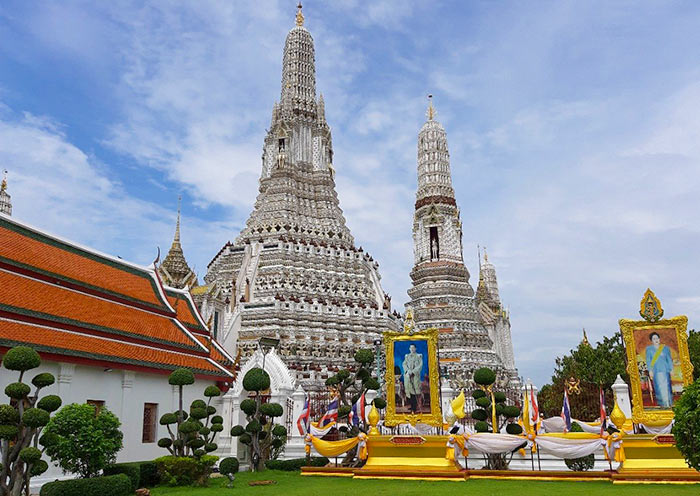
Hop between temples like Wat Arun and the Grand Palace in the morning, then shift to rooftop bars and lively markets at night.
The BTS Skytrain and MRT keep you above the traffic jams, and riverboats offer a scenic way to move between old and new Bangkok.
Asia Odyssey Travel Tip: Come hungry—street food is cheap, safe, and ridiculously good. Try pad thai, mango sticky rice, and boat noodles.
#16. Shanghai (China) – China's Futuristic Showpiece with Deep Roots
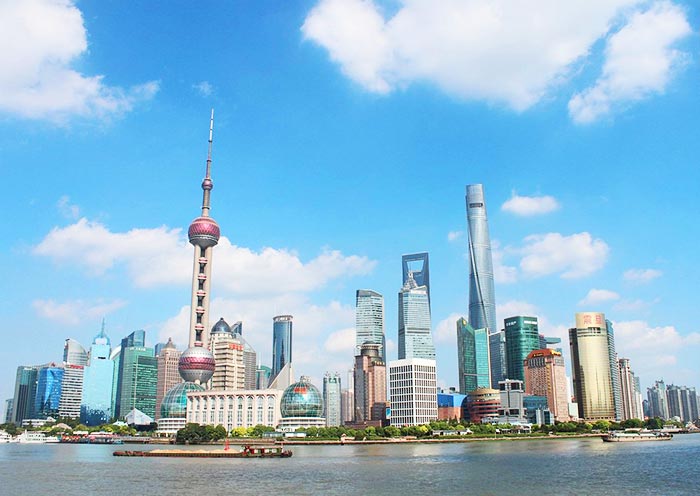
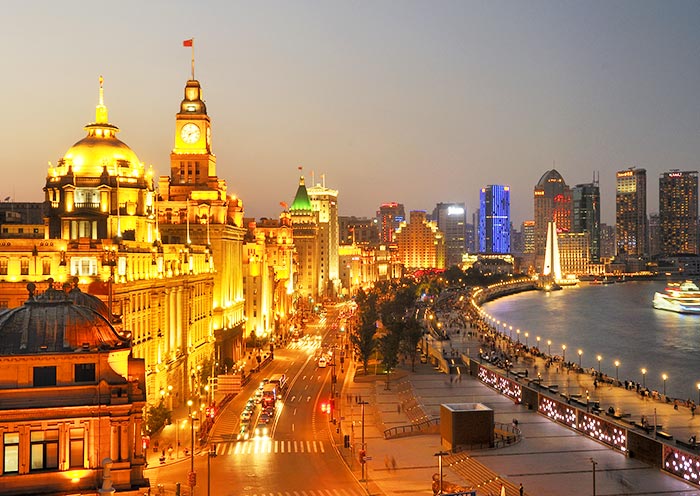
Shanghai is where old Shanghai lanes meet sci-fi Pudong skyscrapers.
Start with The Bund for skyline views, explore the French Concession's tree-lined streets on foot, and dive into local life at Yu Garden and its busy bazaars.
The metro is fast, clean, and cheap—perfect for hopping between museums, shopping streets, and waterfronts.
Asia Odyssey Travel Tip: Evening Huangpu River cruises offer the best view of the skyline—you'll see why Shanghai is the postcard of modern China.
#17. George Town, Penang (Malaysia) – Culture, Street Art & Food All in One Spot
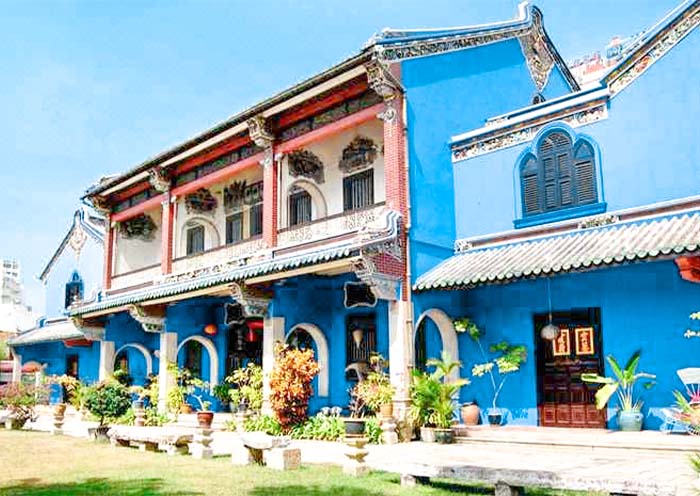
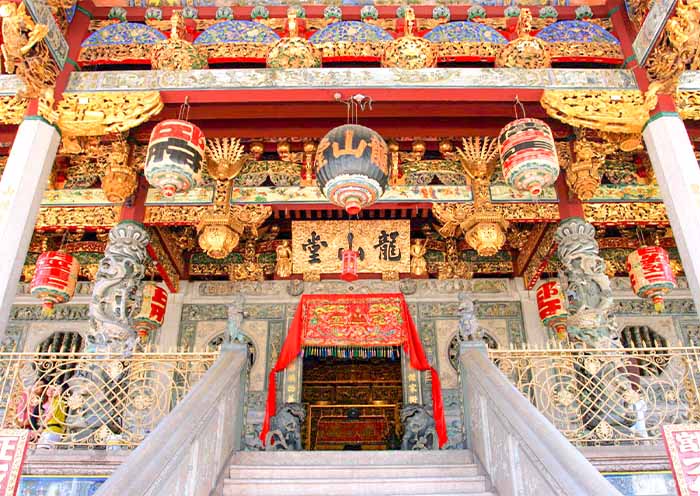
This compact UNESCO-listed city is perfect for wandering.
You'll find Chinese clan houses, British colonial buildings, colorful temples, and famous street art on nearly every corner.
The food scene is legendary—char kway teow, curry mee, and cendol are must-tries. Everything is walkable, but Grab (ride-hailing) makes getting around even easier.
Asia Odyssey Travel Tip: Visit early morning or late afternoon for cooler weather and soft light for street-art photos.
Penang Map: Tourist Map of Penang Island & George Town
Part 4: Sacred Temples & Spiritual Journeys
In this section, you'll climb from Tibet's sky-high Potala Palace to Bhutan's cliffside Tiger's Nest, then wander through the endless torii gates of Kyoto's Fushimi Inari Taisha. These places reveal the region's living traditions, devotion, and serenity. If you're seeking meaning as much as scenery, start here.
#18. Potala Palace (Tibet, China) – Tibet's Sacred Icon Above the Clouds
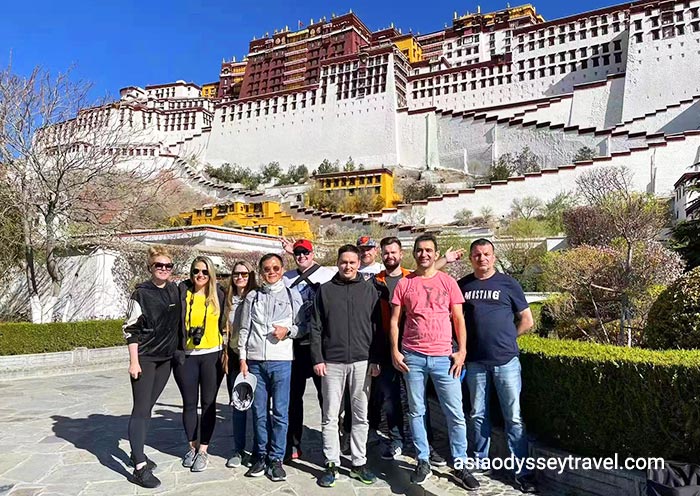
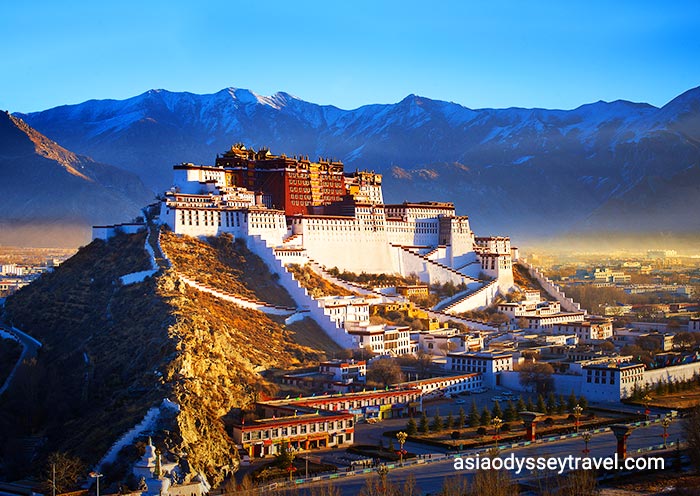
Walking up to Potala Palace feels like stepping into another world. This massive red-and-white fortress towers above Lhasa and was once the winter residence of the Dalai Lama.
Inside, you'll find ancient murals, golden relics, and prayer halls filled with butter-lamp glow.
Good to Know: Traveling to Tibet requires special permits and a guided tour—no independent travel allowed. The altitude is real (3,650m), so plan two easy days in Lhasa before climbing all those palace steps.
AOT Travel Tip: We handle permits, acclimatization planning, and all logistics so you can focus on the spiritual experience, not the paperwork.
Potala Palace - World’s Highest Palace to Experience Tibetan Buddhism
#19. Fushimi Inari Taisha (Japan) – Kyoto's Endless Torii Tunnel
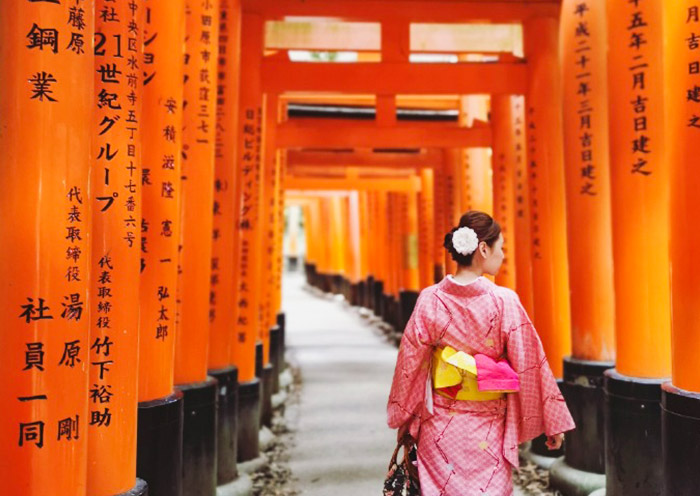
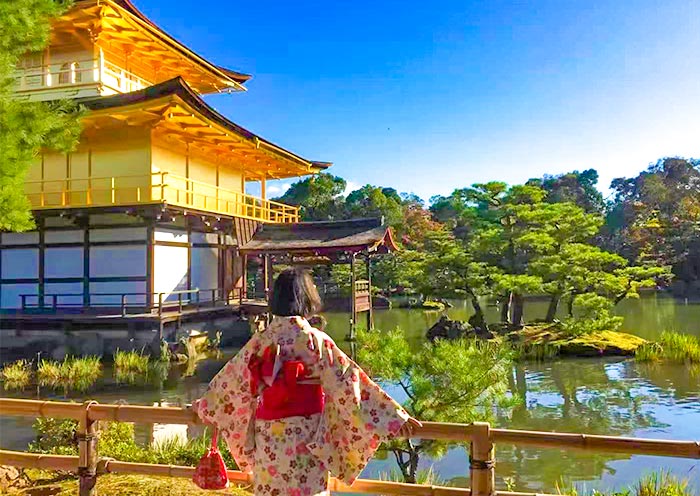
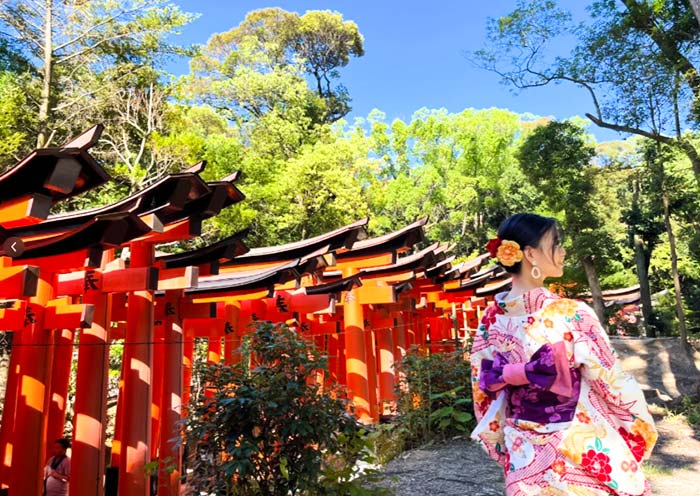
With thousands of bright red torii gates curving up Mount Inari, this shrine is one of Japan's most photographed spots—and for good reason.
The lower trails can get busy, but the higher you climb, the quieter it gets. You'll pass fox statues, tiny shrines, and peaceful forest paths.
Good to Know: The full hike takes 2–3 hours round trip. Go early morning or after sunset for fewer crowds and cooler air.
Traveler Bonus: The shrine is open 24/7, and night visits feel magical.
#20. Tiger's Nest Monastery (Bhutan) – Bhutan's Icon on a Cliffside
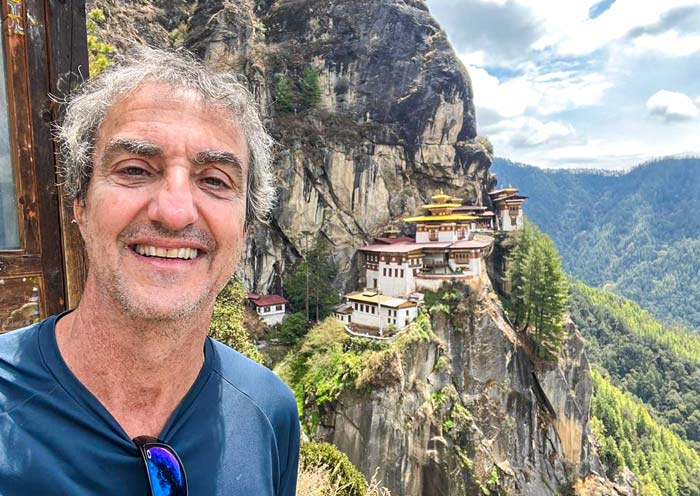
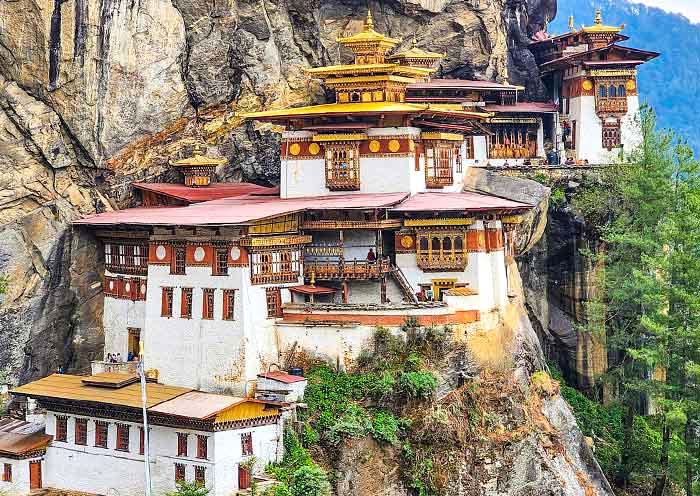
Perched dramatically on a cliff 900 meters above the Paro Valley, Tiger's Nest is both a pilgrimage and a workout.
The 2–3 hour uphill hike is steady but manageable, with rest stops (and tea houses!) along the way. Reaching the top feels like a reward in itself—golden temples, prayer flags, and sweeping mountain views.
Good to Know: All visitors to Bhutan travel with a guide, so your day will be well organized. Wear sturdy shoes and bring layers—the weather changes fast.
AOT Travel Tip: We help you pace your Bhutan trip so you're rested and ready for the Tiger's Nest hike.


 Data in submission...