+852 5394 6901
 Take China Group Tours in 2026/2027 to enjoy 30% discount compared to private tour. Same Experience & Lowest Price!
Stop 1 - Tashkent: The Modern Gateway to an Ancient Land
Tashkent is usually your first stop in Uzbekistan. It is calm, green, and easy to explore.
The best way to enjoy the city is to mix old sites, local life, and modern spaces in one day.
#1. Visit the Khast-Imam Complex: Touch the Spiritual Roots of Central Asia
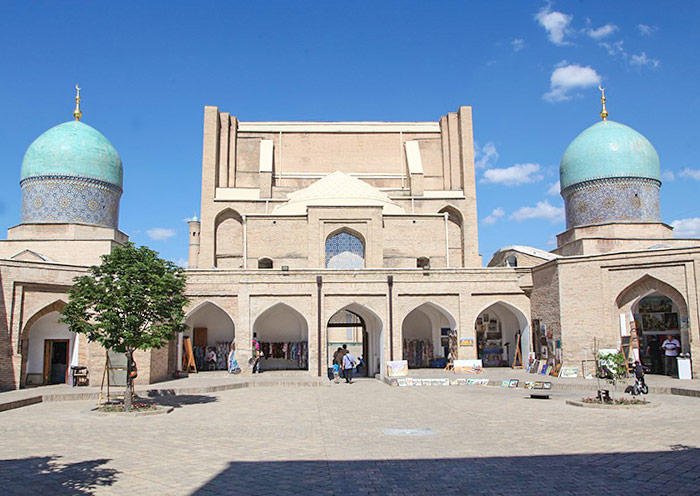
Begin your visit in the old city area, in the northwest of Tashkent. The Khast-Imam Complex is open, spacious, and peaceful, making it an ideal first stop. 2 madrasahs and 2 mosques surround a large central square, so you never feel rushed or crowded.
At the center is Muyi Muborak Madrasah, also known as the library museum. Inside, you can see the Uthman Quran, believed to be the oldest surviving Quran in the world.
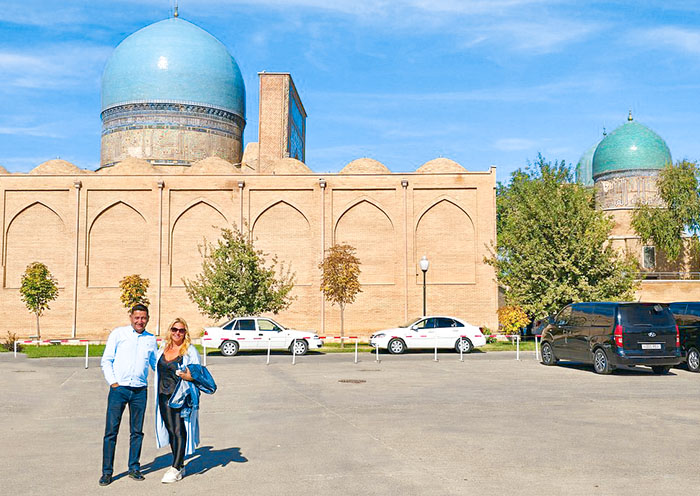
Nearby stands Hazrati Imam Mosque, the larger mosque of the complex. Its two deep-blue domes and tall minarets create one of the most photogenic scenes in the city.
Tip: Dress modestly and slow your pace — this is a place to absorb, not rush.
#2. Ride the Tashkent Metro: The Most Beautiful Commute in Central Asia
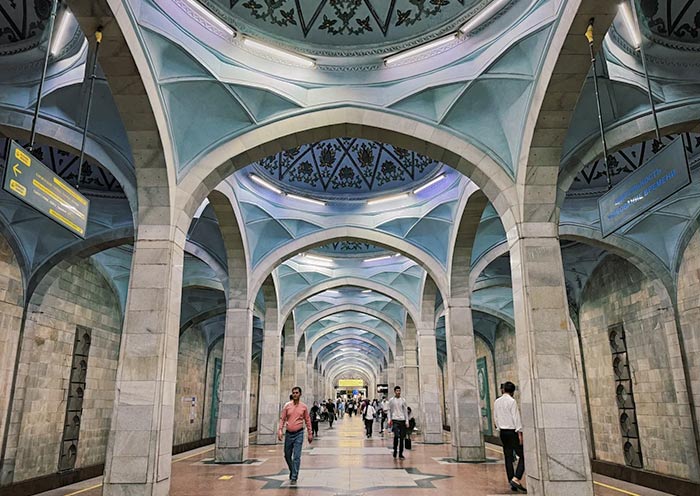
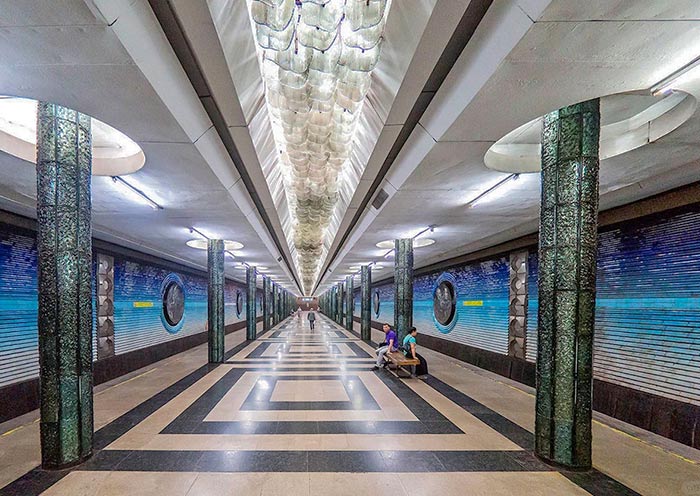
This is not just transport — it's an attraction in its own right. The Tashkent Metro is often described as an underground art museum, and for good reason.
Built during the Soviet era, the stations lie deep underground and were designed with wide halls and high ceilings. While waiting for the train, take time to look around.
Each station follows a different theme, from space exploration and poetry to cotton fields and traditional Uzbek patterns. Marble columns, chandeliers, and detailed mosaics give many stations a palace-like feeling. Some are elegant, others dramatic, but none feel ordinary.
Tickets cost only 3,000 UZS (about 0.25 USD), so it's easy to ride a few stops just for sightseeing. Kosmonavtlar Station, with its blue space murals, and Alisher Navoi Station, with classic Uzbek design, are especially worth a stop.
#3. Explore Chorsu Bazaar: Eat, Wander, and Get Lost
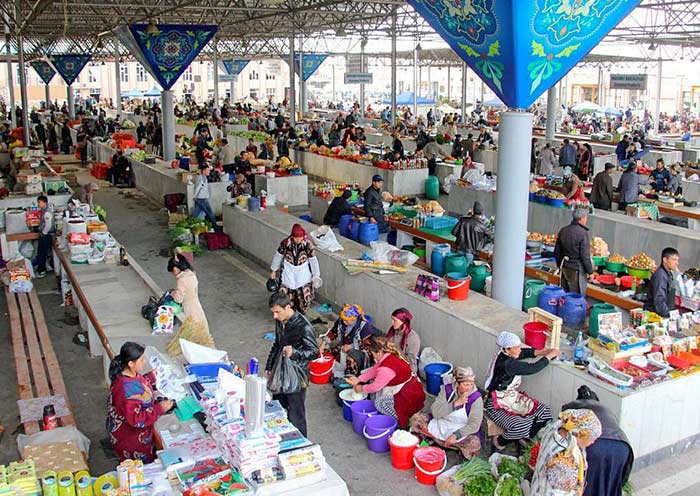
If you want to understand everyday life in Tashkent, Chorsu Bazaar is the place to go. Beneath its massive blue dome, the city comes alive. Inside, you'll find two levels arranged in a clear, organized layout.
The ground floor focuses on daily food: meat, cheese, fruit, spices, and freshly baked bread. You'll also see ceramics, miniature paintings, and Silk Road-style souvenirs, making it a good place to shop for gifts. The upper level is lighter and quieter, filled with dried fruits, nuts, and tea.
Walk slowly and follow your senses. Smell the spices, watch vendors tear warm non bread by hand, and taste whatever is offered.
Must-try snacks: Fresh samsa from the clay oven and dried apricots or raisins from the mountain regions.

#4. Stroll Amir Temur Square & Tashkent City: See Modern Uzbekistan in Motion
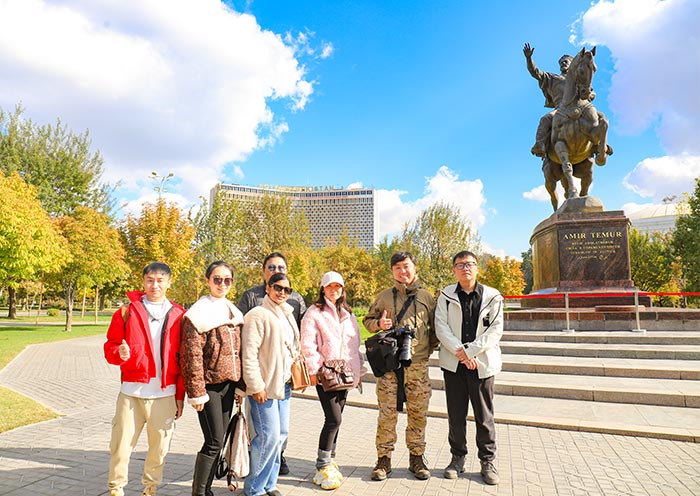
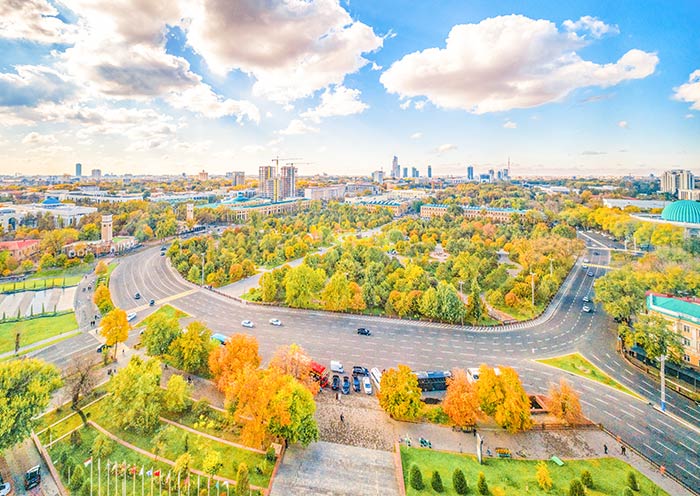
End your day by stepping into modern Uzbekistan. Amir Temur Square is wide, green, and relaxed — a popular meeting point for locals. The statue of Amir Temur stands proudly at the center, symbolizing national identity and independence.
On the northwest corner of the square is the Amir Temur Museum, which offers useful background before visiting Samarkand. On the eastern side, the Uzbekistan Hotel stands out with its large curved facade and orderly windows, creating a clear contrast with the historic monument nearby.
From here, continue to Tashkent City for an evening walk, dinner, or coffee. It's the perfect way to end the day and a reminder that Uzbekistan is modern, confident, and moving forward.
AOT Angle: Tashkent is the perfect introduction. We ensure you see its hidden historical gems alongside its modern marvels, providing the context needed to understand the country you're about to explore.
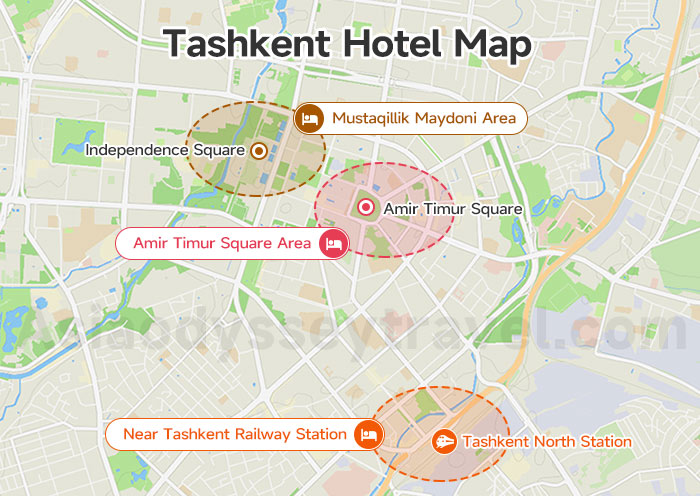
Tashkent Map: Tourist Map of Tashkent Metro & Attractions
Stop 2 – Samarkand: The Crossroads of Culture
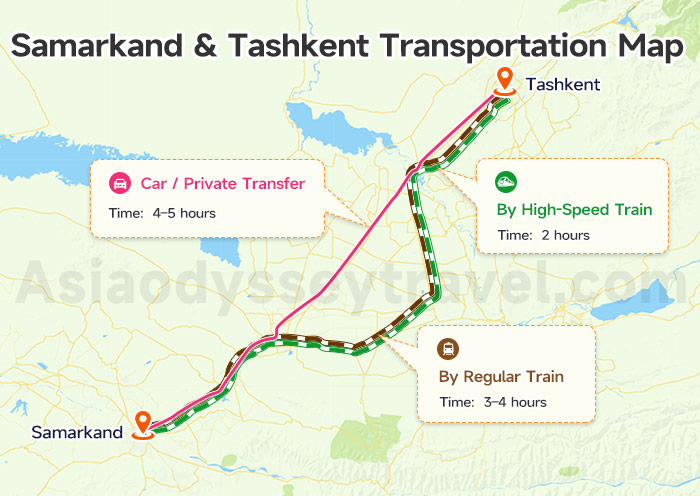
Just two hours by high-speed train from Tashkent, you arrive in Samarkand. This is the most famous UNESCO city on the Silk Road. It was once transformed by Amir Timur (Tamerlane) into the capital of a vast empire.
Compared to calm Tashkent, Samarkand feels grand, dramatic, and intense. The best way to explore it is to follow the city's history step by step in 2 days.
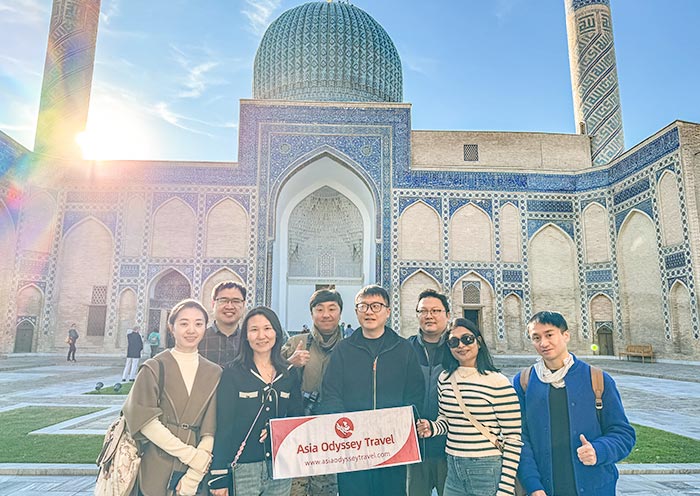
#5. Gur-e-Amir Mausoleum – Deep into the Tomb of Tamerlane
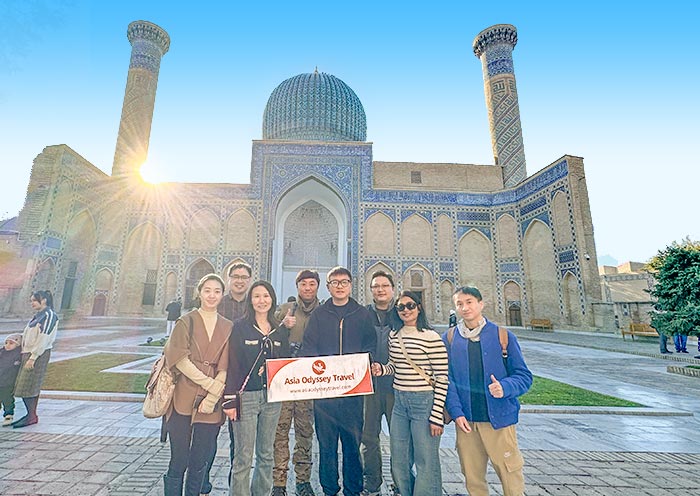
Begin at Gur-e-Amir, the resting place of Amir Timur. This is where Timurid architecture truly begins.
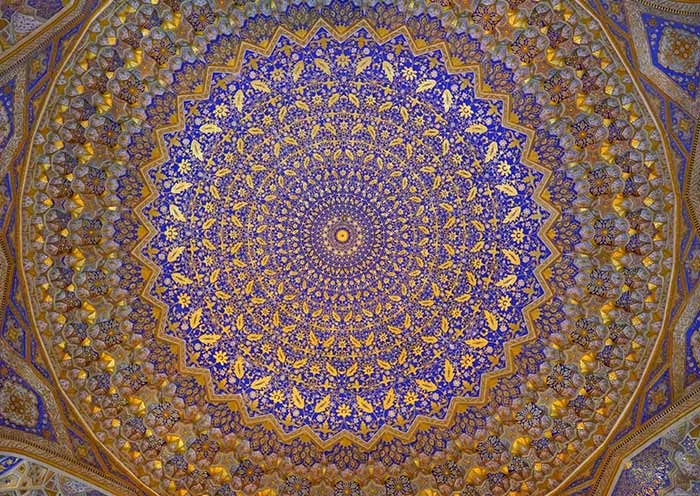
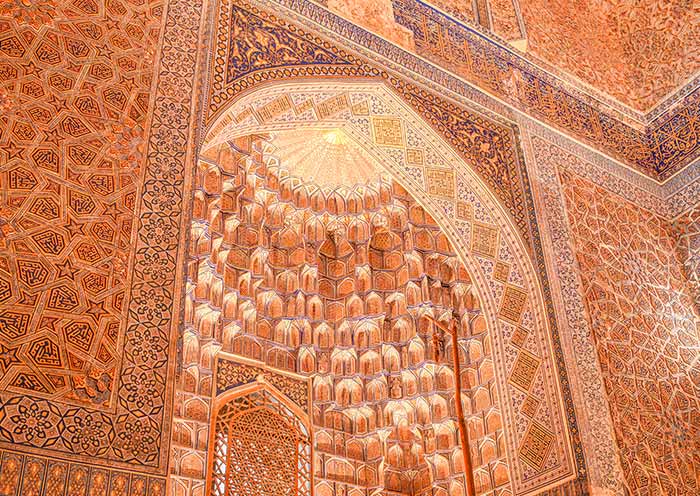
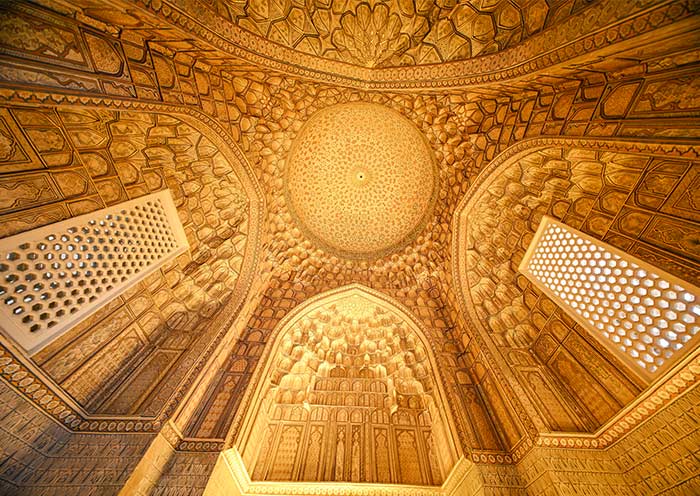
From the outside, the 34-meter-high ribbed blue dome immediately draws your eye. Step inside and look up. The interior feels rich but well balanced, with gold details, deep colors, and perfect proportions.
In the main hall, you see symbolic tombstones. The real burial chamber lies underground. Timur's grave marker is made from a single block of dark green jade, carved with a warning message that says disturbing his rest will bring misfortune.
The mausoleum later became the burial place for Timur, his sons, his grandsons, and his spiritual mentor. In total, nine men from the Timurid family are buried here, making it the dynasty's most important family tomb.
#6. Registan Square – Meet the Heart of Samarkand
Next, head to Registan Square, the most iconic sight in Uzbekistan.
The square is framed by three madrasahs, each from a different period.
- On the left is Ulugh Beg Madrasah (1420), with sun, moon, and star mosaics above its main arch.
- In the center stands Sher-Dor Madrasah (1660), famous for its gilded dome and its tiger-and-sun mosaic. This image later appeared on the cover of Lonely Planet: The Silk Road.
- On the right is Tilya-Kori Madrasah (1619), famous for its gold-covered interior and the striking mosaic of sun-faced lions above the entrance arch.
Together, they form the perfectly balanced ensemble seen today. Walk across the square, sit on the steps, and enjoy the view from different angles.
Come back again at sunset. If you're lucky, you may catch the 3D light show between about 8:30 and 9:30 pm. It lasts around 20 minutes, and once someone pays for it, everyone in the square can watch for free.
#7. Bibi-Khanym Mosque – Built to Impress the World
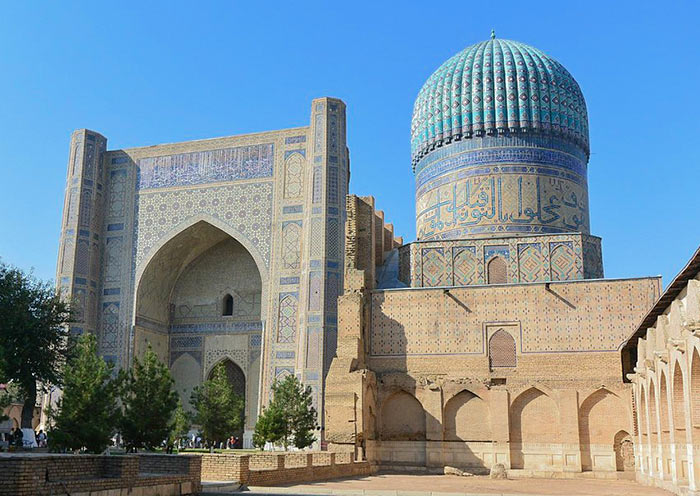
A short walk from the Registan brings you to Bibi-Khanym Mosque, once among the largest mosques in the Islamic world. It was built by Timur in honor of his favorite wife.
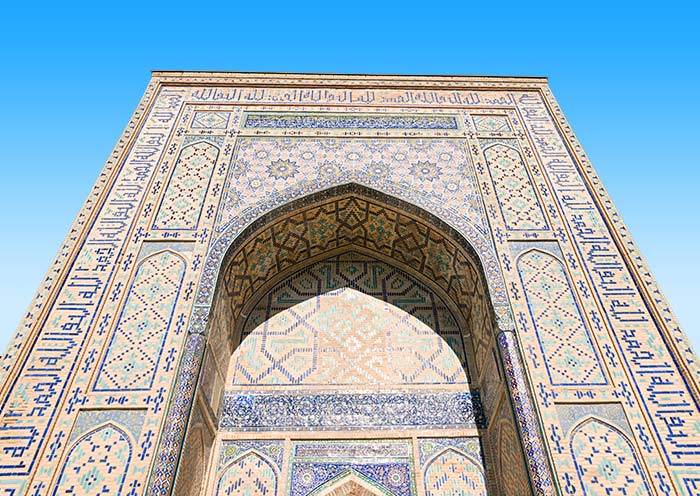
The scale is overwhelming. The main entrance arch rises about 35 meters high, and the ribbed blue dome is one of the largest in the city. Even in partial ruin, the mosque still feels powerful.
Walk through the wide courtyard and explore the corners slowly. The mosque was designed to impress travelers arriving on the Silk Road and to show the empire's strength.
#8. Shah-i-Zinda – Samarkand's Most Beautiful Walk
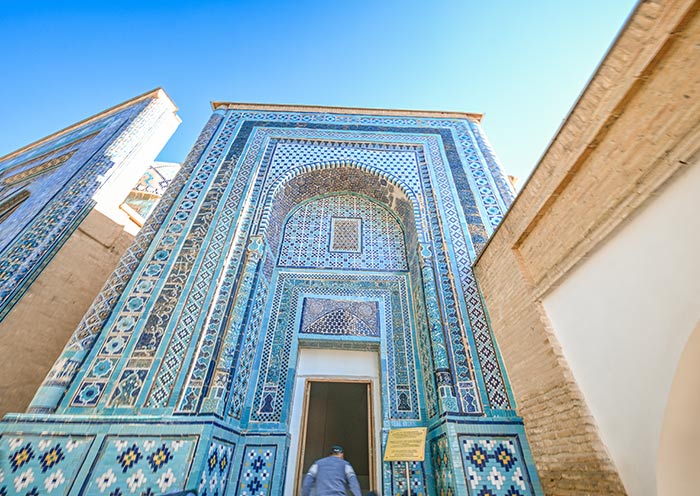
Shah-i-Zinda is not a single building, but a narrow street lined with mausoleums. It is one of the most memorable places in Samarkand.
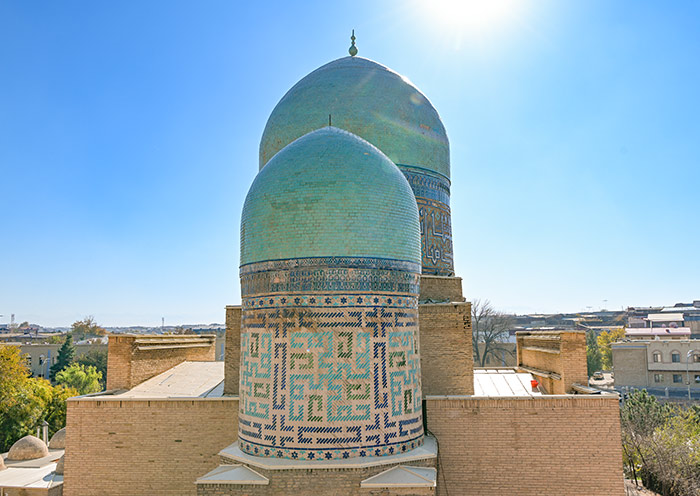
From the first steps, the blue color hits you. Deep blue. Bright turquoise. Glazed tiles cover every wall, dome, and doorway. The blue feels intense and almost unreal.
Walk slowly and look closely. Each mausoleum is different. Patterns change with every few steps, but the color never fades. The space feels tight and quiet, like walking inside a corridor made of blue light.
Most tombs here belong to women of the Timurid dynasty. It is a burial place, yet it feels alive. The colors soften the mood and give the site a calm, almost poetic beauty.
Come early in the morning. The light is better, and the walkway is still quiet. Later in the day, the path fills quickly with tour groups.
#9. Ulugh Beg Observatory – Science on the Silk Road
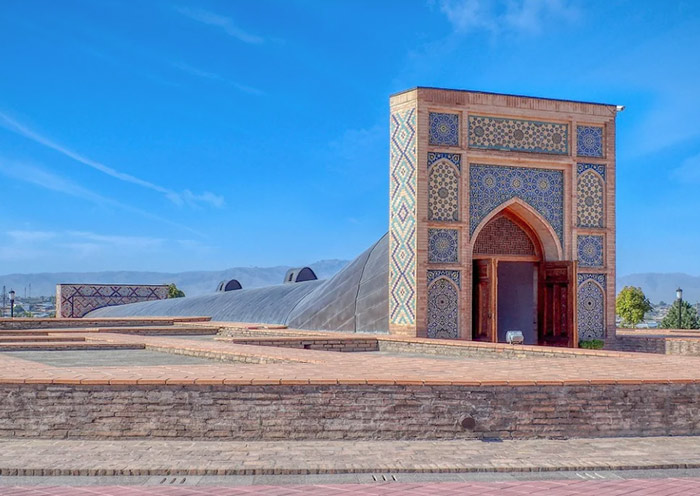
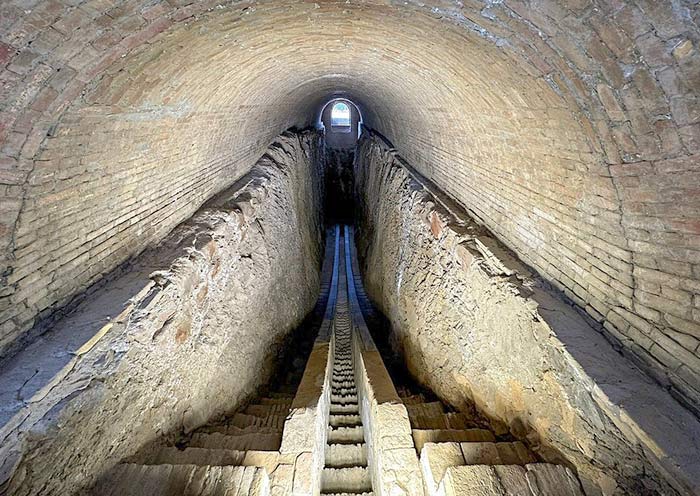
To see another side of Samarkand, head to the Ulugh Beg Observatory in the northern part of the city.
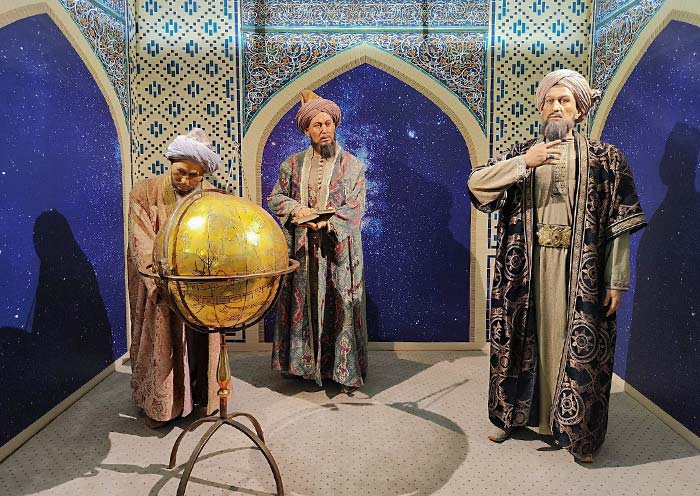
Ulugh Beg, Timur's grandson, was a serious astronomer. The site itself is simple, but the story is impressive. You can see the remains of the massive stone sextant used to measure the movement of stars with great accuracy.
This visit shows that Samarkand was not only a center of power and religion, but also a place of science and knowledge.
#10. Afrosiyob Museum & Archaeological Site – Before the Blue Domes
Not far from Shah-i-Zinda lies Afrosiyob, the birthplace of Samarkand.
Walk through the open ruins of the ancient city, once known as Marakanda. There are no grand buildings here, but the wide landscape helps you understand how large and important the city once was.
Inside the nearby museum, don't miss the 7th-century wall frescoes. They show kings, ambassadors, and scenes of daily life. One famous painting shows Chinese women boating on a lake. According to some scholars, one figure may represent Wu Zetian, China's only female emperor. This detail highlights China's strong influence along the Silk Road.
#11. Meros Silk Paper Workshop & Siab Bazaar – Living Samarkand
Before leaving Samarkand, connect with daily life. Visit the Meros Silk Paper Workshop to see how traditional paper is still made by hand using mulberry bark.
Then head to Siab Bazaar, near Bibi-Khanym Mosque. This is the city's main market. Walk through the stalls, buy fruit or bread, and watch locals shop. It's lively, practical, and very real.
Samarkand Map: Explore Samarkand City with Map

Stop 3 - Shahrisabz: The Emperor's Hometown
Just 2-hour drive from Samarkand is Shahrisabz, meaning "The Green City."
As a UNESCO site, Shahrisabz is a crucial part of the Timurid story. We integrate it seamlessly as a day trip from Samarkand, providing the historical context that makes these 'ruins' come alive.
#12. Ak-Saray Palace (White Palace)
Ak-Saray was Tamerlane's summer palace and the most ambitious of all his buildings.
Construction began in 1380 and continued for more than twenty years. In the 16th century, the palace was deliberately destroyed by the army of Abdullah Khan II of Bukhara.
Today, only the 40-meter-high entrance gate still stands.
Its immense scale gives a powerful sense of how vast and magnificent the full palace once was.
#13. Dorut Tilovat & Dorus Saodat Complexes
These two quiet complexes reveal a more personal side of Tamerlane.
Dorut Tilovat is centered around the Kok Gumbaz Mosque, built near the tomb of his spiritual teacher.
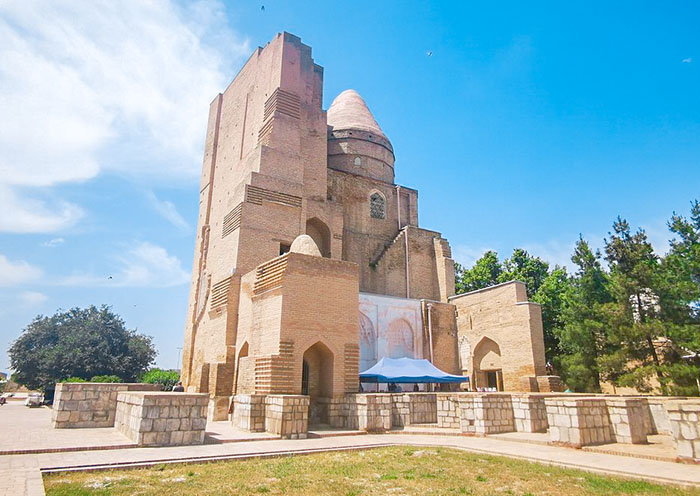
Just a short walk away, Dorus Saodat was planned as a royal burial site for his family.
Here you'll see an empty stone crypt, prepared for Tamerlane himself. He was never buried here, but the silence of the space makes it unforgettable.
Stop 4 - Bukhara: The Noble Soul of Central Asia
1.5-hour high speed train from Samarkand, Bukhara is Uzbekistan's spiritual heart. A UNESCO World Heritage city with over 140 protected buildings, its center is a living museum that has been a beacon of faith and learning for over a millennium.
#14. Chor Minor – Four Towers at the City's Edge
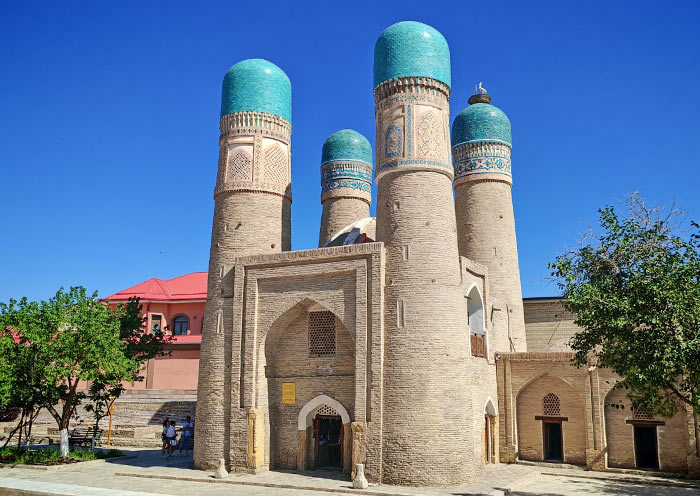
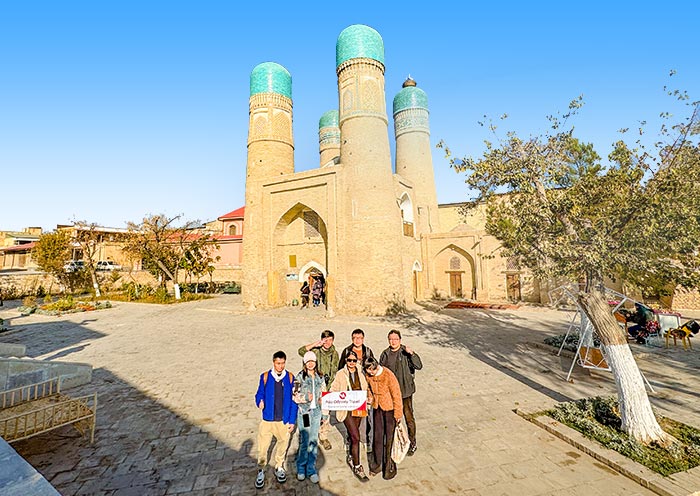
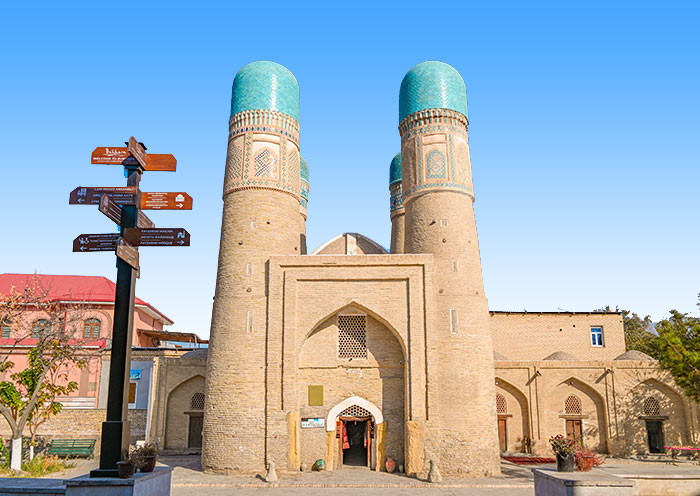
Your Bukhara walk begins in the east at Chor Minor, often called the Four Minarets.
Its four perfectly balanced blue-domed towers made it famous — even appearing on the cover of Lonely Planet's Silk Road.
Up close, the reality is surprising. Chor Minor is small and intimate, hidden inside a quiet residential neighborhood rather than standing on a grand square. Today, the interior functions as a tiny souvenir shop selling scarves and ceramics.
For a small fee, you can climb the narrow staircase to the rooftop platform, gaining a rare elevated view over old Bukhara's rooftops.
#15. Lyabi-Hauz Ensemble – Bukhara's Living Room
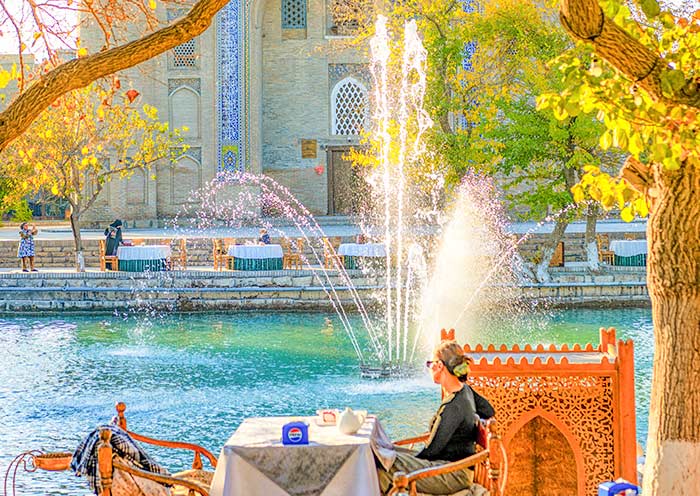
Walking west, you reach Lyabi-Hauz, the social heart of Bukhara and a must-visit area.
The ensemble is built around a large rectangular pond — roughly the size of two basketball courts — shaded by mulberry trees and surrounded by teahouses and restaurants. Locals and travelers gather here day and night, with lights and music animating the square after sunset.
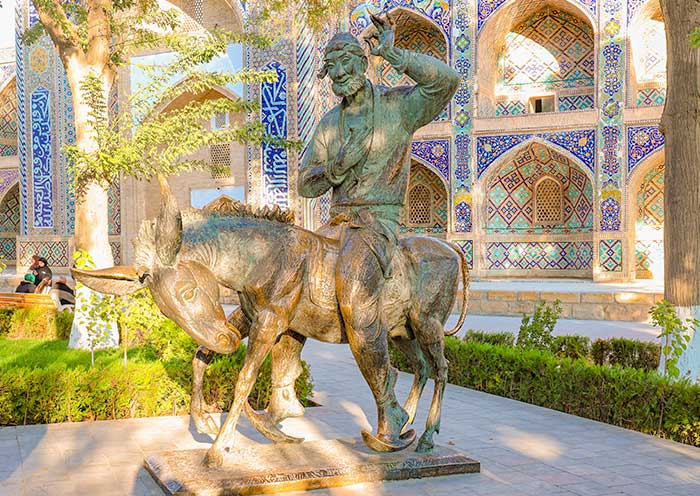
- East side: Nadir Divanbegi Madrasah, famous for its unusual portal depicting peacocks, deer, and a sun-faced figure — imagery that breaks Islamic tradition. Today, it houses cafés and tea rooms. At the entrance stands the statue of Khodja Nasreddin (Afanti), making Bukhara especially popular with Chinese travelers.
- North side: Kukaldosh Madrasah (1568–1569), once the largest madrasah in Bukhara. It has served as a prison and warehouse, and now functions as a ceramics and folk museum.
- West side: Nadir Divan Begi Khanaka, a former Sufi lodge, now used as an exhibition space.
Most first-time visitors choose accommodation near Lyabi-Hauz — and it's easy to see why.
#16. Poi Kalyan Complex – The Symbol of Bukhara
Continue northwest to the iconic Poi Kalyan Complex, one of Central Asia's most harmonious architectural ensembles.
At its center rises the Kalyan Minaret (1127), standing 46.5 meters high. Once a guiding beacon for Silk Road caravans, it famously survived the Mongol invasion. The minaret is viewable from outside only, but its presence dominates the skyline.
Beside it, the vast Kalyan Mosque opens into an immense courtyard. Step inside to admire the beautifully decorated mihrab and the 288 pillars supporting the roof — a space designed for thousands of worshippers.
Facing the mosque is Mir-i-Arab Madrasah, still an active religious school training future imams. Its grand portal and twin blue domes are striking, though the inner courtyard remains closed to visitors.
Together, these three structures form the spiritual and visual core of Bukhara.
#17. The Ark of Bukhara – Power Behind the Walls
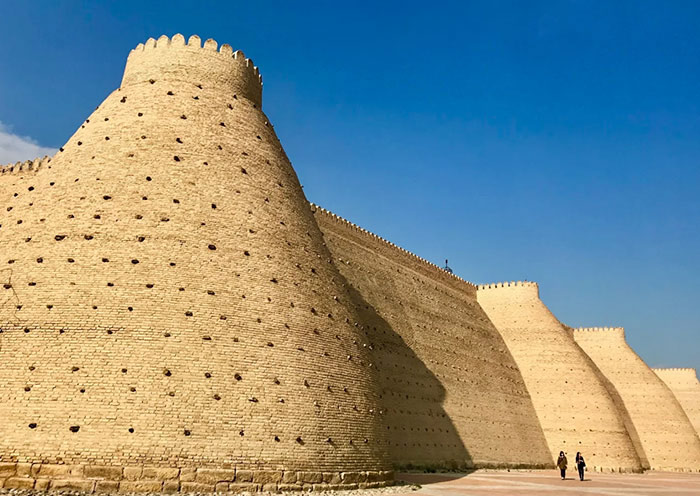
From Poi Kalyan, walk about 700 meters west to reach the Ark Fortress, once the seat of Bukhara's rulers.
Only the massive outer walls hint at its former power.
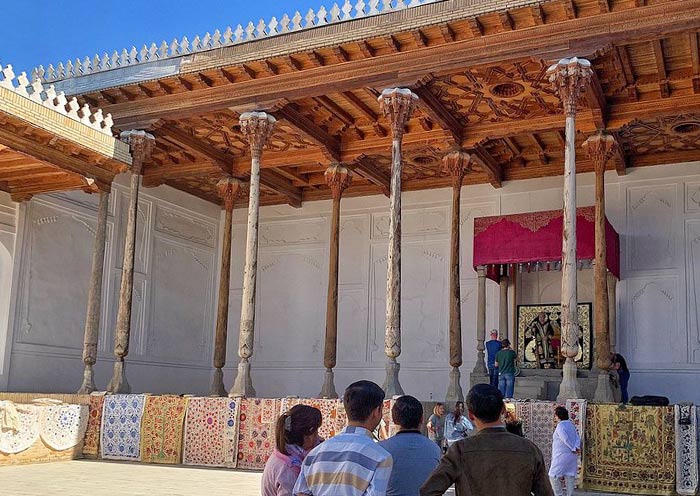
Enter through the sloping ramp — once flanked by livestock trading stalls — and step into a complex of small museums, including a former reception hall now used as a coin museum. A remaining throne platform in the courtyard has become a popular photo spot.
Behind the main area lies a ruined zone. If you enjoy wandering, explore carefully — fragments of old ceramics still surface here.
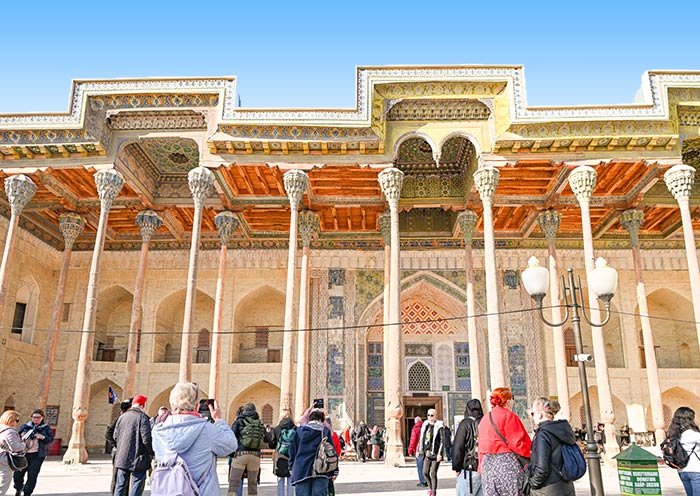
If time allows, cross the road to Bolo Hauz Mosque. Its 20 carved wooden columns are among the finest examples of traditional Uzbek woodwork.
#18. Samanid Mausoleum – Where Time Slows Down
Continue west to the Samanid Mausoleum, one of the oldest Islamic mausoleums in the world.
Despite centuries of earthquakes, it remains perfectly intact.
Built entirely of baked brick with no tile decoration, its cube-and-dome form symbolizes the ancient idea of earth below, heaven above. Each wall features a different brick pattern — 18 variations in total.
Visit near sunset. As the light shifts, shadows dance across the brickwork, turning the structure into a quiet masterpiece of geometry and time.
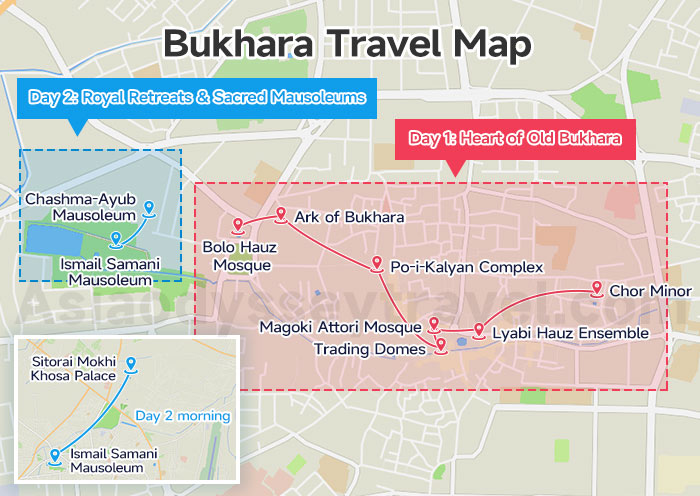
Bukhara Map: 2026 Tourist Map of Bukhara City in Uzbekistan
Stop 5 - Khiva: The Living Desert Fortress
Khiva lies far to the west, deeper into the desert. There is no high-speed train here.
From Bukhara, the journey takes about 6 hours by train or car. Another easy option is to fly 2 hours from Tashkent to Urgench, then drive a short distance to Khiva.
The effort is worth it. Khiva feels unlike anywhere else in Uzbekistan.
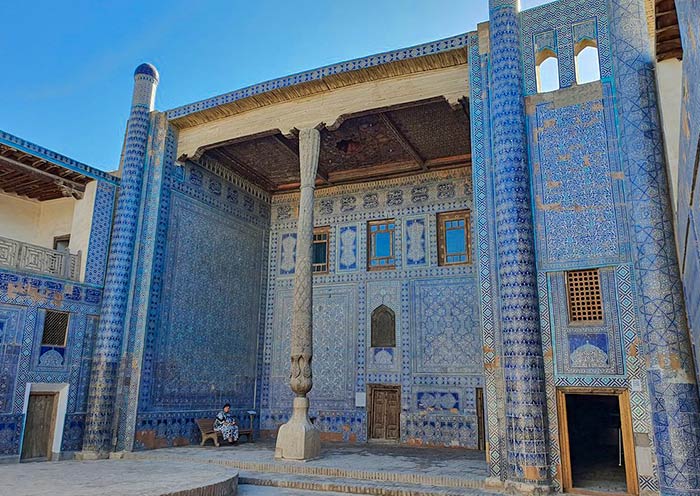
#19. Explore Itchan Kala – A City Frozen in Time (UNESCO)
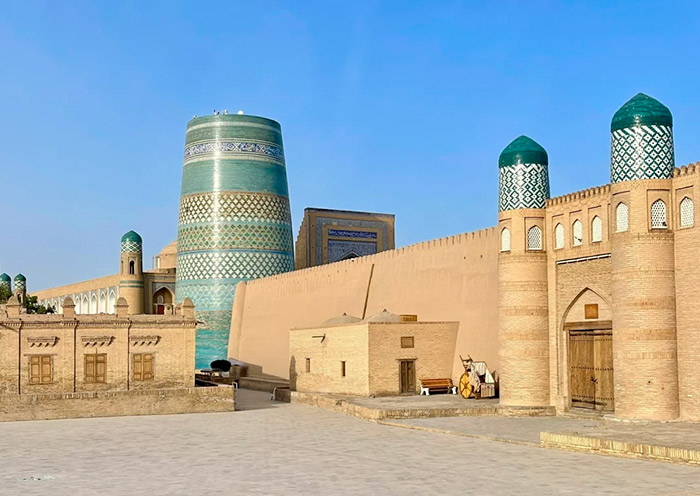
Khiva's historic core, Itchan Kala, is a complete city within walls. Surrounded by 2.2 kilometers of mud-brick fortifications, it is the only fully preserved medieval city in Central Asia.
Most major sights lie along the west–east main axis, making it easy to explore on foot.
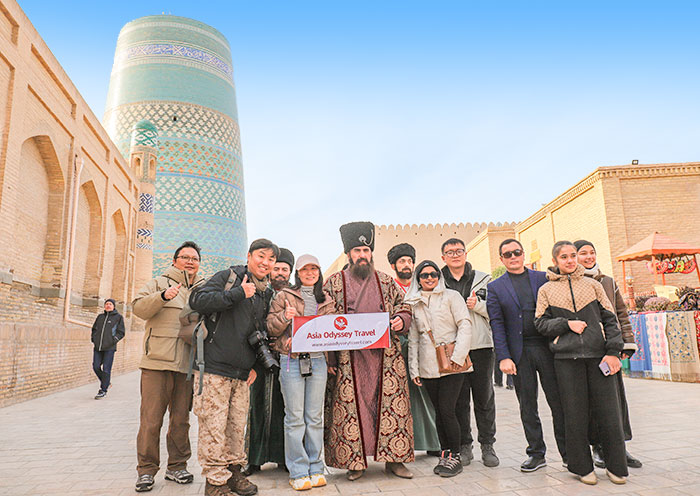
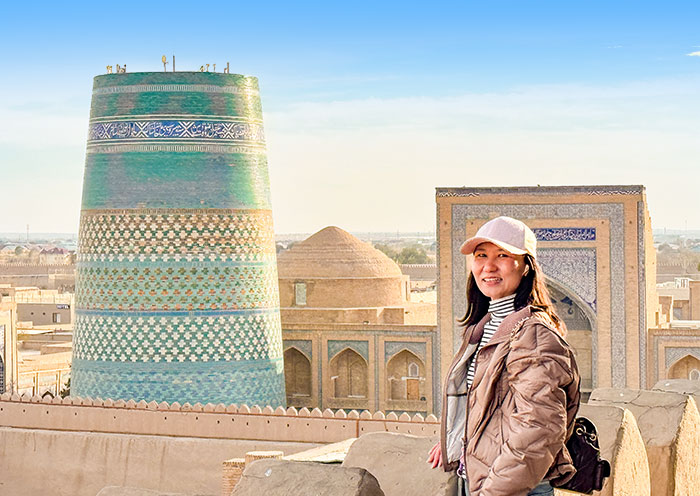
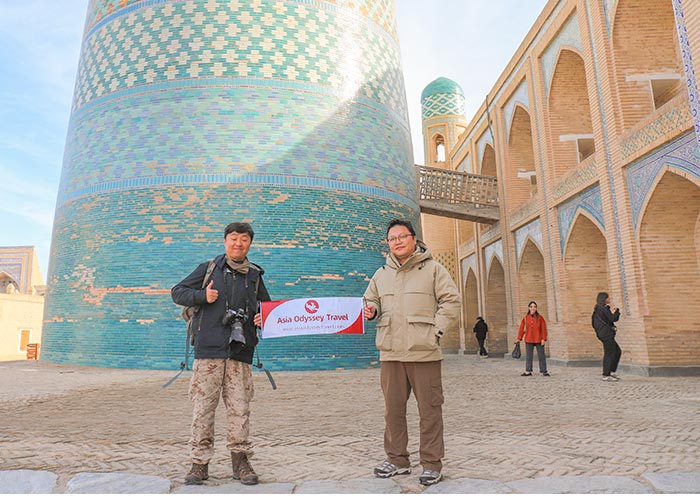
Kalta Minor Minaret:
Right by the West Gate, this short, wide turquoise tower is one of Khiva's icons. Planned to be the tallest minaret in Central Asia, it was never finished. The result is unusual, beautiful, and surrounded by local legends.
Juma Mosque:
At the heart of the old city stands this quiet mosque. Step inside and walk through a forest of 218 carved wooden columns, some dating back to the 10th century. No tiles, no domes — just rhythm, light, and craftsmanship.
Tash Hauli Palace & Kuhna Ark:
These complexes reveal the private and public lives of the Khivan khans. Tash Hauli, the "Stone Palace," once housed the khan's wives and concubines.
Its courtyards are richly decorated and filled with some of the most striking blue tiles in the city. Nearby, Kuhna Ark shows the older fortress-residence where power was displayed — and enforced.
Islam Khoja Complex:
Rising 56.6 meters, the Islam Khoja Minaret is the tallest structure in Khiva. You can climb to the top for a sweeping view over domes, minarets, and mud-brick walls — the best panorama in the city.
#20. Day trip to the Desert Castles of Khorezm
For those seeking something deeper, a day trip leads into the Kyzylkum Desert to explore ancient fortress ruins over 2,000 years old.
- Ayaz-Kala: The largest and most dramatic site, begun in the 2nd century during the Kushan Empire. It is not a single fortress, but a group of three hilltop castles, rising directly from the desert.
- Toprak-Kala: Dating to the 3rd–4th century, this was once a royal and religious center. Archaeologists uncovered a palace complex with at least 102 rooms, offering rare insight into daily life, rituals, and early urban planning in the region.
These sites show that Khorezm was a center of civilization long before the famous Silk Road cities.
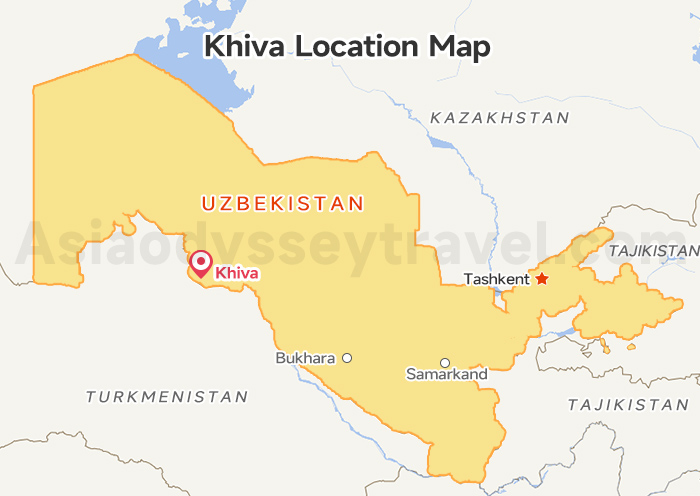
Khiva Map: How to Visit Khiva (Old Town) with Map (2026)
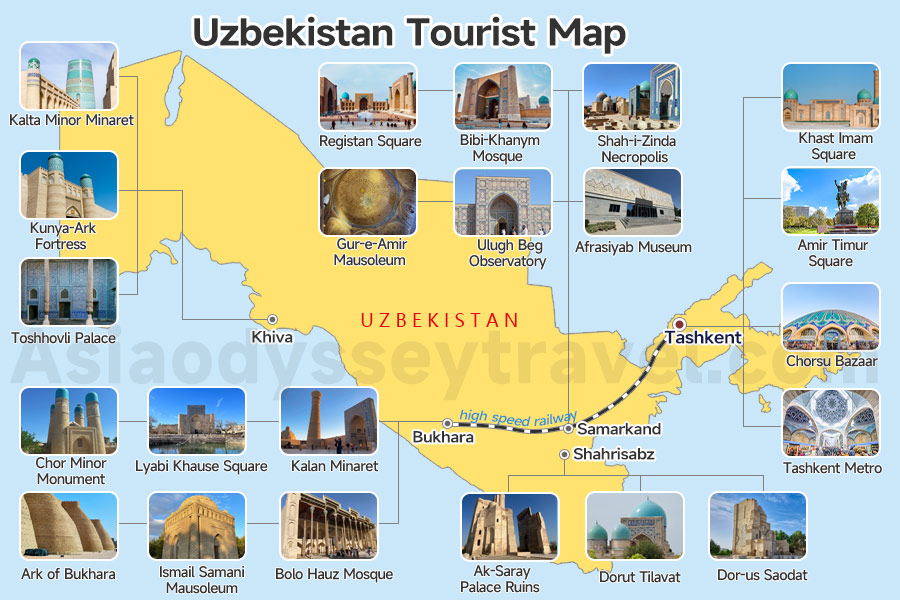
How to Plan an Uzbekistan Tour for First-timers?
Uzbekistan's iconic blue domes and Silk Road cities are truly worth the journey.
If time allows, we recommend visiting each major stop at a relaxed pace. An 8-day itinerary gives you enough time to see the highlights without rushing.
Recommended 8-Day Classic Route
Day 1: Arrive in Tashkent, half-day city tour
Day 2: Morning flight from Tashkent to Khiva, half-day tour
Day 3: Travel from Khiva to Bukhara by train or road (about 7 hours)
Day 4: Full day exploring Bukhara
Day 5: Morning in Bukhara, afternoon high-speed train to Samarkand
Day 6: Full day in Samarkand
Day 7: Morning in Samarkand, afternoon high-speed train back to Tashkent
Day 8: Departure from Tashkent
This route covers three UNESCO-listed ancient cities plus the capital, combining flights, road travel, and high-speed trains for maximum efficiency.
We place Samarkand in the second half of the journey, allowing the most spectacular architecture to serve as the emotional high point of the trip. The goal is not just to see Uzbekistan, but to remember it — and want to return with family and friends.
A Shorter Option: 6 Days Without Khiva
If you prefer to avoid long train or road journeys, Khiva can be skipped. It is remote and compact, and removing it allows you to focus on Uzbekistan's most accessible and contrasting cities: modern Tashkent, noble Bukhara, and majestic Samarkand.
Day 1: Arrive in Tashkent, half-day city tour
Day 2: Morning high-speed train to Bukhara, afternoon tour
Day 3: Morning in Bukhara, afternoon high-speed train to Samarkand
Day 4: Full day in Samarkand
Day 5: Morning in Samarkand, afternoon high-speed train back to Tashkent
Day 6: Departure from Tashkent
This itinerary is smooth, efficient, and ideal for first-time visitors who want rich history without long transfers.
FAQs You Want to Know about Things to Do in Uzbekistan
Is Uzbekistan good for first-time visitors to Central Asia?
Yes. Uzbekistan is the easiest country in Central Asia to explore. It's safe, clean and well connected by high-speed trains.
What is the best city for architecture and photos?
Samarkand offers the most dramatic architecture. Registan Square, Shah-i-Zinda, and Gur-e-Amir are especially stunning at sunrise and sunset.
What is the best place to experience local life?
Bukhara feels the most atmospheric and lived-in. Spending time around Lyabi-Hauz, visiting local workshops, and wandering old alleys gives a real sense of daily life.
Are bazaars worth visiting, or are they just for shopping?
Bazaars are a must-do experience. Even if you don't plan to buy anything, they are perfect for walking, tasting local snacks, and observing everyday life. Chorsu Bazaar in Tashkent and Siab Bazaar in Samarkand are the best.
Can I explore Uzbekistan without a guide?
You can, especially when you're travelling for photos, experiences and adventures. However, a guide is essential when you admire those old mosques, minarets and tombs, especially in Samarkand and Bukhara. Guide can explaine stories, manage transportation, and avoid crowds.
What kind of traveler enjoys Uzbekistan the most?
Uzbekistan is ideal for travelers who enjoy culture, architecture, history, and slow exploration. It's less about nightlife and more about atmosphere, beauty, and storytelling.
Explore Uzbekistan's Silk Road Heritage Sites with Asia Odyssey Travel
This closing section is here to help you take the next step from planning to traveling.
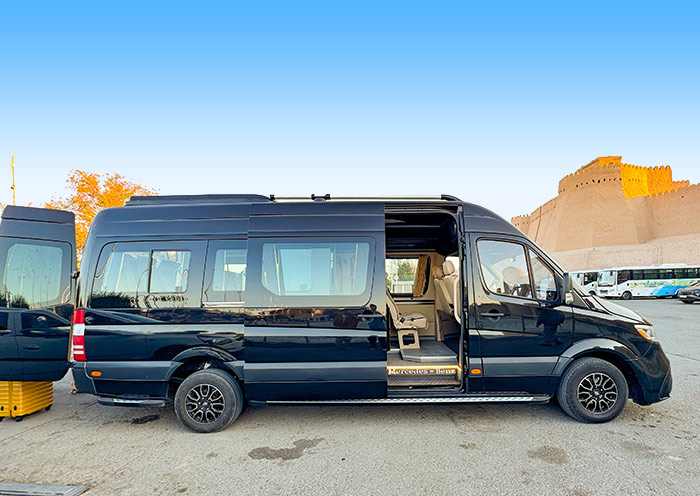
As a locally connected travel agency, Asia Odyssey Travel works directly with experienced Uzbek guides, professional drivers, and our own trusted vehicle teams, ensuring your journey across Uzbekistan is safe, smooth, and well-organized—from airport pickup to your final farewell.
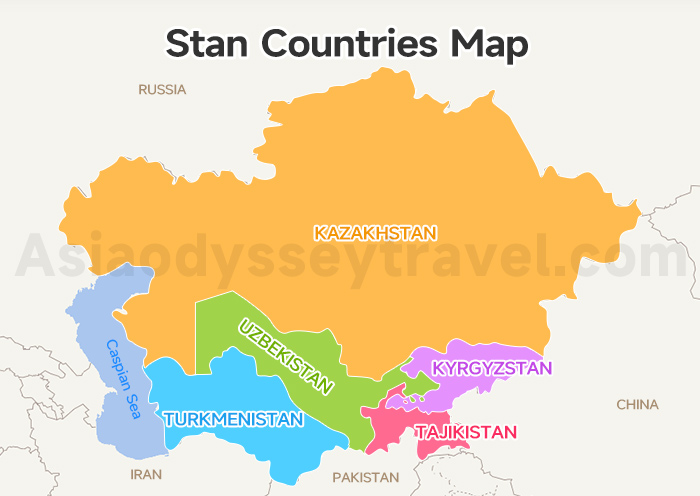
Beyond Uzbekistan, we also offer Central Asia multi-country tours, seamlessly combining Uzbekistan with Kazakhstan, Kyrgyzstan, Tajikistan, and Turkmenistan—ideal for travelers who want to experience the Silk Road in its full regional depth.
Our Uzbekistan Tour Collections
Classic Uzbekistan Tours: Uzbekistan Tours, Uzbekistan Small Group Tours
City-Focused Tour Packages: Samarkand Tour Packages, Bukhara Tour Packages, Tashkent Tour Packages
Uzbekistan Tours by Departure Market: Uzbekistan Tours from Australia, Uzbekistan Tours from Singapore, Uzbekistan Tours from USA, Uzbekistan Tours from South Africa, Uzbekistan Tours from Dubai
South Asia–Focused Uzbekistan Tours: Uzbekistan Tour Packages from India, Tashkent Tour Packages from India, Uzbekistan Tour Packages from Pakistan

Our Central Asia multi-country Tour Collections
Classic Central Asia Tours: Central Asia Group Tours, Central Asia Tours, Five Stans Tours
Central Asia Tours by Departure Market: Central Asia Tour from Singapore, Central Asia Tour from Malaysia, Central Asia Tour from UK, Central Asia Tour from India, Central Asia Tour from USA, Central Asia Tour from Australia
Follow Asia Odyssey Travel, and explore Uzbekistan not just as a destination, but as a living Silk Road journey—comfortably, safely, and deeply.


 Data in submission...