+852 5394 6901
 Take China Group Tours in 2026/2027 to enjoy 30% discount compared to private tour. Same Experience & Lowest Price!
Bukhara Location Map: Pinpointing the Pearl of the Desert
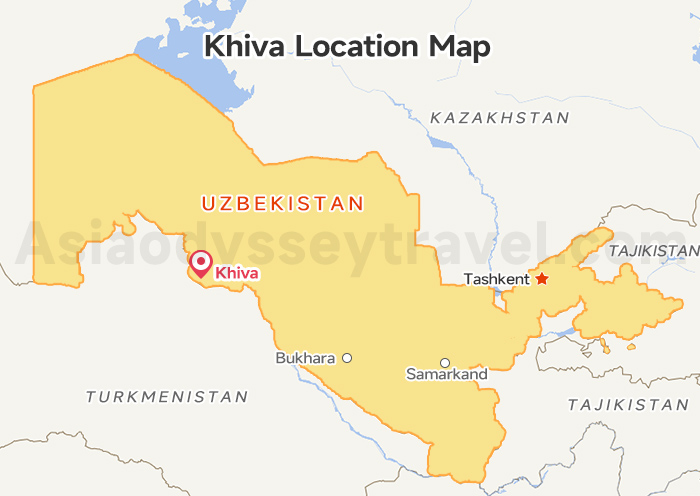
Bukhara is located in south-central Uzbekistan, on the edge of the vast Kyzylkum Desert. For over 2,000 years, this oasis city thrived as a major stop for traders, scholars, and pilgrims traveling between East and West.
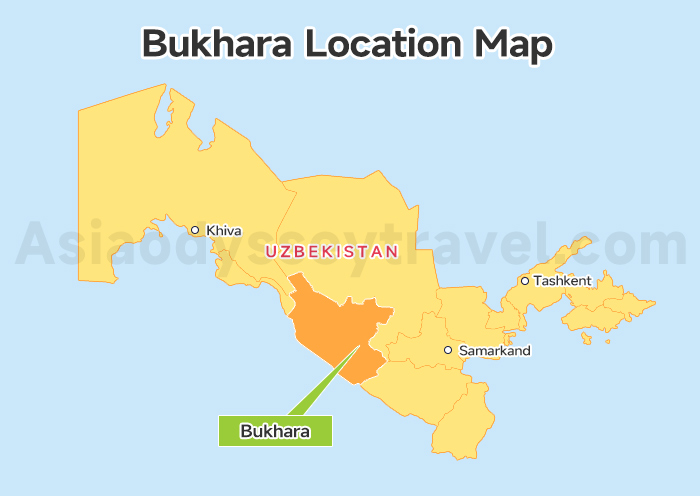
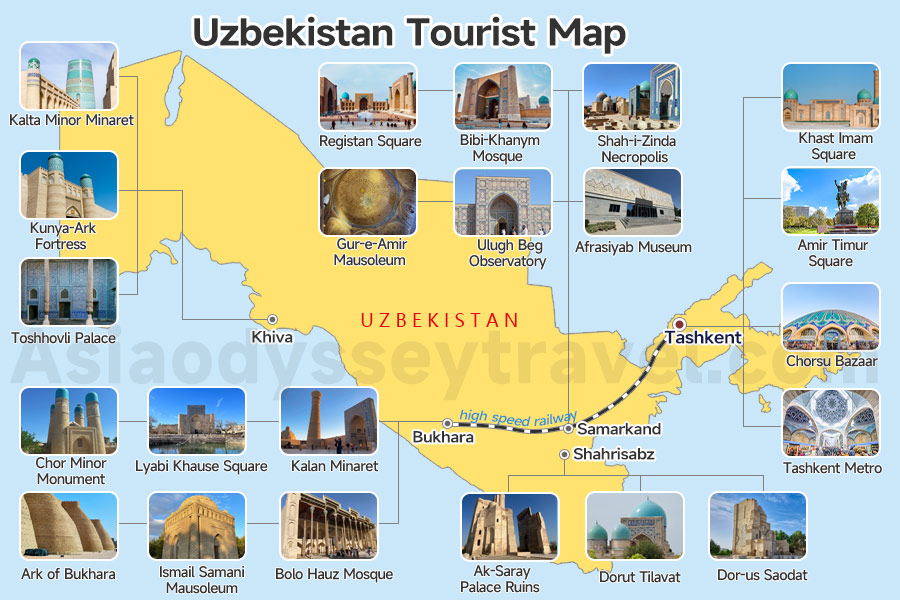
On a classic Uzbekistan itinerary, Bukhara forms a crucial link between the country's most famous destinations:
- Tashkent – the modern capital and main international gateway
- Samarkand – grand, majestic, and Timurid at heart
- Khiva – remote, atmospheric, and perfectly preserved
Bukhara sits comfortably between them, making it a natural and essential stop on any Silk Road journey.
Climate tip: Thanks to its desert location, Bukhara experiences hot summers and cool winters. Spring (April–May) and autumn (September–October) are widely considered the best times to visit, with pleasant temperatures for walking the Old City.
Bukhara City Map: Arrival, Layout, and Orientation
Once you've pinned Bukhara on the map, the next question is simple: how do you actually get into the city—and where should you go first?
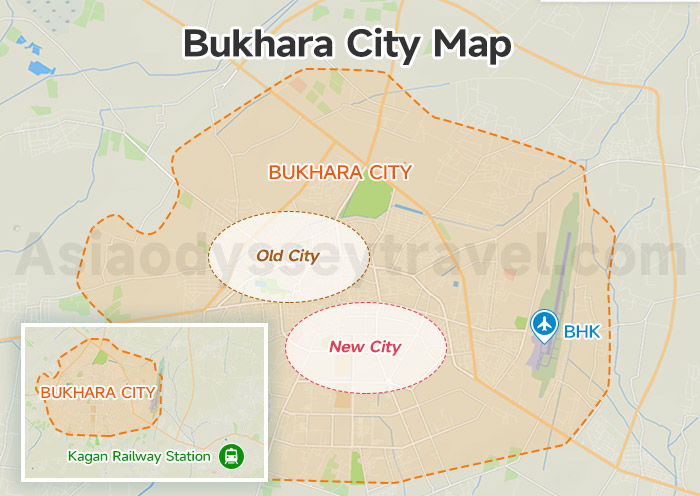
Bukhara International Airport (BHK)
Bukhara's airport is conveniently located just outside the city, around a 15–20 minute drive from the historic center. It's small, easy to navigate, and a surprisingly gentle arrival point compared to larger hubs.
Kagan Railway Station (Important!)
Here's a detail many first-time visitors miss: Bukhara's main train station is not in Bukhara itself.
The railway station is located in Kogon, a nearby town about 20–30 minutes from the Old City. This is completely normal—but knowing it in advance saves confusion and stress, especially after a long train ride.
Old City vs. New City
Your city map clearly shows two very different worlds:
The Old City – compact, historic, and where travelers spend 99% of their time
The New City – modern, residential, and administrative
If your hotel is in the Old City (which we highly recommend), almost everything you want to see will be within walking distance.
Asia Odyssey tip: Getting from the airport or Kogon station to your Old City hotel is your first step into Bukhara. Taxis are available, but an Asia Odyssey Travel private transfer ensures a seamless, stress-free arrival—no bargaining, no language worries, just a smooth welcome.

Bukhara Tourist Attractions Map: Your Definitive Walking Guide
One of Bukhara's greatest surprises? How easy it is to explore on foot.
The Old City is compact, flat, and full of atmosphere, with most major sights connected by quiet lanes and short, scenic walks. Instead of hopping between areas, you can simply follow a natural east-to-west walking route, letting the city unfold step by step.
On our map, this walking path begins at Chor Minor in the east and gradually leads you westward through Bukhara's most iconic landmarks.
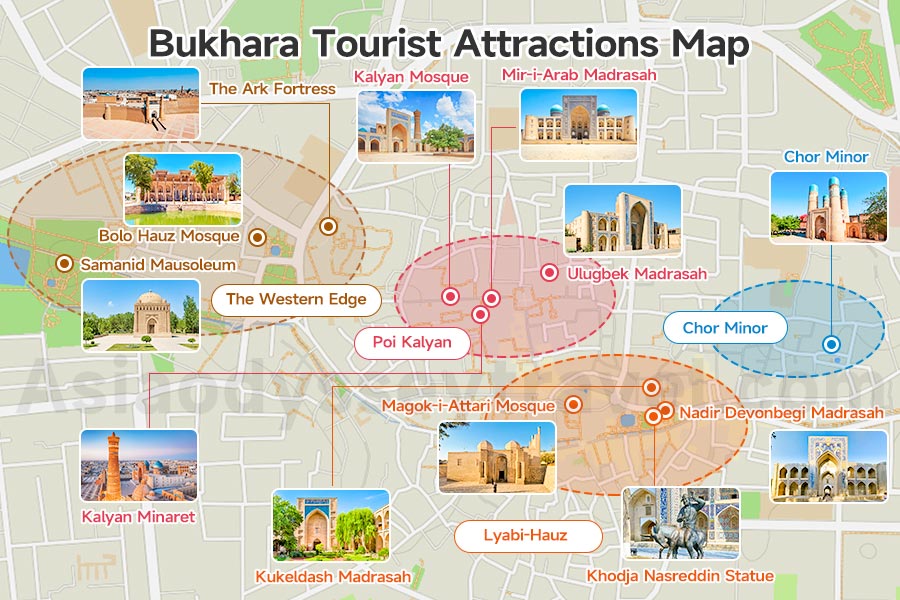
Stop 1: Chor Minor – The Eastern Gateway
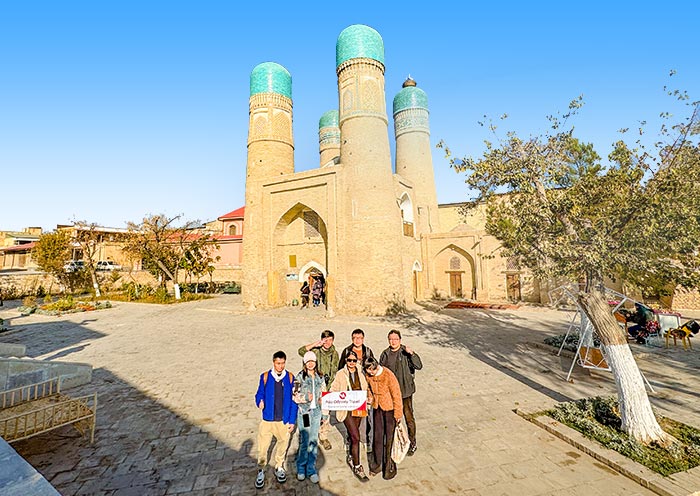
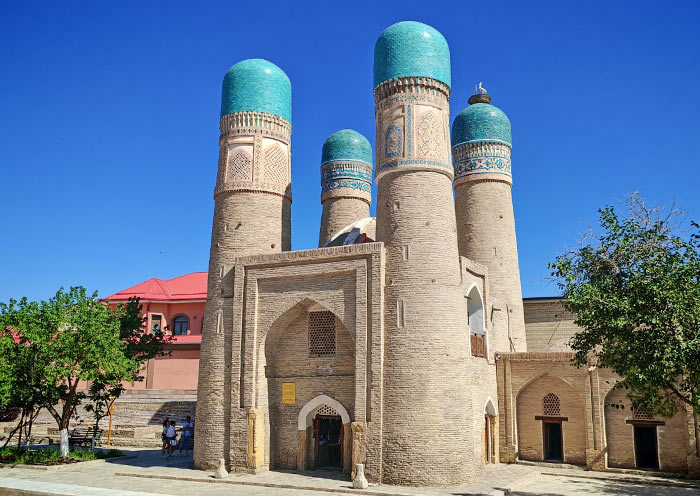
Tucked away in a residential neighborhood, Chor Minor ("Four Minarets") feels like a secret discovery—and the perfect place to begin your walk.
This quirky, storybook-like structure once marked the entrance to a madrasah and today offers a gentle introduction to Bukhara's charm, away from the crowds.
Key sight:
Chor Minor – One of Bukhara's most unusual and photogenic landmarks
Stop 2: Lyabi-Hauz – The Social Heart of Bukhara
From Chor Minor, walk west toward Lyabi-Hauz, where the city suddenly feels alive and communal.
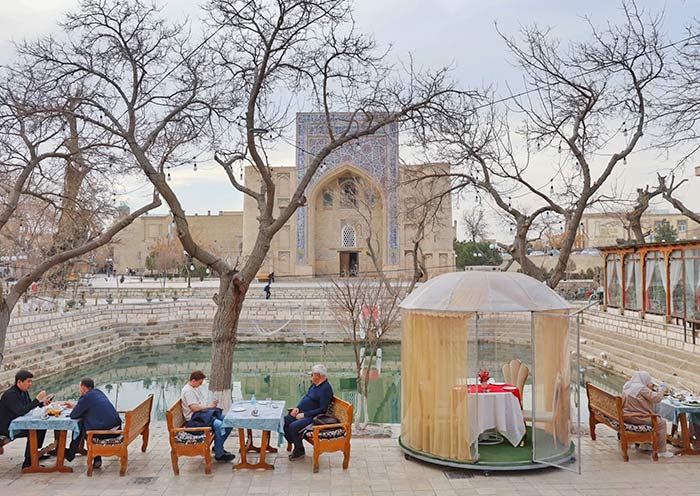
Built around a centuries-old pool (hauz), this area has always been Bukhara's gathering place. Locals relax on shaded benches, travelers linger over tea, and evenings glow softly beneath illuminated madrasahs. It's a place you'll naturally pass through more than once.
Key sights around Lyabi-Hauz:
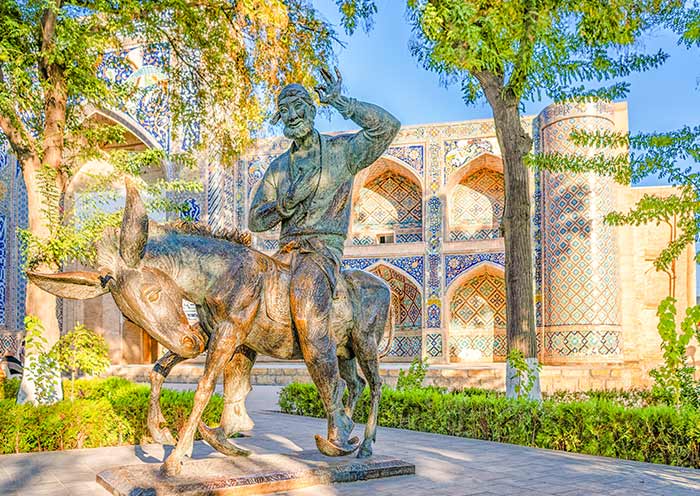
Khodja Nasreddin Statue – A playful tribute to Central Asia's legendary folk philosopher
Nadir Devonbegi Madrasah – Famous for its bold mosaics featuring animals and birds
Kukeldash Madrasah – One of the largest madrasahs in Central Asia
Magok-i-Attari Mosque – One of Bukhara's oldest mosques, partly below today's street level
Stop 3: Poi Kalyan – In the Shadow of the Great Minaret
A relaxed 10-minute walk west from Lyabi-Hauz brings you to the most powerful sight in the city.
The Poi Kalyan complex is where Bukhara's spiritual authority and architectural brilliance come together. Rising high above it all is the legendary Kalyan Minaret, once used as a guiding beacon for Silk Road caravans—and still visible from almost anywhere in the Old City.
This is the moment when Bukhara truly feels monumental.
Key sights in the Poi Kalyan area:
Kalyan Minaret – The unmistakable symbol of Bukhara
Kalyan Mosque – One of the largest historic mosques in Central Asia
Mir-i-Arab Madrasah – Still functioning as an Islamic school today
Ulugbek Madrasah – A refined example of Timurid-era scholarship and design
Stop 4: The Western Edge – Ark Fortress & Sacred Monuments
Continue west toward the edge of the Old City, where Bukhara's political and spiritual history comes into focus.
This area feels more open and ceremonial, with wide squares, leafy spaces, and some of the city's most meaningful monuments—perfect for slowing your pace and reflecting on what you've seen.
Key sights on the western edge:
Bolo Hauz Mosque – Known for its elegant wooden columns and beautiful reflections
The Ark Fortress – Bukhara's ancient citadel and the best place for sunset views
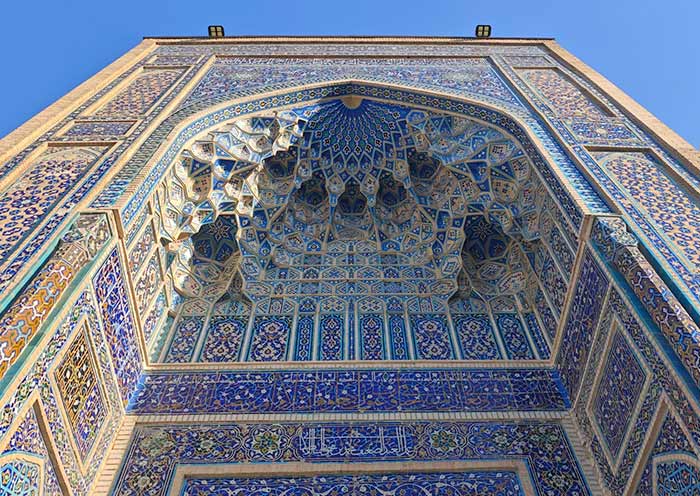
Samanid Mausoleum – Often called the "Pearl of the East", especially stunning in soft morning or late-afternoon light
How to Use This Walking Map
This east-to-west route can be comfortably completed in half a day, or stretched into a full day with café stops, museum visits, and photo breaks. Most travelers naturally end near the Ark Fortress around sunset—one of the most rewarding moments in Bukhara.
Follow the map, walk at your own pace, and let Bukhara guide you.
Bukhara Transportation Map: Connecting to Samarkand, Khiva & Beyond
Bukhara fits beautifully into a wider Uzbekistan journey, and your transportation map helps visualize how everything connects.
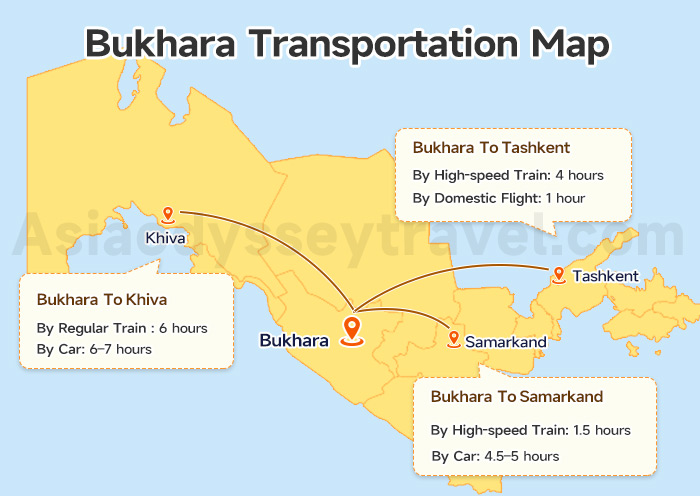
Bukhara To / From Samarkand
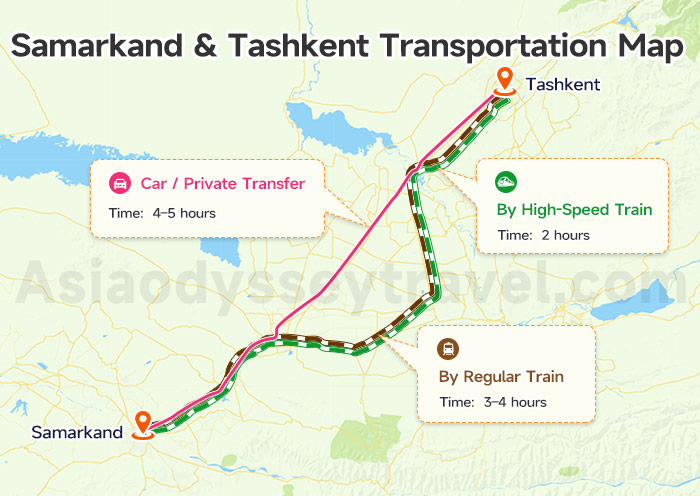
The Afrosiyob high-speed train is the top choice, taking about 1.5 hours. It's fast, modern, and comfortable—but very popular, so booking early is essential.
Traveling by private car takes around 4.5–5 hours and offers more flexibility. With a road journey, you can optionally detour to Shahrisabz, the birthplace of Amir Timur (Tamerlane), famous for its grand ruins and UNESCO-listed monuments. This detour adds time but enriches the experience.
Bukhara To / From Tashkent
From Uzbekistan's capital, you have two convenient options:
- High-speed train: roughly 4 hours, reliable and comfortable
- Domestic flight: faster in the air, but total time depends on schedules and transfers
The train is usually preferred for its ease and city-center connections.
Bukhara To / From Khiva (Key Planning Point)
There is no high-speed train between Bukhara and Khiva, so planning ahead matters.
Your options include:
- Regular train (daytime or overnight): about 6 hours
- Private car across the Kyzylkum Desert: 6–7 hours, the most flexible and scenic option
Many travelers choose a car for desert views, photo stops, and a smoother connection to Khiva's old town.
Asia Odyssey advantage: Booking train tickets—especially Afrosiyob seats—and arranging reliable transport to Khiva can be tricky. Asia Odyssey Travel handles all logistics, securing the best train options and comfortable private vehicles so you can simply enjoy the journey.
Bukhara Travel Map: A Perfect 2-Day Itinerary
Short on time? Follow the paths on our map for a perfectly paced 2-day Bukhara experience.
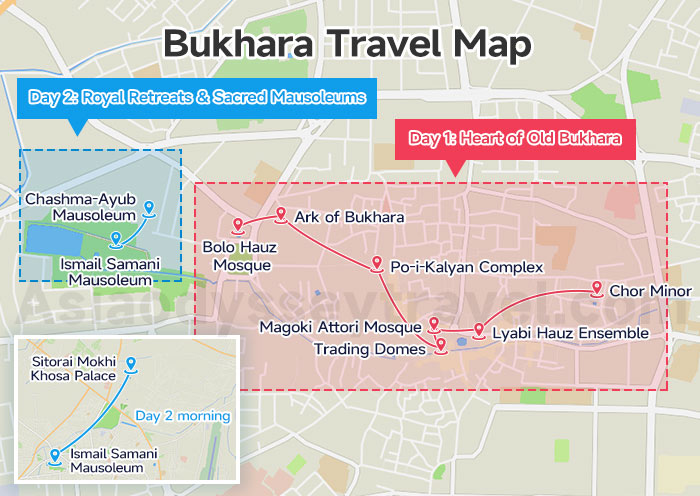
Day 1: Heart of Old Bukhara
Start your day at Chor Minor Madrasah, famous for its quirky four minarets, then stroll to the lively Lyabi Hauz Ensemble, home to the playful Afandi statue and shaded tea spots.
Continue to the atmospheric Magoki Attori Mosque before wandering through the historic Trading Domes, once the center of Silk Road commerce.
In the afternoon, explore the iconic Po-i-Kalyan Complex, dominated by the towering Kalyan Minaret, then step into royal history at the Ark of Bukhara.
End the day at Bolo Hauz Mosque, especially beautiful in the soft evening light.
Day 2: Royal Retreats & Sacred Mausoleums
Begin with a visit to Sitorai Mokhi Khosa Palace, the former summer residence of Bukhara's emirs, blending European and Central Asian styles.
Back in town, explore the serene Ismail Samani Mausoleum, one of Central Asia's finest architectural masterpieces, and finish at the nearby Chashma-Ayub Mausoleum, linked to ancient legends and sacred water.
(Optional/Guided Extra): Take a short drive to the Sitorai Mokhi-Khosa (Summer Palace of the Emirs).
Classic 8-Day Uzbekistan Tour includes Bukhara
This classic 8-day route covers Uzbekistan's most iconic Silk Road cities, with Bukhara as the cultural and spiritual heart of the journey. It's fast-paced but well-balanced—perfect for first-time visitors who want the highlights without feeling rushed.
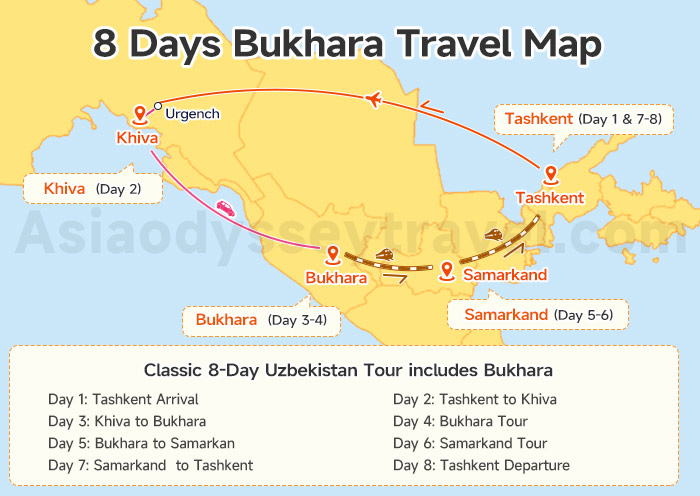
Day 1: Tashkent Arrival
Arrive in Tashkent and explore Khast Imam Square, ride the beautiful Tashkent Metro, browse Chorsu Bazaar, sample local street food, and see a mix of modern and Soviet-era architecture.
Day 2: Tashkent → Khiva
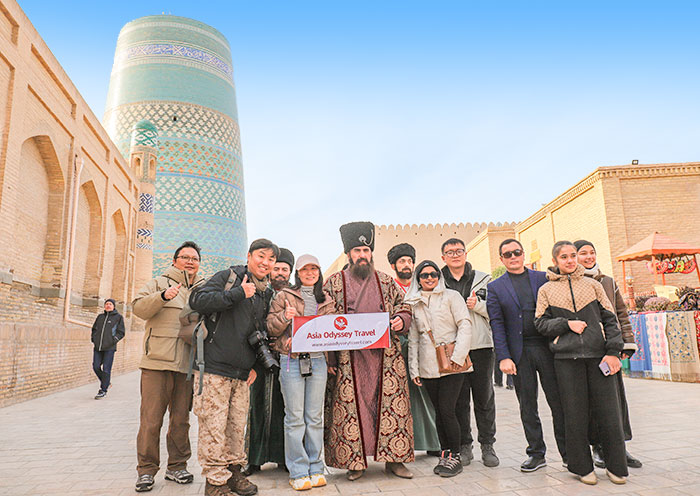
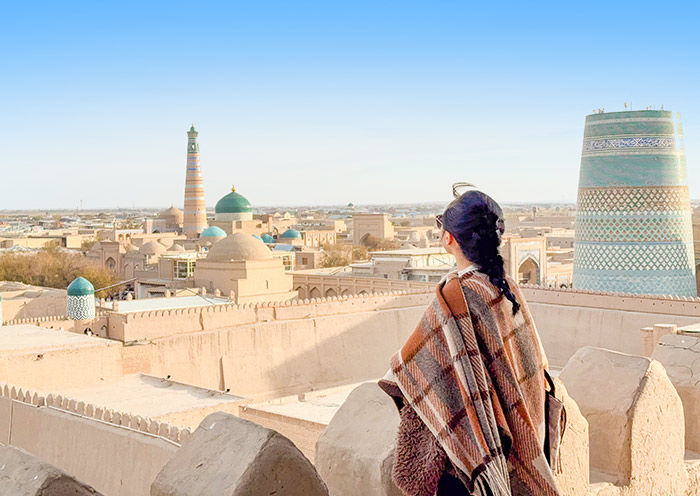
Take a morning flight to Khiva and explore the Old City, including the West Gate, Kalta Minor Minaret, Kuhna Ark, and Tash Hauli Palace, then walk along the city walls, visit small workshops, and enjoy sunset and blue-hour photography.
Day 3: Khiva → Bukhara
Travel from Khiva to Bukhara by train or private transfer across the desert landscape.
Day 4: Bukhara
Spend the day discovering Bukhara's highlights, including Chor Minor, Lyabi-Hauz Ensemble, Magoki Attori Mosque, the historic Trading Domes, the Po-i-Kalyan Complex, the Ark of Bukhara, and Bolo Hauz Mosque.
Day 5: Bukhara → Samarkand
Visit Sitorai Mokhi Khosa Palace, the Ismail Samani Mausoleum, and Chashma-Ayub Mausoleum, then take an afternoon train to Samarkand.
Day 6: Samarkand
Explore Samarkand's masterpieces such as Gur-e-Amir Mausoleum, Bibi-Khanym Mosque, and Shah-i-Zinda, then stroll through Siyab Bazaar, visit artisan workshops, and enjoy a relaxed lunch in a local teahouse.
Day 7: Samarkand → Tashkent
Visit Ulugh Beg Observatory, Khodja Doniyor Mausoleum, and the Afrosiab Museum, then return to Tashkent by afternoon train.
Day 8: Tashkent Departure
Depart from Tashkent, with time for last-minute souvenir shopping if your flight schedule allows.
Explore Uzbekistan's Silk Road Heritage Sites with Asia Odyssey Travel
This closing section is here to help you take the next step from planning to traveling.
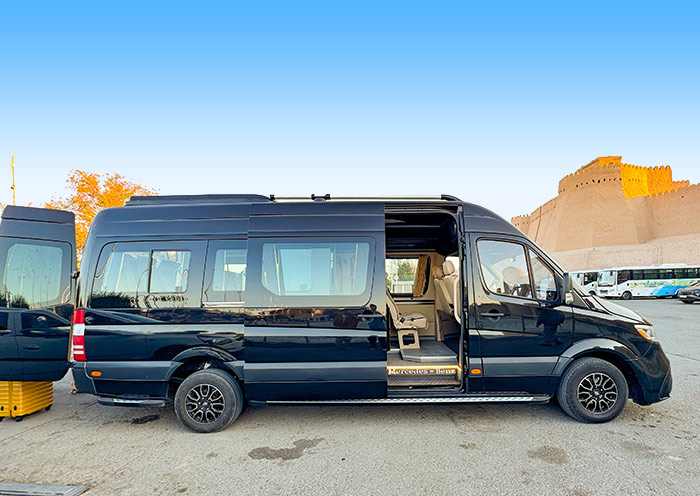
As a locally connected travel agency, Asia Odyssey Travel works directly with experienced Uzbek guides, professional drivers, and our own trusted vehicle teams, ensuring your journey across Uzbekistan is safe, smooth, and well-organized—from airport pickup to your final farewell.
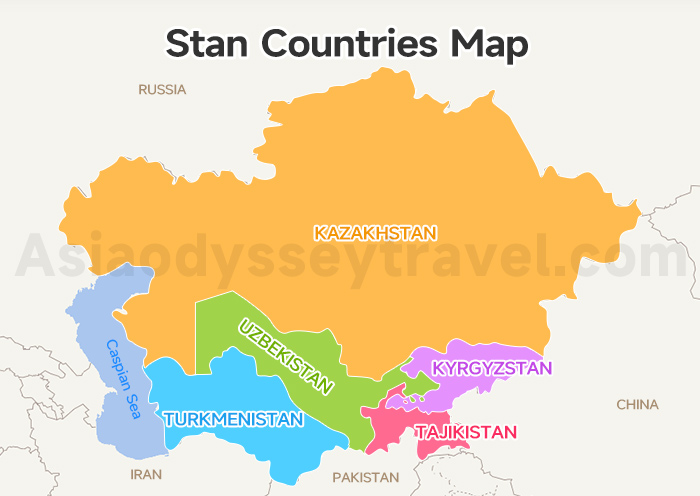
Beyond Uzbekistan, we also offer Central Asia multi-country tours, seamlessly combining Uzbekistan with Kazakhstan, Kyrgyzstan, Tajikistan, and Turkmenistan—ideal for travelers who want to experience the Silk Road in its full regional depth.
Our Uzbekistan Tour Collections
Classic Uzbekistan Tours: Uzbekistan Tours, Uzbekistan Small Group Tours
City-Focused Tour Packages: Samarkand Tour Packages, Bukhara Tour Packages, Tashkent Tour Packages
Uzbekistan Tours by Departure Market: Uzbekistan Tours from Australia, Uzbekistan Tours from Singapore, Uzbekistan Tours from USA, Uzbekistan Tours from South Africa, Uzbekistan Tours from Dubai
South Asia–Focused Uzbekistan Tours: Uzbekistan Tour Packages from India, Tashkent Tour Packages from India, Uzbekistan Tour Packages from Pakistan

Our Central Asia multi-country Tour Collections
Classic Central Asia Tours: Central Asia Group Tours, Central Asia Tours, Five Stans Tours
Central Asia Tours by Departure Market: Central Asia Tour from Singapore, Central Asia Tour from Malaysia, Central Asia Tour from UK, Central Asia Tour from India, Central Asia Tour from USA, Central Asia Tour from Australia
Follow Asia Odyssey Travel, and explore Uzbekistan not just as a destination, but as a living Silk Road journey—comfortably, safely, and deeply.


 Data in submission...