+852 5394 6901
 Take China Group Tours in 2026/2027 to enjoy 30% discount compared to private tour. Same Experience & Lowest Price!
Khiva Map of Location: Where Khiva Sits on the Map of Uzbekistan
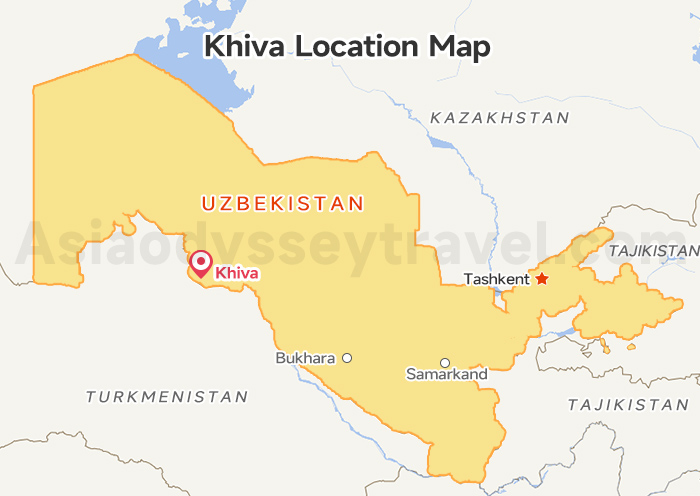
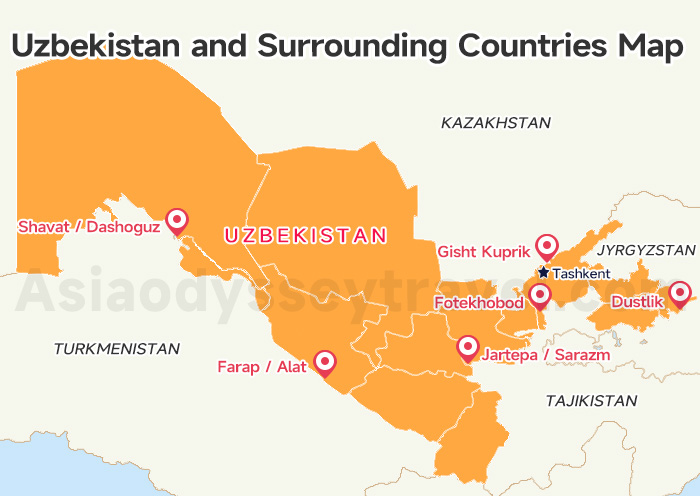
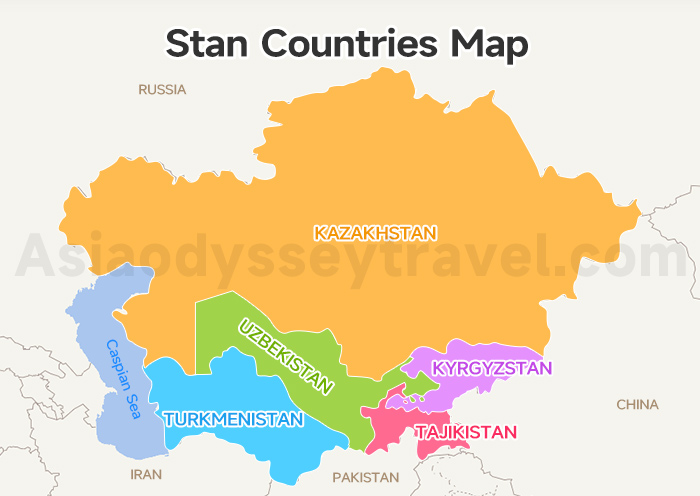
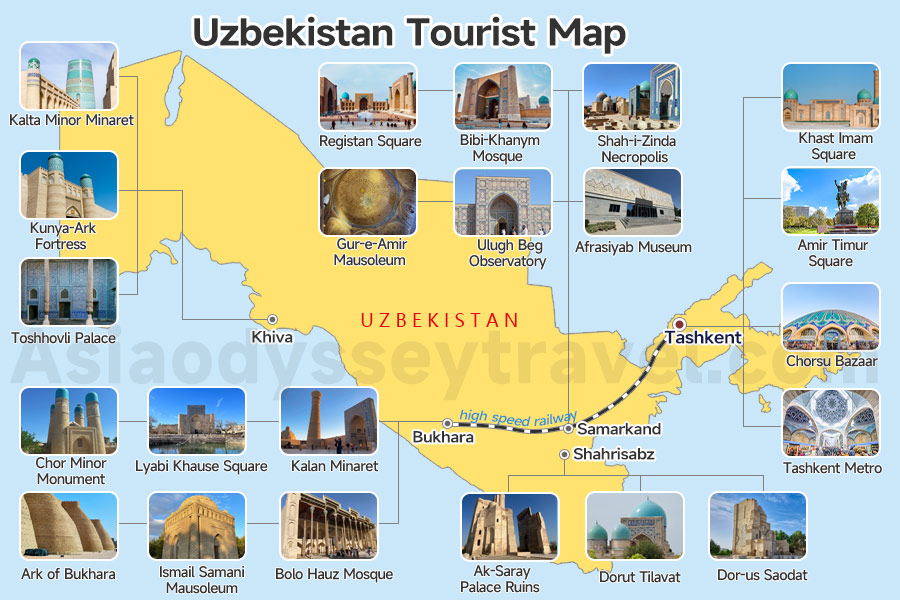
Khiva is located in western Uzbekistan, close to the border with Turkmenistan, just 30 km away. On a Uzbekistan map, it is farther from the capital and the country's other famous Silk Road cities. This is one reason it feels quieter and less crowded.
Most travelers visit Khiva after seeing Tashkent, Samarkand, and Bukhara. These cities sit closer to the center of the country, while Khiva stands alone in the west.
Here are the rough distances:
From Tashkent: about 1,000 km
From Samarkand: about 700 km
From Bukhara: about 450 km
Khiva is small, well-organized, and easy to explore — especially when you catch these useful Khiva maps. Almost all major sights are inside the walls of Itchan Kala, and everything is within walking distance.
Khiva Map of Layout - Itchan Kala vs. Dishan Kala
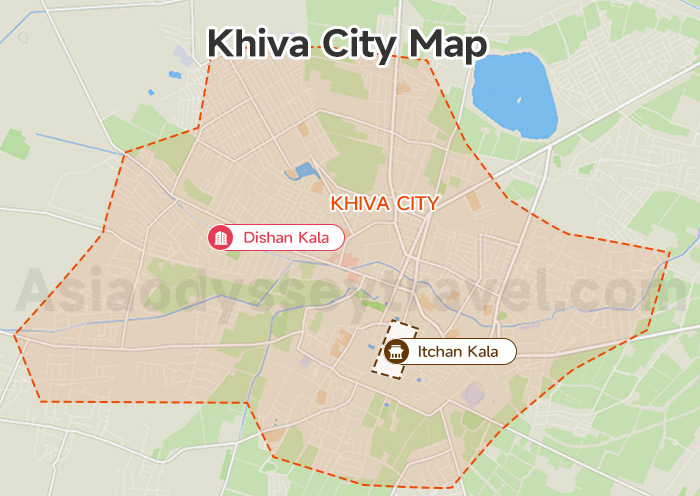
When you look at a Khiva city map, you will notice one thing right away. The city is divided into two clear parts: Itchan Kala and Dishan Kala. Knowing the difference makes your visit much easier.
Itchan Kala – The Walled Old City
Itchan Kala is the historic heart of Khiva. This is the UNESCO-listed old city surrounded by thick mud-brick walls. Almost all famous sights are located here, including minarets, madrassahs, palaces, museums, and traditional hotels.
On the map, Itchan Kala looks small, and that's true in real life. You can walk from one side to the other in about 15 minutes. Most visitors spend nearly all their time here, especially if they only stay one or two days.
When people talk about "visiting Khiva," this is usually what they mean.
Dishan Kala – The Outer Town
Dishan Kala is the modern part of Khiva that surrounds the old city. This is where most local residents live and where you'll find local markets, cafés, and everyday life.
On the map, Dishan Kala looks much larger than Itchan Kala, but it has fewer tourist sights. You may pass through it when arriving at Khiva or going to restaurants outside the walls. It is useful to know, but not essential for a short visit.

Khiva Map of Attractions in Itchan Kala (Khiva Old City)
Itchan Kala is the walled old city of Khiva. Think of it as a compact open-air museum. The entire area is surrounded by thick mud-brick walls, about 2.2 km in total length and 8–10 meters high. Most of what you see today dates from the 17th–18th centuries, built on much older foundations.
On the map, you'll notice four main gates, placed roughly in each direction:
- West Gate (Ata Darvoza) – the main tourist entrance and the busiest gate
- East Gate (Palvan Darvoza) – the most decorative gate, leading to the local bazaar
- North Gate (Baghcha Darvoza) – connects to the modern city and railway area
- South Gate (Tash Darvoza) – quieter, near historic cemeteries
To make sightseeing easier, the main attractions inside Itchan Kala can be grouped into three walkable areas. This layout helps you follow the map without backtracking.
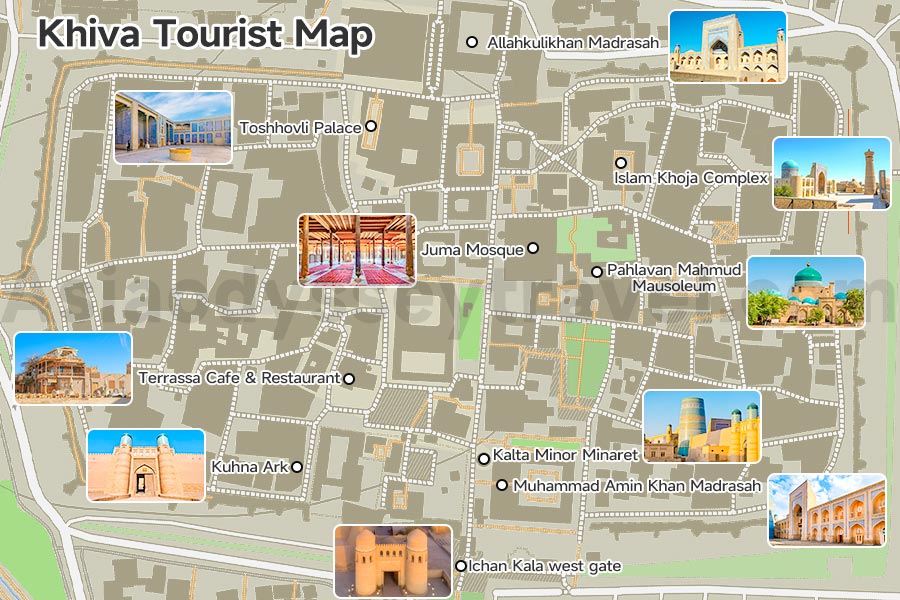
Area 1: West Gate (Ata Darvoza) & Fortress Zone
This is where most visitors enter and where the walk usually begins.
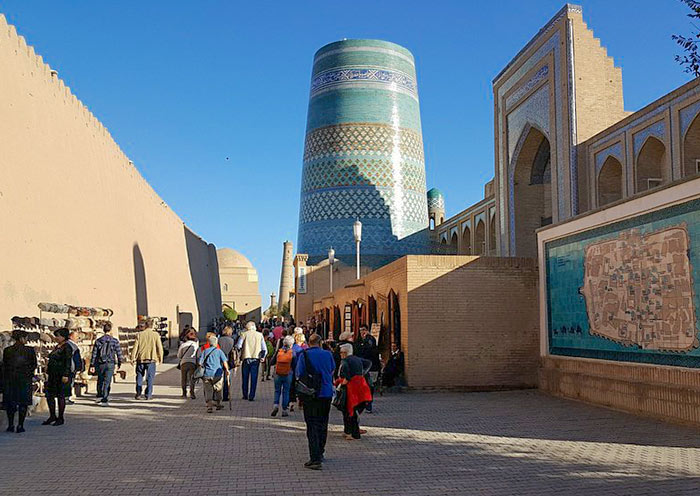
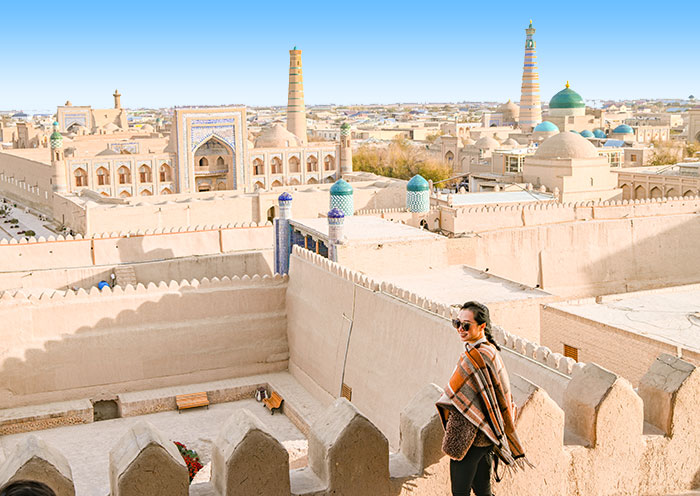
- Kuhna Ark (Old Fortress): Former rulers' fortress. Climb to the watchtower platform for the best panoramic view of Itchan Kala, with the Kalta Minor Minaret in the foreground.
- Kalta Minor Minaret (Short Minaret): Khiva's most iconic symbol. It was meant to be the tallest minaret in the region but was never finished. Don't miss its stunning complete covering of glazed turquoise tiles. It's uniquely photogenic.
- Muhammad Amin Khan Madrasah: The largest madrasah in Khiva (1851-1854), right next to Kalta Minor.Step into the courtyard to appreciate its grand scale and symmetrical facade. Part of it now operates as a boutique hotel.
Area 2: Central Core (Religious & Civic Heart)
This area forms the heart of the old city and sits roughly in the middle of the map.
- Juma Mosque (Friday Mosque): Unique for its hall-like structure supported by 218 ancient wooden columns, some of them over 800 years old. The quiet interior and carved columns. You can also climb the minaret for a central city view.
- Pahlavan Mahmud Mausoleum: The most sacred site in Khiva, dedicated to the 14th-century poet, philosopher, and wrestler-saint Pahlavan Mahmud. Don't miss the deep blue dome and richly decorated interior tiles.
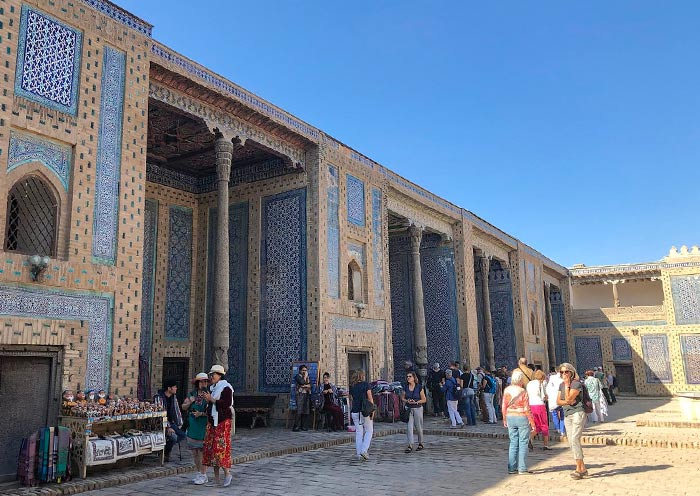
- Tash Hauli Palace (Stone Palace): The khan's extravagant harem and reception palace (1830s). Don't miss the "Ishrat Hauli" (Reception Court) and especially the "Harem" section. Marvel at the ceramic-tiled walls, carved marble, and exquisite painted ceilings.
Area 3: East Gate (Palvan Darvoza) & Market Zone
This area feels more lived-in, with bazaars and later-period buildings.
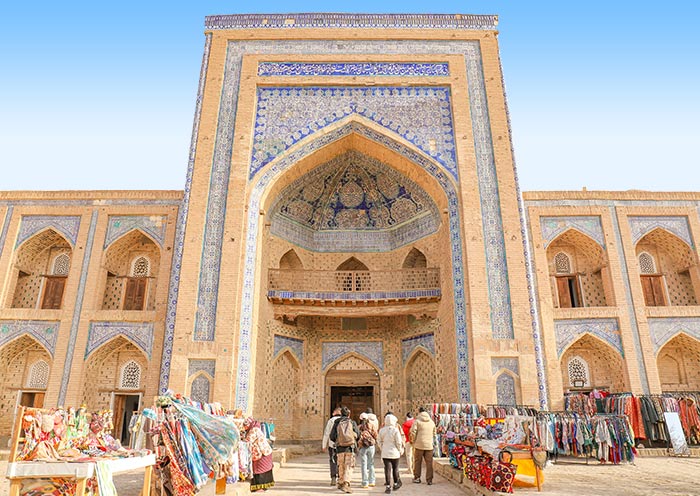
- Allahkulikhan Madrasah (beside East Gate): Now used as workshops and small shops for local craftsmen. Watch artisans at work carving wood, weaving carpets, or engraving metal. It's a great place to buy quality souvenirs.
- Islam Khoja Complex (Early 20th Century): A newer complex showcasing Khiva's last architectural flourish.
- Islam Khoja Minaret: At 56.6 meters, it's the tallest in Khiva. For a small extra fee, you can climb its narrow stairs for the ultimate panoramic view.
- Islam Khoja Madrasah: Now houses the interesting Museum of Applied Arts.
- East Gate (Palvan Darvoza) & Outside Market: The most ornate city gate, leading to the authentic local bazaar. Walk outside the gate to experience the lively, non-touristy market where locals shop for everything from spices to hardware.
Asia Odyssey Travel Advantage: While this map shows you what to see, our expert local guides tell you why it matters. They share the legends of the khans, the secrets of the architects, and the stories of the Silk Road traders that you won't find in any guidebook.
Khiva Map with Transportation: How to Get to Khiva?
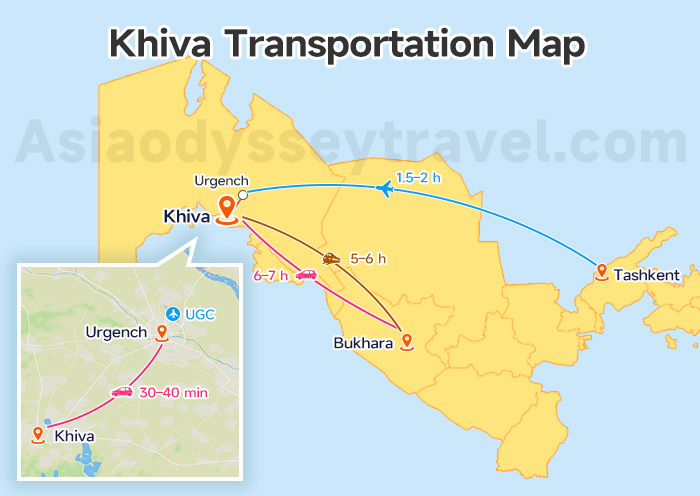
Khiva is remote on the map, but getting there is straightforward. Most travelers arrive by flight, train, or a private transfer.
Option 1: Fly to Urgench, Then Drive to Khiva
The closest airport is Urgench International Airport (UGC), located about 35 km from Khiva. From the airport, you can reach Khiva by taxi or private transfer in 30–40 minutes.
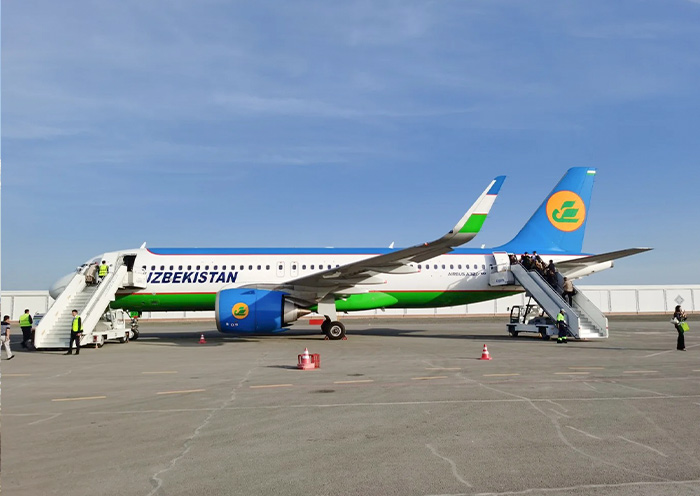
Flights from Tashkent to Urgench are the most common. The flight time is about 1.5–2 hours, making this the fastest way to reach Khiva. It is a good choice if you have limited time or prefer a smooth, easy arrival.
Option 2: Train to Khiva
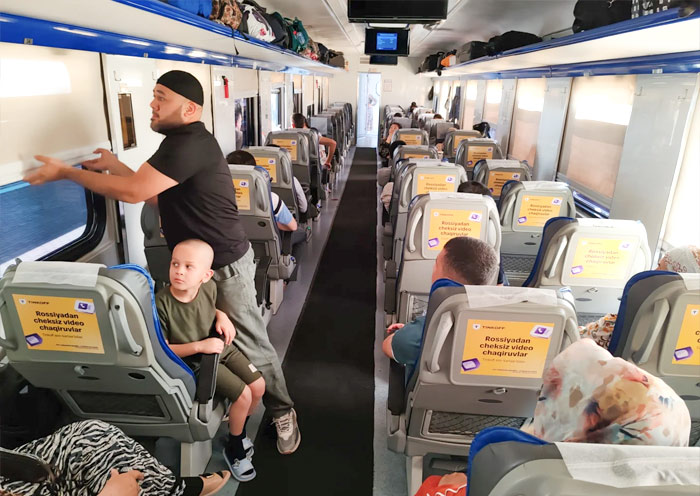
Traveling by train is a more affordable and relaxed option. These are regular sleeper trains, not high-speed trains.
From Bukhara, direct trains are available, with a travel time of about 5–6 hours. You can choose between 2-berth, 4-berth, or 6-berth sleeping cabins, or a simple seating class.
Trains arrive at Khiva Railway Station, which is only 1.4 km from Itchan Kala. From there, a short taxi ride takes you straight to the old city.
This is a comfortable option if you enjoy slow travel and scenery.
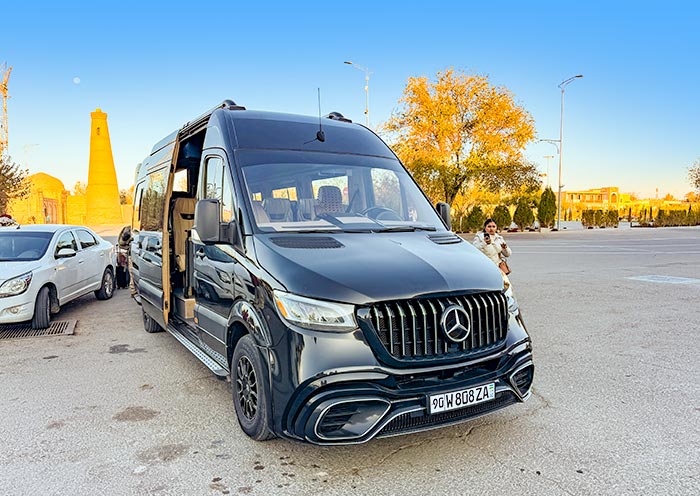
Option 3: Private Transfer (Most Flexible)
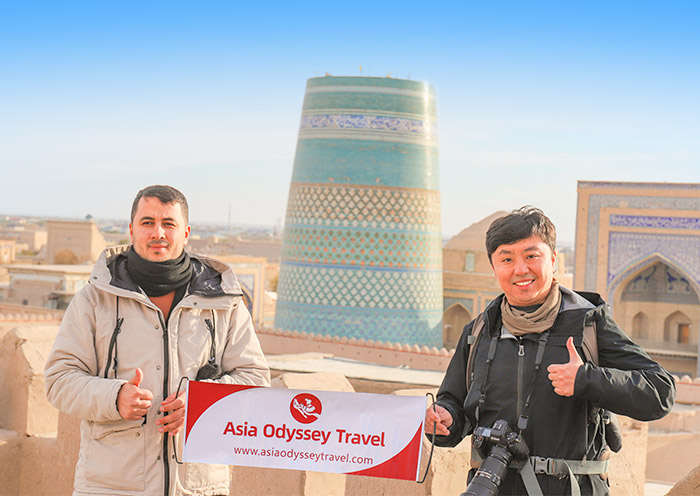
A private transfer is a popular choice, especially when traveling between cities.
From Bukhara to Khiva, the drive takes about 6–7 hours, crossing desert landscapes and small settlements along the way.
From Urgench to Khiva, the drive is much shorter at 30–40 minutes.
This option is ideal if you value flexibility. You can choose your departure time, stop for breaks or photos, and travel directly to your hotel without transfers.
Private transfers work well for families, small groups, or travelers with big luggage, and are often combined with sightseeing or border-area routes.
Asia Odyssey Travel Tip: We help to arranges train tickets, airport pickups, and private transfers, so you arrive at the ancient city walls smoothly and without stress.
Khiva Map of Hotels: Where to Eat and Sleep
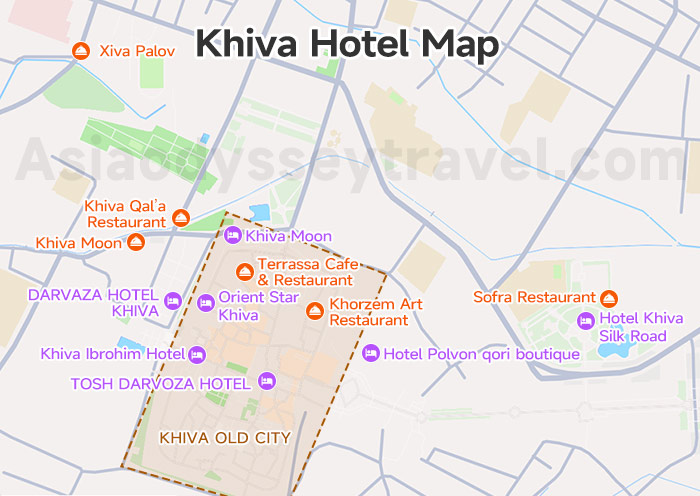
Khiva is small, so a hotel with right position saves money and energy. Most travelers choose to eat and sleep near or inside Itchan Kala. This keeps everything within walking distance.
Where to Stay in Khiva
Staying inside the old city means you can walk to all major sights early in the morning and late in the evening, when the crowds are gone.
Best for: first-time visitors, short stays, photographers
Accommodation type: small boutique hotels and family-run guesthouses
Suggested Hotels: Orient Star Khiva, Khiva Ibrohim Hotel, Hotel Polvon qori boutique, DARVAZA HOTEL KHIVA, Meros B&B Khiva, Hotel Khiva Silk Road, TOSH DARVOZA HOTEL, and more.
Tips: Hotels outside the walls are usually cheaper and still very convenient.
Where to Eat in Khiva
Most restaurants are located inside the old city or right next to the gates.
What to expect: Uzbek classics like plov, shashlik, lagman, and local bread
Suggested Restaurants: Terrassa Cafe & Restaurant, Khiva Moon, Sofra Restaurant, Khorzem Art Restaurant, Khiva Qal'a Restaurant, Xiva Palov
This is the most convenient option after a full day of walking.
Khiva Map of Travel Itinerary: Travel around Khiva with Map
Option 1: Itchan Kala Walking Map
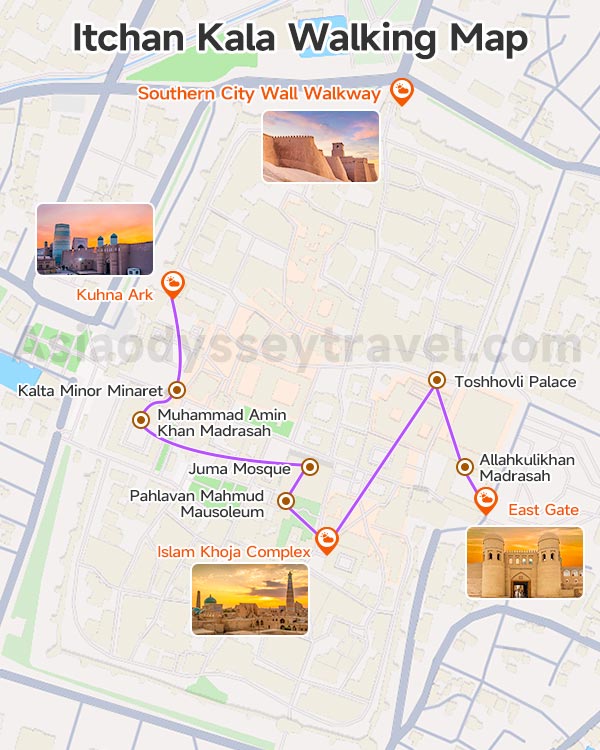
Stay at least one night inside the old city to catch the most romantic moments. Sunset and the "blue hour" are magical. The low-angle light makes the clay walls and turquoise tiles glow.
Top Sunset Spots (ranked):
- Islam Khoja Minaret – The #1 panoramic view
- Kuhna Ark Watchtower – Easier climb, still great views
- Southern City Wall Walkway – Quiet and scenic
- Outside East Gate (Palvan Darvaza) – Lively local vibe
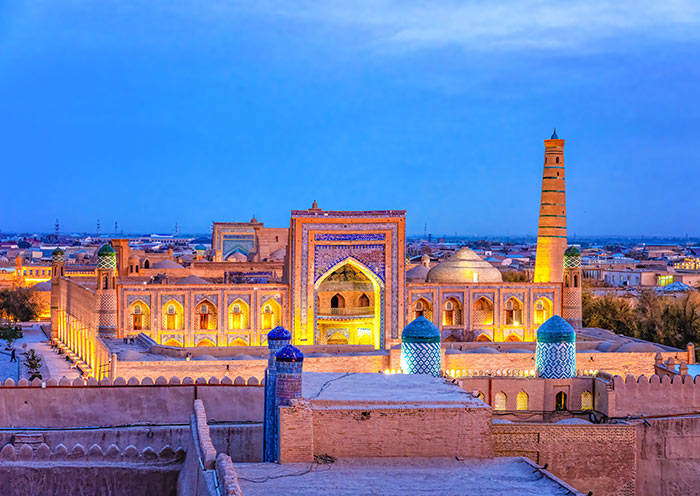
Blue Hour Tip: Stay 20–30 minutes after sunset. Soft lighting turns Kalta Minor and other tiled buildings into a peaceful, magical scene before the main lights come on.
The old city is small — only about 600 meters from West Gate to East Gate. Streets and alleyways are full of surprises, and you might easily get "lost" in the beauty. A local guide adds context to the history, architecture, and hidden stories, making your visit far richer.
Option 2: Combine with Tashkent, Samarkand, and Bukhara
Khiva fits perfectly into a classic Uzbekistan route: Tashkent → Khiva → Bukhara → Samarkand
This way, you get the full contrast: big cities, desert landscapes, and the quiet charm of a walled medieval town.
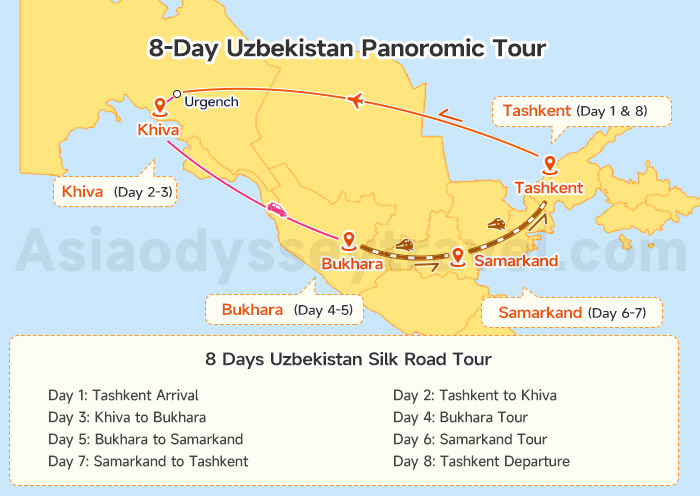
| Day | Destination | Highlights |
|---|---|---|
| 1 | Tashkent Arrival | Explore Khast Imam Square, take Tashkent Metro, visit Chorsu Bazaar, enjoy street food, see modern and Soviet-era architecture, |
| 2 | Tashkent →Khiva | Morning Flight. Explore West Gate, Kalta Minor Minaret, Kuhna Ark, Tash Hauli Palace; walk city walls; visit small workshops; sunset and blue hour photography |
| 3 | Khiva → Bukhara | Travel by train or private transfer |
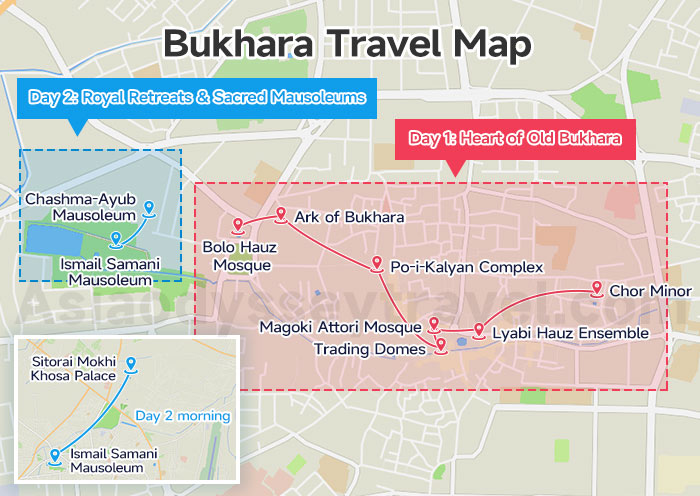
| 4 | Bukhara | Visit Chor Minor Madrasah, Lyabi Hauz Ensemble, Magoki Attori Mosque, Trading Domes, Po-i-Kalyan Complex, Ark of Bukhara, Bolo Hauz Mosque |
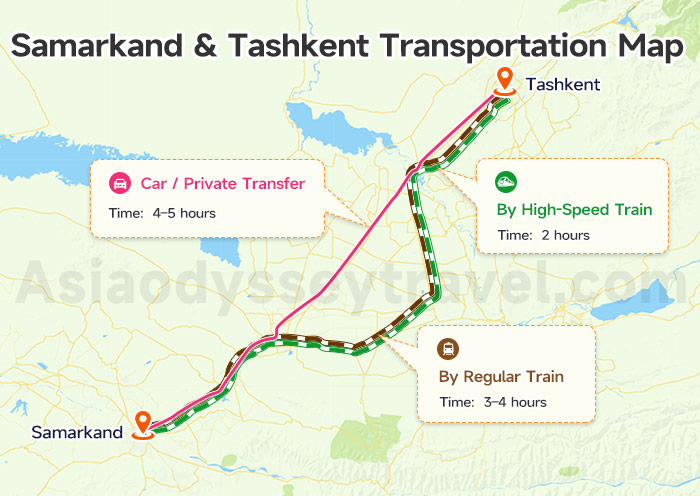
| 5 | Bukhara → Samarkand | Sitorai Mokhi Khosa Palace, Ismail Samani Mausoleum, Chashma-Ayub Mausoleum, take Afternoonn Train. |
| 6 | Samarkand | Gur-e-Amir Mausoleum, Bibi-Khanym Mosque, Shah-i-Zinda necropolis; Siyab Bazaar, artisan workshops and relaxed lunch in a local teahouse. |
| 7 | Samarkand → Tashkent | Ulugh Beg Observatory, Khodja Doniyor Mausoleum, Afrosiab Museum, take afternoon train. |
| 8 | Tashkent Departure | If time allowed, shopping for souvenirs before flying out. |
Frequently Asked Questions about Khiva Map
- How many days should I spend in Khiva?
A one or two-day stay is ideal. You can cover the main attractions in one day, but a second day gives you time to explore at a slower pace and capture the best moments during sunrise and sunset.
- Is Khiva safe for tourists?
Yes, Khiva is very safe for tourists. It is a small, quiet city, and the locals are friendly. As always, practice basic travel precautions, especially in crowded areas like bazaars.
- What is the best time to visit Khiva?
The best time to visit is spring (April–May) and autumn (September–October) when the weather is mild. Summers can be very hot, while winters can be cold, but Khiva is beautiful year-round.
- Can I walk everywhere in Khiva?
Yes! Itchan Kala is small and easily walkable. The main attractions are within a 15-20 minute walking distance, and the streets are generally flat and easy to navigate.
- Do I need a guide to explore Khiva?
While you can explore Khiva independently, having a local guide can enhance your experience. Guides can share historical insights, stories, and legends that you won't find in a guidebook.
- What souvenirs can I buy in Khiva?
Khiva is famous for handmade carpets, ceramic pottery, embroidered textiles, and traditional jewelry. Check out the artisan workshops near the East Gate or in the markets for authentic pieces.
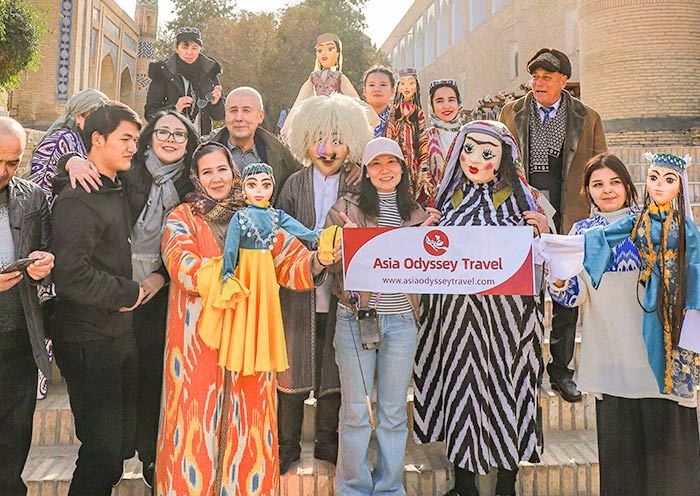
Explore Uzbekistan's Silk Road Heritage Sites with Asia Odyssey Travel
This closing section is here to help you take the next step from planning to traveling.
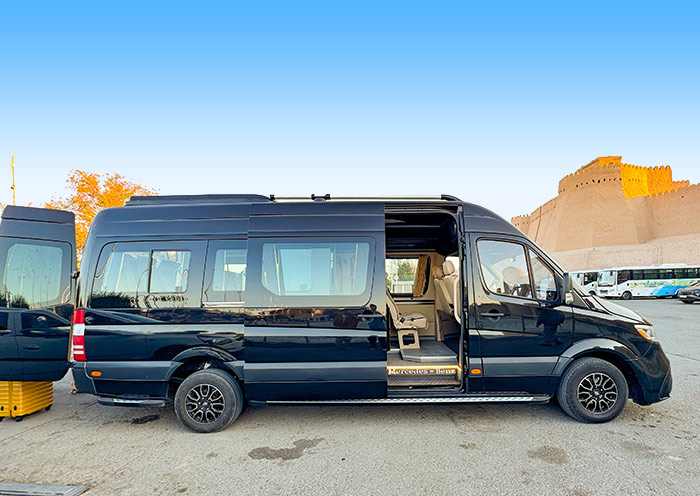
As a locally connected travel agency, Asia Odyssey Travel works directly with experienced Uzbek guides, professional drivers, and our own trusted vehicle teams, ensuring your journey across Uzbekistan is safe, smooth, and well-organized—from airport pickup to your final farewell.
Beyond Uzbekistan, we also offer Central Asia multi-country tours, seamlessly combining Uzbekistan with Kazakhstan, Kyrgyzstan, Tajikistan, and Turkmenistan—ideal for travelers who want to experience the Silk Road in its full regional depth.
Our Uzbekistan Tour Collections
Classic Uzbekistan Tours: Uzbekistan Tours, Uzbekistan Small Group Tours
City-Focused Tour Packages: Samarkand Tour Packages, Bukhara Tour Packages, Tashkent Tour Packages
Uzbekistan Tours by Departure Market: Uzbekistan Tours from Australia, Uzbekistan Tours from Singapore, Uzbekistan Tours from USA, Uzbekistan Tours from South Africa, Uzbekistan Tours from Dubai
South Asia–Focused Uzbekistan Tours: Uzbekistan Tour Packages from India, Tashkent Tour Packages from India, Uzbekistan Tour Packages from Pakistan

Our Central Asia multi-country Tour Collections
Classic Central Asia Tours: Central Asia Group Tours, Central Asia Tours, Five Stans Tours
Central Asia Tours by Departure Market: Central Asia Tour from Singapore, Central Asia Tour from Malaysia, Central Asia Tour from UK, Central Asia Tour from India, Central Asia Tour from USA, Central Asia Tour from Australia
Follow Asia Odyssey Travel, and explore Uzbekistan not just as a destination, but as a living Silk Road journey—comfortably, safely, and deeply.


 Data in submission...