+852 5394 6901
 Take China Group Tours in 2026/2027 to enjoy 30% discount compared to private tour. Same Experience & Lowest Price!
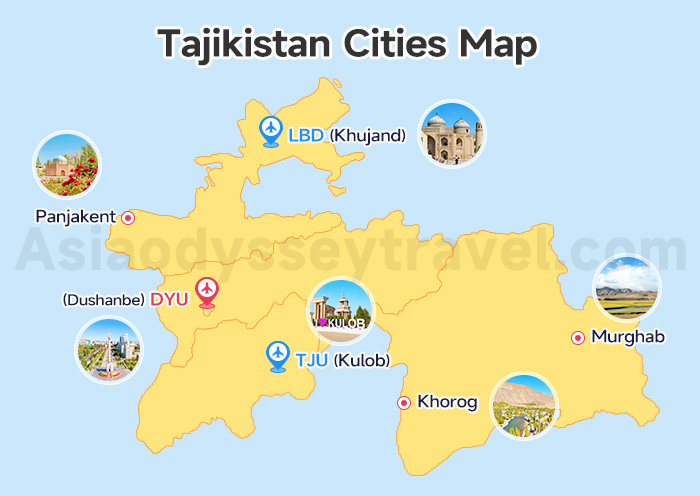
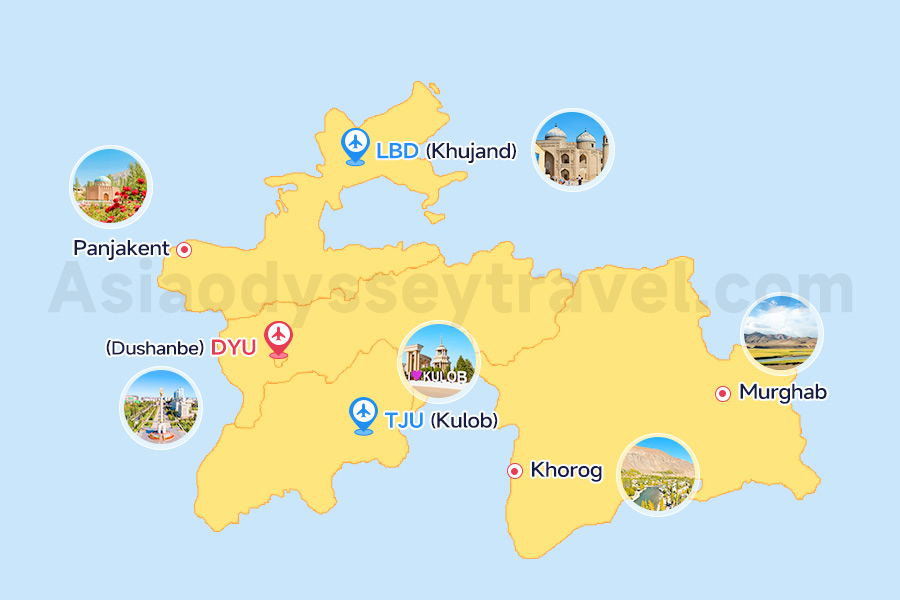
Map of Tajikistan's Top Attractions
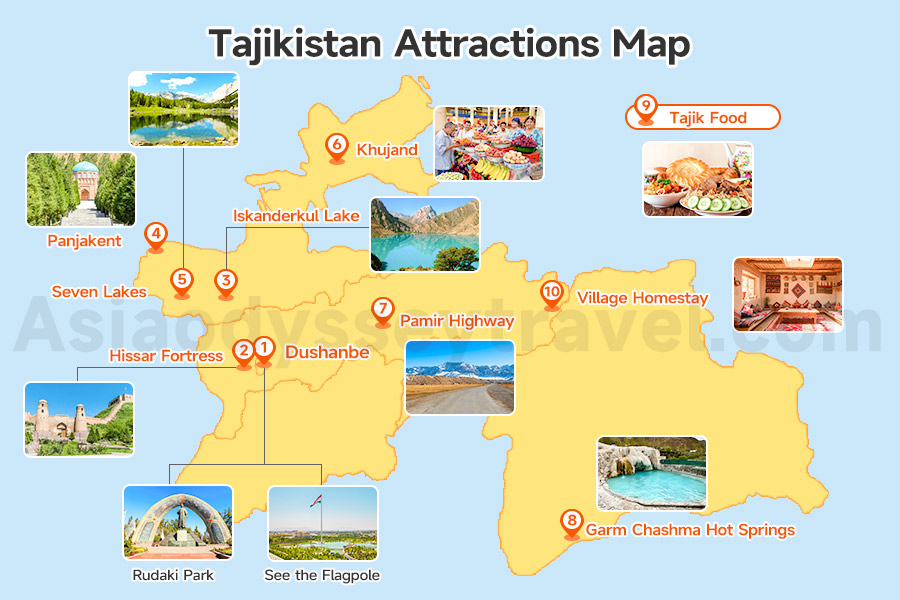
Places to Visit in Tajikistan: 10 Best Attractions
| Attraction / Activity | Region | Best For... | Effort Level (1-5) |
|---|---|---|---|
| Dushanbe | Capital City | Parks, Statues & Relaxing | 1/5 (Very Easy) |
| Hissar Fortress | Near Dushanbe | Quick History Trip | 1/5 (30 min drive) |
| Iskanderkul Lake | Fann Mountains | Swimming & Waterfalls | 2/5 (Bumpy road) |
| Penjikent | West (Border) | Ancient History (Silk Road) | 1/5 (Easy access) |
| Seven Lakes (Haft Kul) | Fann Mountains | Epic Views without Hiking | 2/5 (Dirt road drive) |
| Khujand | North | Silk Road Expirence | 1/5 |
| Pamir Highway (M41) | East (GBAO) | The Ultimate Adventure | 5/5 (High Altitude!) |
| Garm Chashma Hot Springs | Wakhan Valley | Relaxing | 1/5 |
| Eat Qurutob | Everywhere | Foodies (Vegetarian friendly) | 1/5 (Messy & Tasty) |
| Village Homestay | Pamirs | Cultural Expirence | 1/5 (Bring cash) |
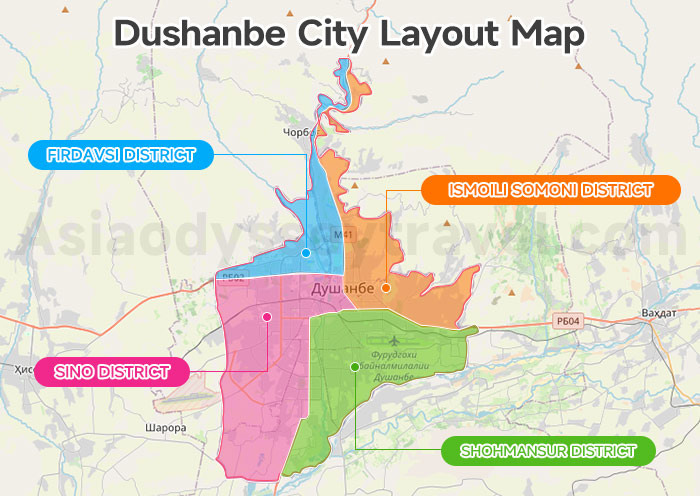
#1: Dushanbe - The Capital That Feels Like a Huge Garden (Seriously)
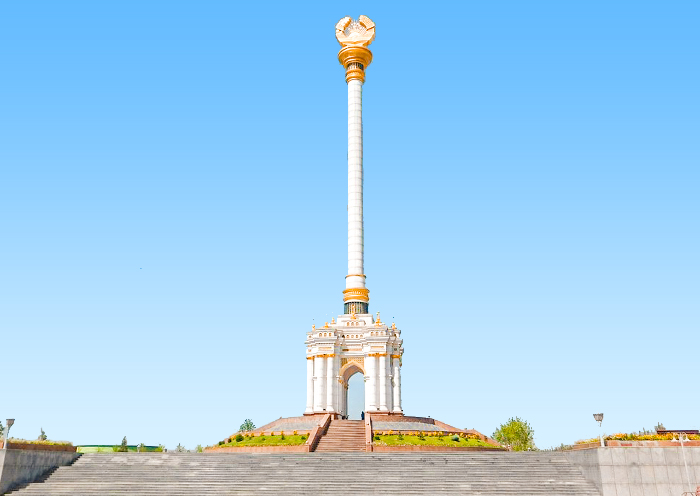
Most capital cities punch you in the face with noise, traffic, and chaos. Dushanbe hugs you with trees. he city has more parks per capita than almost anywhere in Central Asia. Wide boulevards lined with massive trees. Fountains everywhere.
The name "Dushanbe" actually means "Monday" in the Persian language (because the market used to be held on Mondays). It is the perfect place to fix your jet lag before you head into the wild.
Things to Do in Dushanbe
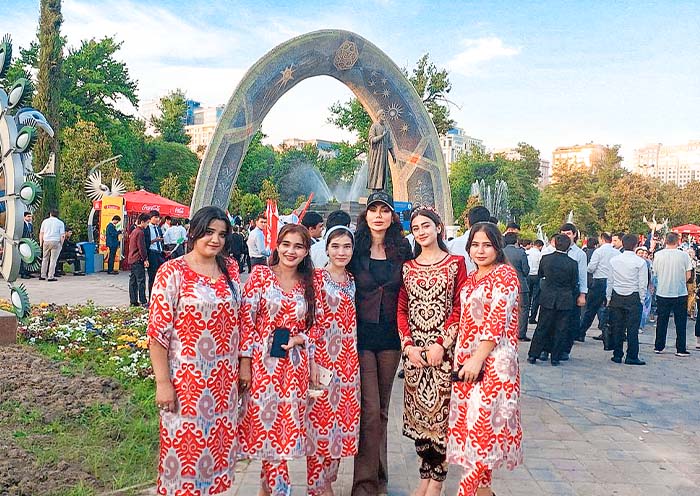
Walk through Rudaki Park: This is the heart of the city. You will see the statue of Ismoil Somoni (the national hero) under a giant gold arch.
See the Flagpole: For a few years, Dushanbe held the world record for the tallest flagpole (165 meters). It has since been beaten by Saudi Arabia and others, but it is still ridiculously huge.
Mehrgon Bazaar: Unlike the chaotic, dirty markets in South Asia, Mehrgon is housed in a beautiful building with a grand atrium. It's organized and colorful. Pro Tip: Go to the second floor to buy dried fruits and nuts (the apricots are world-class).
The Nightlife (Surprise!): You might think a Muslim-majority country has no nightlife. Think again. Dushanbe has a thriving scene. Head to the rooftop bars along Rudaki Avenue. You can get a local draft beer (Sim-Sim) for about $1.50. It's lively, secular, and fun.

#2: Iskanderkul Lake – Where Alexander the Great (Maybe) Lost His Horse
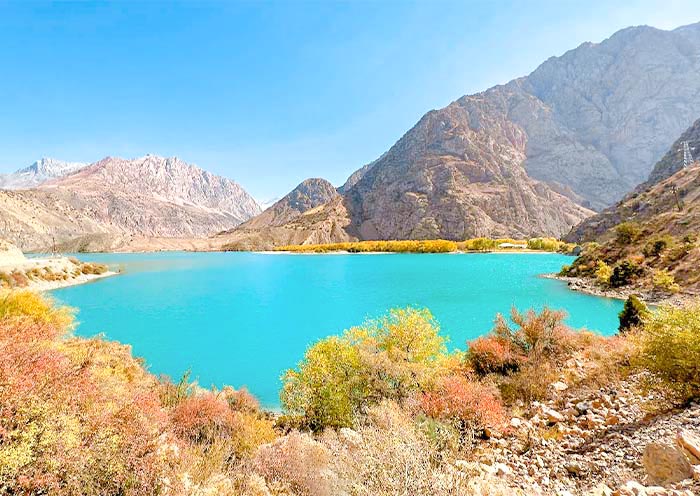
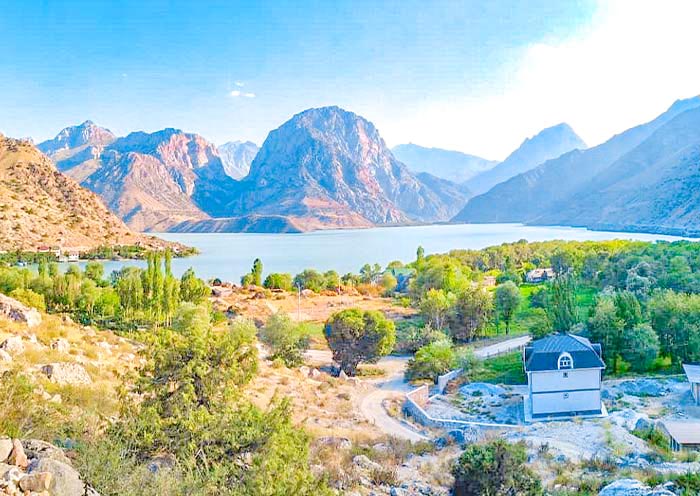
If you look at any postcard of Tajikistan, it's probably Iskanderkul. Located in the Fann Mountains, this lake is named after Alexander the Great ("Iskander" is Alexander in Persian, "Kul" means Lake).
The legend says Alexander stopped here on his way to India and lost his favorite horse, Bucephalus, in the lake. Locals say during full moons, you can still see the horse rise from the water.
Iskanderkul sits at 2,195 meters in the Fann Mountains, about 130 kilometers northeast of Dushanbe.
The water is that specific shade of turquoise that cameras never quite capture accurately. Everyone's photos look like they cranked the saturation to 150%. They didn't. It really looks like that.
The lake is 3.4 kilometers long and up to 72 meters deep. These are facts. Here's what matters: you can swim in it (cold, but doable in summer), hike around it (5-6 hours for the full loop), and camp near it (several guesthouses and homestays dot the shore).
Pro tip: If you're into trekking, Iskanderkul is the starting point for several multi-day hikes into the Fann Mountains. But we're talking serious hiking here, not Instagram strolls. Hire a guide in Dushanbe before you go.
#3: Penjikent – The Pompeii of Central Asia (Minus the Crowds)
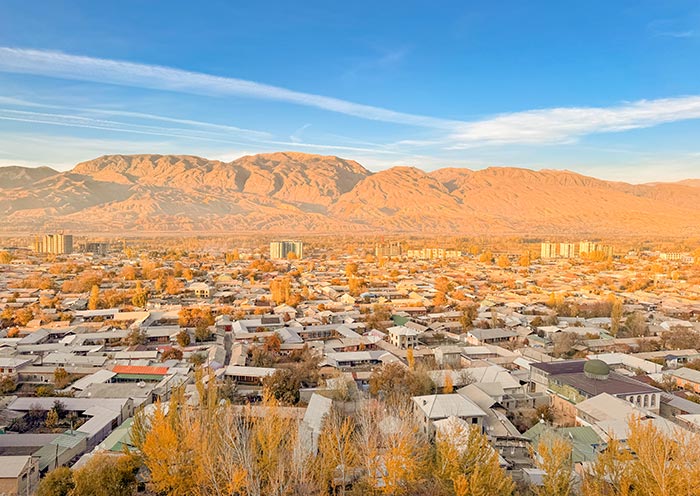
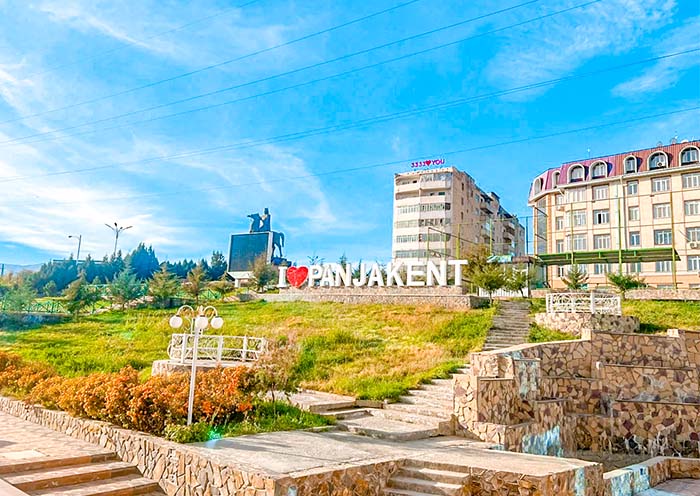
Penjikent was once a thriving city on the Silk Road, rich from trade. Then, the Arabs invaded in the 8th century, and the city was abandoned. Because it was abandoned rather than rebuilt over, archaeologists call it the "Pompeii of Central Asia."
The Highlights of Penjikent
Ancient Penjikent Ruins: You'll see the foundations of houses, palaces, temples, and fortifications. Everything's made of mud brick, so it looks pretty brown and unimpressive until your guide explains what you're looking at.
The Rudaki Museum: Room after room of restored frescoes showing Sogdian life in vivid detail. Musicians playing instruments. Warriors in battle. Merchants counting coins. Religious ceremonies. The colors are still bright after 1,400 years.
Penjikent's Thursday bazaar: Locals from surrounding villages pour in to buy, sell, and socialize. Fresh produce, livestock, clothes, tools, and people everywhere. It's chaotic, loud, and completely authentic. Zero tourist pandering. This is real Central Asian bazaar culture.
Sarazm: A UNESCO World Heritage Site about 15 kilometers from Penjikent, shows even older settlements dating back to the 4th millennium BCE. You will appreciate standing in one of Central Asia's oldest urban settlements.
Insider Tip: Most travelers visit Penjikent because it is very close to the Samarkand (Uzbekistan) border. You can easily cross from Uzbekistan for a day trip or start your Tajik adventure here.
#4: Seven Lakes - 7 Different Colors, No Hiking Required
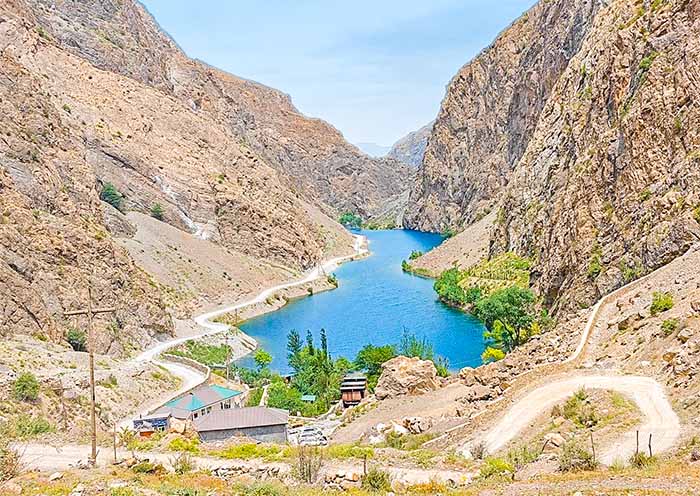
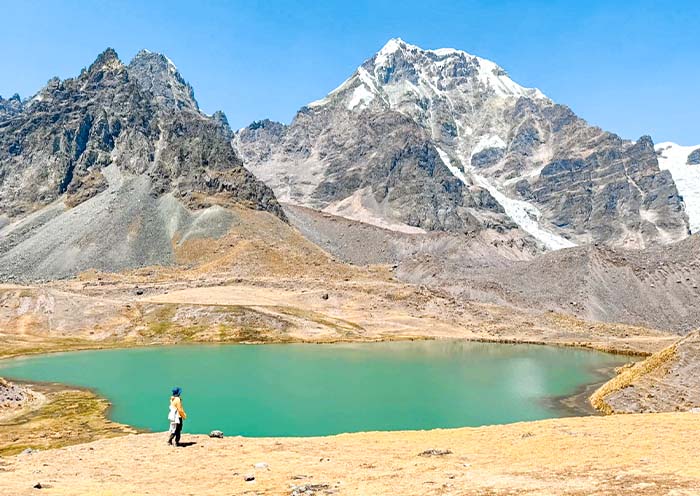
This is my number one recommendation for mainstream tourists who want epic views without sweating too much.
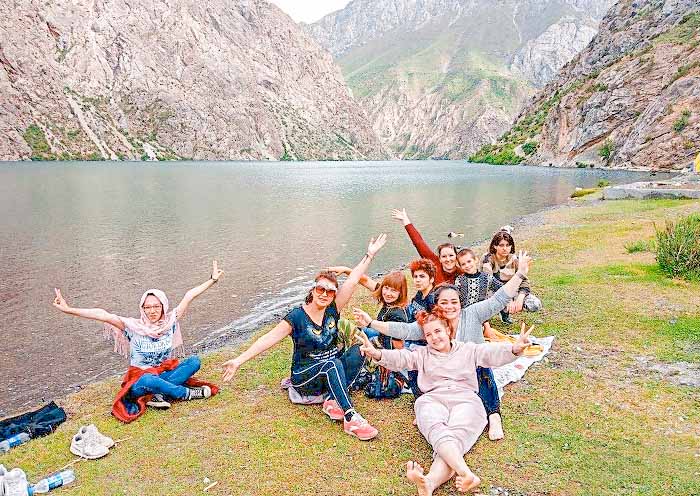
The Seven Lakes (known locally as Haft Kul) is a chain of lakes in a narrow valley, each sitting higher than the last. The magic is that each lake has a different color due to the mineral content and sun angle.
- Lake 1 (Mijgon): Dark purple / Black.
- Lake 2 (Soya): Deep blue.
- ...and so on, up to the 7th lake which is a clear turquoise.
How to Visit Seven Lakes?
Most people do this as a day trip from Penjikent (about 50 kilometers away) or as a stop between Penjikent and Dushanbe. The drive up takes about 1.5-2 hours each way. You'll stop at viewpoints for each lake.
while you can visit all seven lakes in one day, staying overnight is better. Most day-trippers stop at Lake 4. But the guesthouses around the upper lakes (especially near Marguzor, the sixth lake) offer simple rooms. It is the most secluded and beautiful.
or serious hikers, the Seven Lakes area connects to extensive trail networks through the Fann Mountains. Multi-day treks to other lakes and passes leave from here.
#5: The Pamir Highway – One of the World's Highest Roads (And Definitely the Most Beautiful)
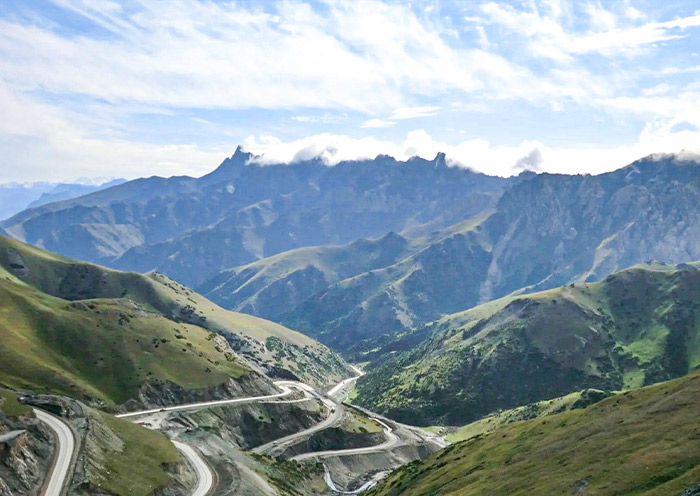
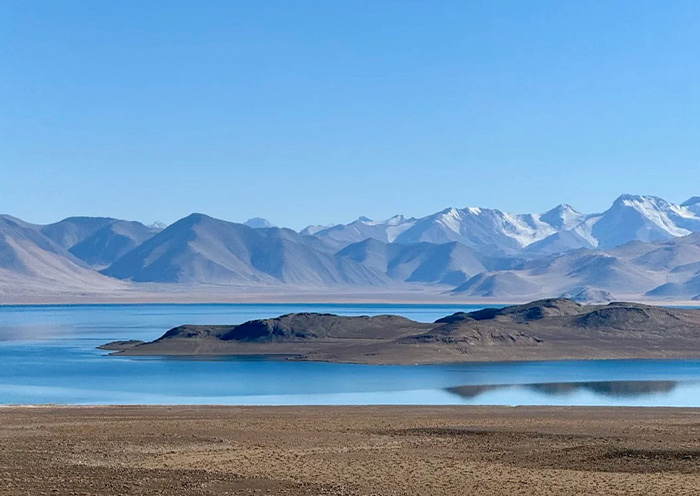
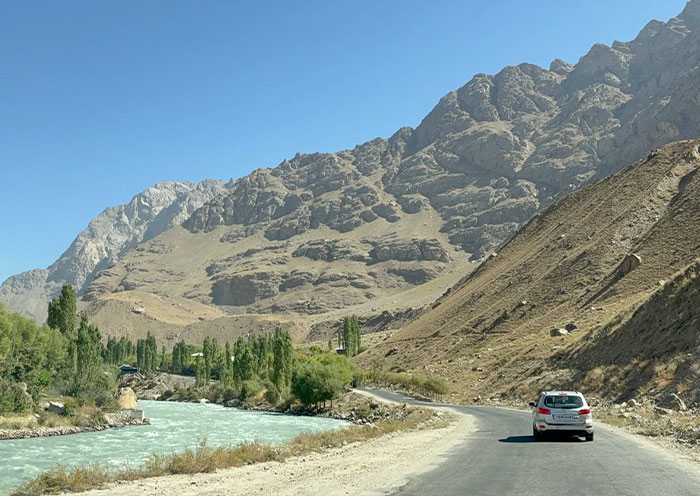
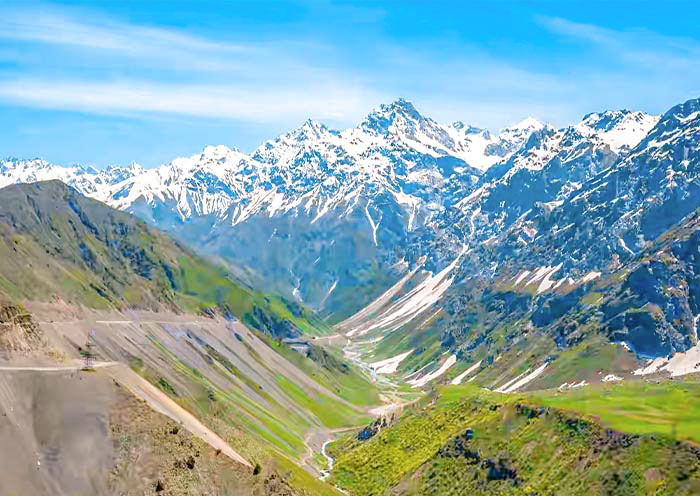
This is it. The big one. The M41. For 90% of travelers, the Pamir Highway is the only reason they come to Tajikistan. It is the second-highest international highway in the world (after the Karakoram in Pakistan). It traverses the Pamir Mountains, often staying above 4,000 meters (13,000 feet).
The landscape looks like Mars. It is barren, rocky, and harsh. There are no trees, just massive snow-capped peaks and high-altitude deserts.
Key Stops on the Highway:
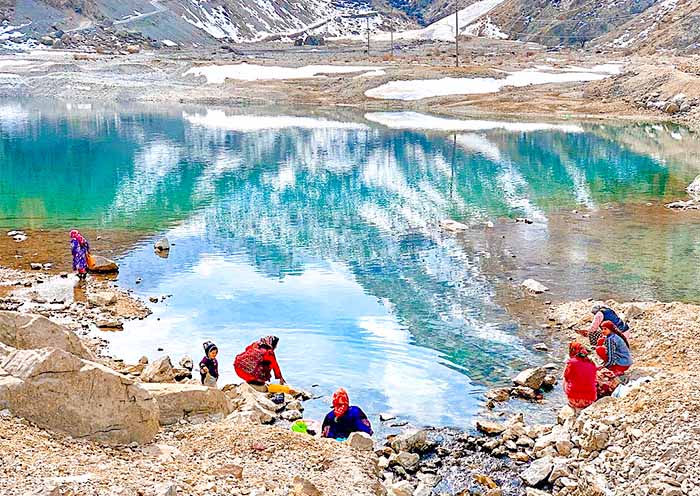
Karakul Lake: A massive lake created by a meteor impact millions of years ago. It sits higher than Lake Titicaca. The water is black-blue, and the backdrop is the Lenin Peak glacier.
Khorog: The Pamir's urban center, which means it has ATMs, a decent bazaar, and actual restaurants. The Botanical Garden sits at 2,200 meters and is one of the highest in the world. Spend a night here to rest and restock.
Wakhan Corridor: Several hot springs dot the corridor (Garm Chashma being the most famous). Buddhist stupas and ancient forts remind you this was once a Buddhist region before Islam arrived.
Murghab: The highest town in Tajikistan at 3,650 meters. Cold, remote, and charming in a harsh way. The people are ethnically Kyrgyz, so the culture shifts here.
Karakul Lake: A massive high-altitude lake near the Kyrgyz border. The water is salty and undrinkable, but the views are incredible. Camping here is an option if you're prepared for cold nights.
Permits: You need a GBAO permit to travel in the Gorno-Badakhshan Autonomous Oblast (basically the entire Pamir region). Your tour company can arrange this, or apply online through the Tajik e-visa website.
Tajikistan Itinerary: Road Trips & Pamir Highway Itinerary
#6: Khujand – The Silk Road Stop You've Never Heard Of
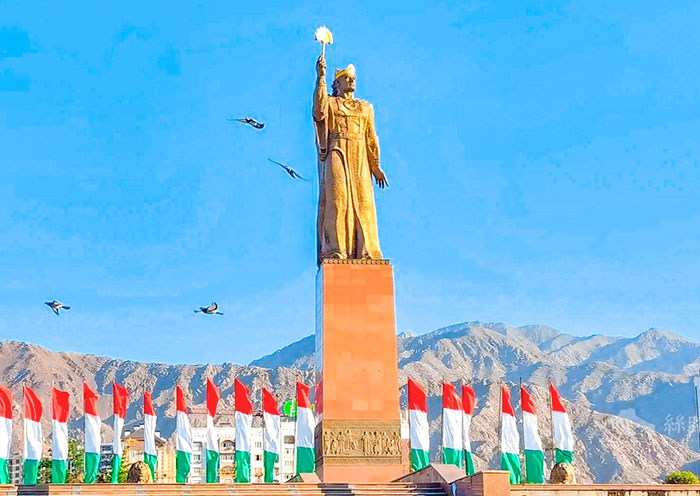
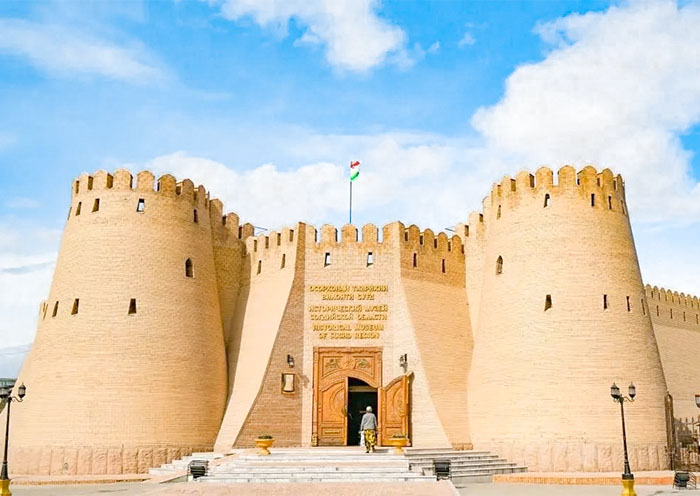
Khujand is the second-largest city, located in the far north. It feels completely different from Dushanbe. The people here are historically merchants, and the culture is closer to Uzbekistan.
This is one of the oldest cities in Central Asia. Alexander the Great founded a city here called Alexandria Eschate (Alexandria the Furthest).
What to Do in Khujand?
Panjshanbe Bazaar: This is, hands down, the most photogenic market in the country. The main building looks like a pink palace or a cathedral. It is loud, vibrant, and full of gold-toothed grandmothers selling spices.
The Cable Car: A new cable car takes you across the wide Syr Darya river to the Somoni Park. It's a cheap, fun ride with great views of the city.
The Lenin Statue: Khujand has one of the largest remaining statues of Lenin in Central Asia. If you are interested in Soviet history, it's a must-see giant.
Most travelers spend just one day here, usually as a stop between Dushanbe and the Seven Lakes or vice versa. That's enough time to see the bazaar, walk along the river, and get a feel for northern Tajikistan's vibe.
#7: Explore Hissar Fortress for Half a Day (If You Have Time)
Hissar Fortress sits about 30 kilometers west of Dushanbe. It's one of those "if you have extra time" attractions that won't devastate you if you miss it but makes for a pleasant half-day trip if you don't.
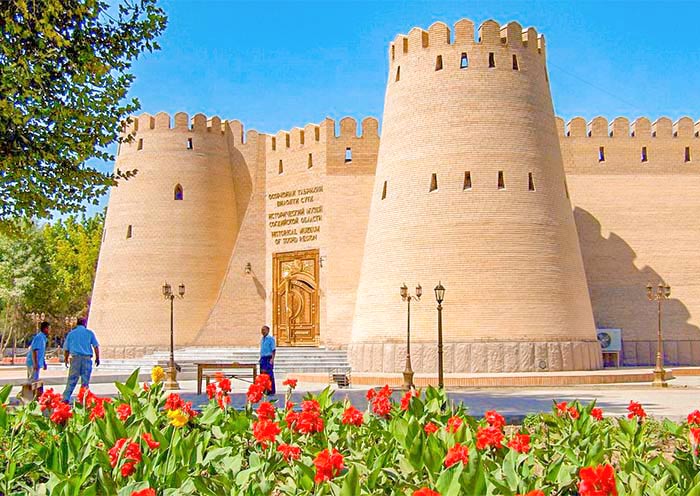
Most of what you see today is a reconstruction. The original fortress was destroyed. The massive twin-towered gate looks impressive in photos (and is on the 20 Somoni banknote), but behind the gate, there isn't a huge amount to see.
And right next to it are two beautiful 16th-century Madrassas (Islamic schools). It's a perfect half-day trip to see rural Tajik life without the commitment of a 4x4 expedition. 2-3 hours is plenty for the fortress, museum, and a meal.
#8: Soak in Garm Chashma Hot Springs (Relaxation in the Pamirs)
After days of bouncing on the dusty roads of the Wakhan Valley, your back will hurt. Garm Chashma is the cure. Located high in the mountains south of Khorog, these are natural mineral hot springs.
The water is rich in lime and minerals, which over centuries have built up massive, blindingly white travertine mounds (like Pamukkale in Turkey, but smaller and wilder). The water is milky blue and incredibly hot.
Locals believe the water cures skin diseases and helps with fertility. Whether that's true or not, it definitely cures "road trip fatigue.
#9: Try Tajik Food (Yes, It's Mostly Plov)
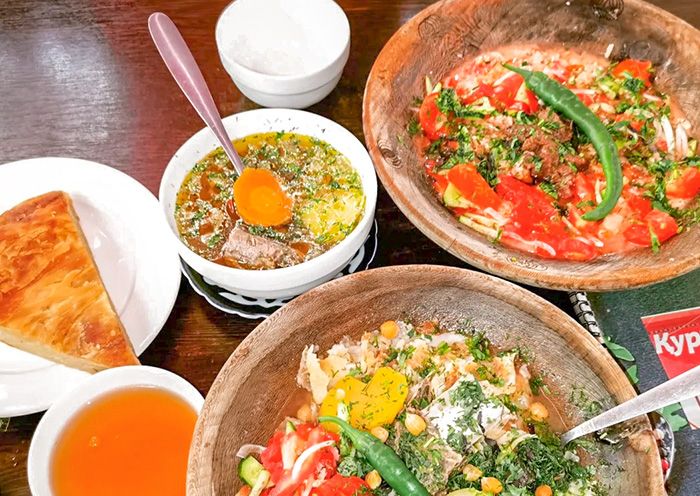
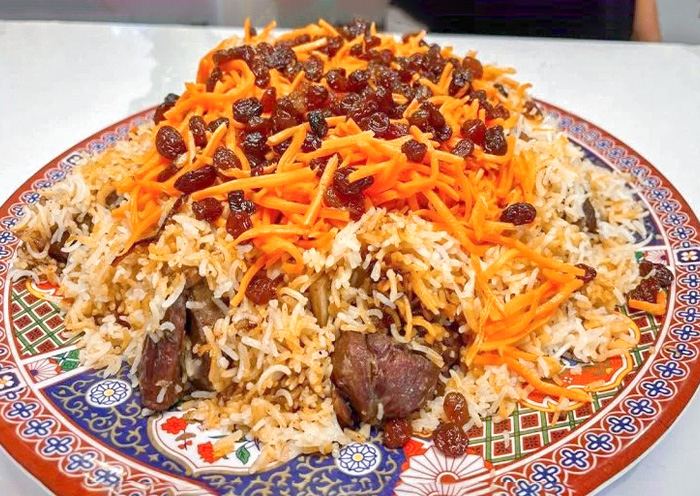
Tajik food is not diverse. You will eat plov (pilaf rice with meat and carrots) so many times you'll dream about it. Sometimes you'll eat plov for lunch. Then someone will offer you more plov for dinner. This is normal.
When plov is done right, it's delicious. The rice absorbs lamb fat and carrot sweetness. The meat falls apart. The combination of textures and flavors is comfort food at its finest. Bad plov is greasy rice with chewy meat. Good plov is why Central Asian food matters.
The "Must-Eat" List
Qurutob: This is the national dish, and you must try it. It's a vegetarian dish (rare!). Layers of fat bread (fatir) are mixed with a dried yogurt sauce (qurut), onions, and fried vegetables. You eat it with your hands. Everyone digs into the same bowl.
Plov (Osh): Rice fried with carrots, beef/mutton, and heaps of oil. Every city has its own version.
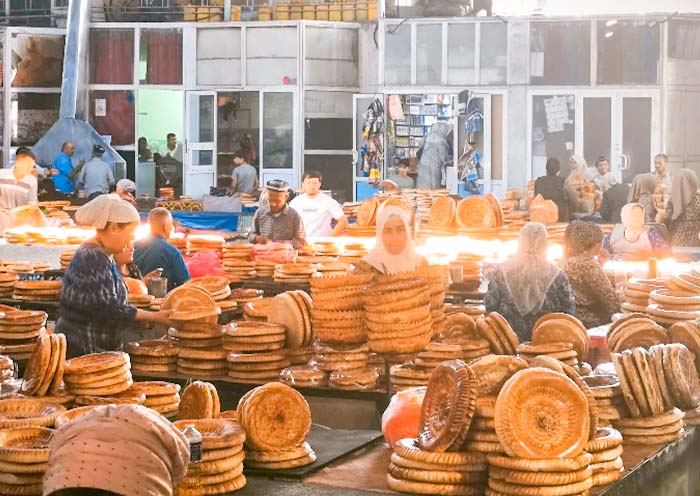
Non: The flatbread that appears at every meal. Fresh from a tandoor oven, it's slightly crispy outside and soft inside. Tajiks tear pieces off and use it to scoop food. Do the same.
Shashlik: Grilled meat skewers. Lamb is most common, but you'll also find chicken and beef. Always served with onions and sometimes tomatoes. Simple and satisfying.
Pro Tip: If you are a vegetarian, you will eat a lot of "Salad Fresh" (tomatoes and cucumbers) and bread. It is tough but possible.
#10: Village Homestay – The Cultural Experience That's Actually Real.
In many countries, "cultural homestays" are fake shows set up for tourists. In Tajikistan, they are a necessity. In the Pamirs, there are very few hotels. You will stay in people's homes.
Here's what homestays are like: You'll sleep on a kurpacha (thin mattress) on the floor, covered with thick blankets. The room might have electricity, probably doesn't have heating (bring warm clothes for mountain stays).
The bathroom is either a squat toilet in an outhouse or, if you're lucky, an actual toilet in a small attached room. Hot water comes from a kettle if it comes at all.
The host will treat you like royalty. Even if they have little money, they will put every piece of candy, bread, and jam they own on the table for you. Always take off your shoes at the door. It is polite to bring small gifts for the host or their kids (fruits, sweets, or small souvenirs from your country).
How Much Time You Actually Need
Bare minimum (5-6 days): Dushanbe (1-2 days), Iskanderkul and Seven Lakes (2 days), Penjikent (1 day). This covers the main northwestern highlights. You'll feel rushed but hit the major spots.
Comfortable northern tour (7-9 days): Same as above but with actual time to enjoy places instead of just checking them off. Add Khujand (1 day), Hissar (half day), extra time in Dushanbe for museums and rest.
Pamir Highway trip (12-14 days): Dushanbe (2 days), Pamir Highway from Dushanbe to Osh (7-10 days including stops), then either fly back or continue into Kyrgyzstan. This is the trip most people dream about.
My Advice: If you have less than 7 days, do not attempt the Pamir Highway. You will just be miserable in a car. Stick to the Fann Mountains (West).
When to Go (And When to Avoid)
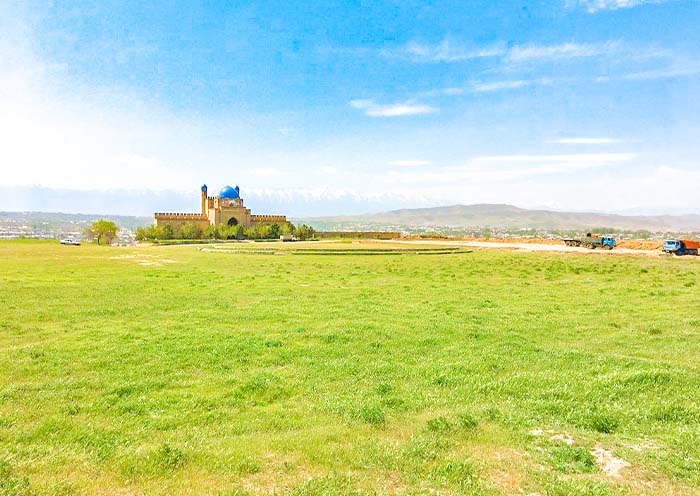
Best time: June to September. This is when the high passes on the Pamir Highway are snow-free. July and August are best for hiking, but Dushanbe will be very hot (35°C+).
July and August are peak season. Guesthouses fill up, especially along popular routes. Book ahead if possible. September offers fewer crowds and still-decent weather, though nights get colder.
Best Time to Visit Tajikistan: The Pamir Highway & Trekking Season (2026)
Important Things to Know Before You Go
Visas: Most nationalities can get an e-visa online for about $50. It's valid for 45 days. Apply at least a week before traveling. If you're visiting the Pamirs (GBAO region), you need an additional GBAO permit ($20), which you can add during the e-visa application.
Money: The currency is Tajikistani somoni (TJS). Roughly 11 TJS = 1 USD (rates change). ATMs exist in Dushanbe, Khujand, and Khorog, but they're rare elsewhere. Bring USD or euros to exchange. Small towns often can't change large bills, so stock up on smaller notes.
Internet: Mobile data works in cities. In mountain areas, especially the Pamirs, expect zero connectivity for days. Buy a local SIM card in Dushanbe (Megafon or Tcell are reliable).
Travel to Tajikistan With Asia Odyssey Travel
Tajikistan is 90% mountains—a pristine, high-altitude paradise perfect for a cool summer escape. Asia Odyssey Travel handles the rugged logistics and border crossings, making your trip to the "Roof of the World" safe and seamless. You just show up and enjoy.
✅ Tajikistan Tour Packages – In-depth journeys covering Dushanbe, Khujand, and the turquoise gem of Iskanderkul Lake.
✅ Central Asia Combo – Expertly connected multi-country routes that blend Persian history with Pamir landscapes.
✅ Dushanbe Tours: Dive into the Persian heart of Central Asia, covering Rudaki Park, museums, and the ancient Hissar Fortress.


 Data in submission...