After breakfast, you will drive to the Zhongshan Scenic Area to begin a day of exploring Nanjing’s most iconic landmarks.
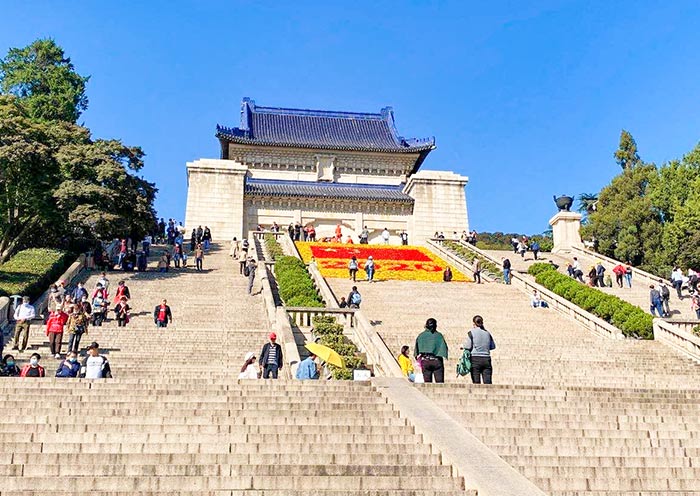
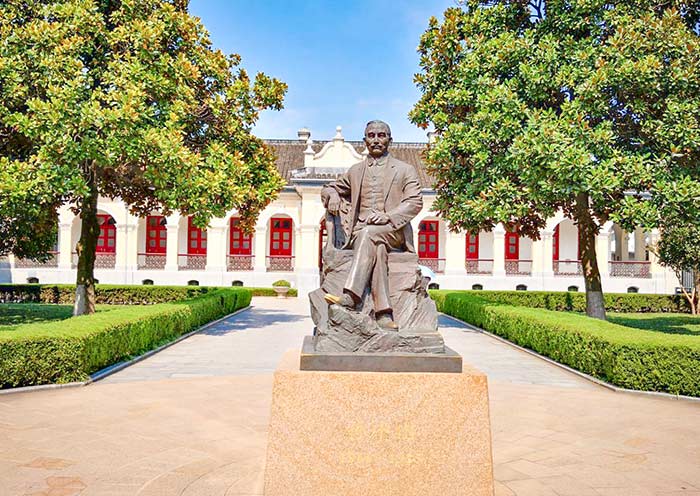
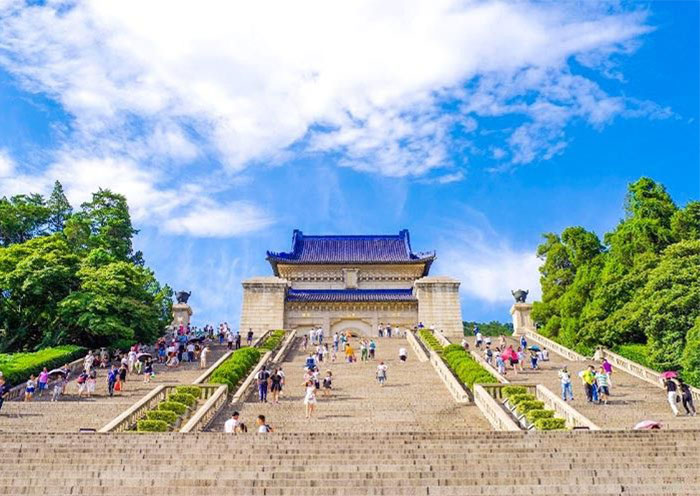
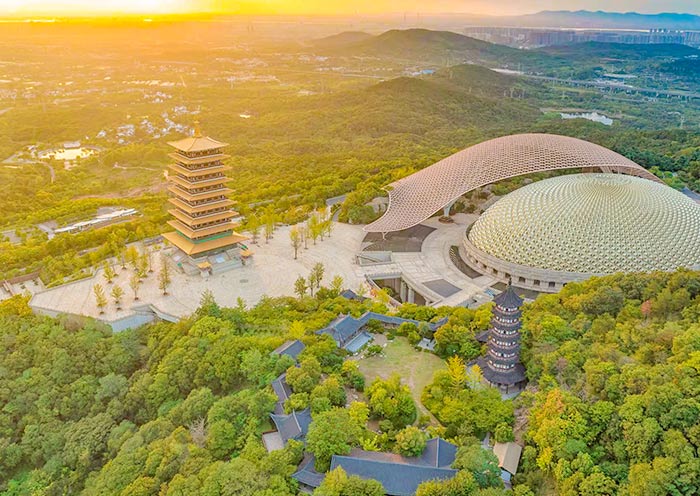
First, visit the Sun Yat-sen Mausoleum, the resting place of Dr. Sun Yat-sen, the founding father of the Republic of China. This immense, solemn site is a masterpiece of architecture, blending traditional Chinese and Western styles. You will enter through the grand Archway of Universal Love, then walk up the ceremonial staircase of 392 steps, representing Dr. Sun’s lifelong journey and national ideals. At the top stands the solemn memorial hall, housing a marble statue of Dr. Sun and offering panoramic views over the forested mountain and Nanjing city.
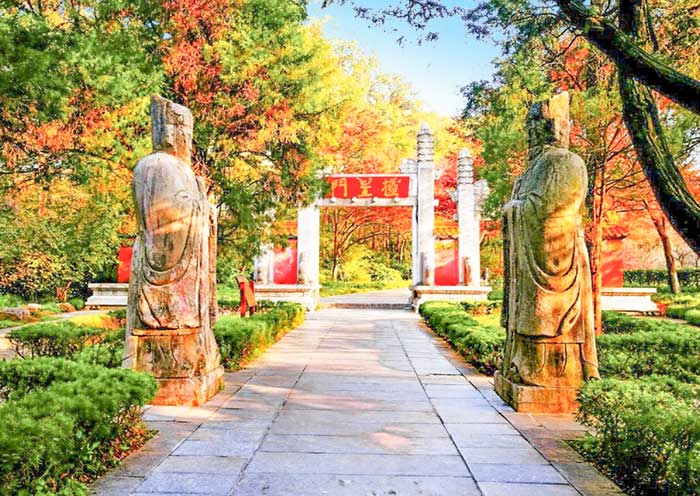
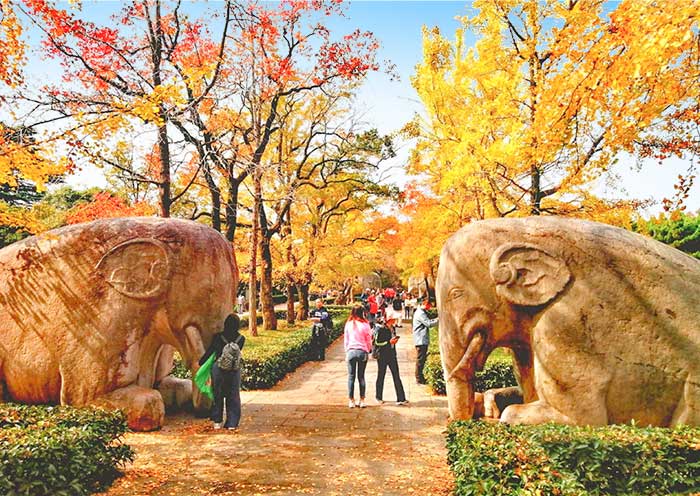
Continue to the Ming Xiaoling Mausoleum, the tomb of the Hongwu Emperor, Zhu Yuanzhang, the founder of the Ming Dynasty. As a UNESCO World Heritage site, it holds immense historical weight. Your experience will include walking the famous Sacred Way, an impressive avenue lined with pairs of massive stone animals and military figures, which gracefully winds through the landscape, setting the imperial standard for tomb construction for centuries.
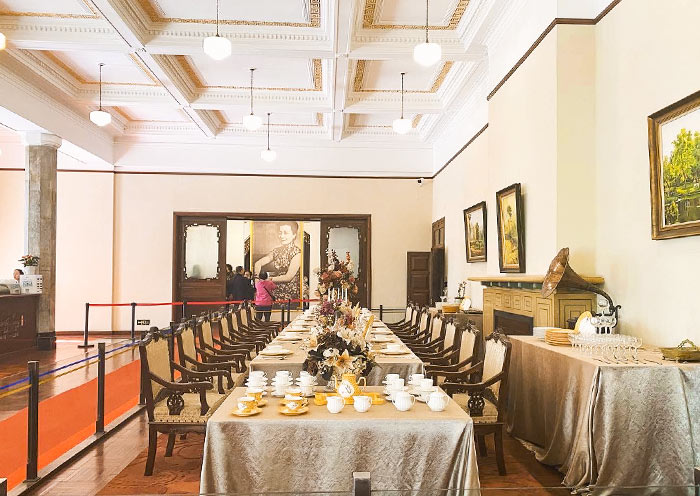
You will then visit the nearby Meiling Palace (Meilinggong), the magnificent former residence of Chiang Kai-shek and Soong Mei-ling. This building is a splendid example of Chinese palatial architecture, famously dubbed the "First Villa of the Republic Era." From above, the palace and its surrounding tree-lined avenue are said to resemble a "Pearl Necklace," symbolizing Chiang Kai-shek's enduring love for Soong Mei-ling. Inside, you can explore the preserved living quarters and learn about the former First Lady's life and historical significance.
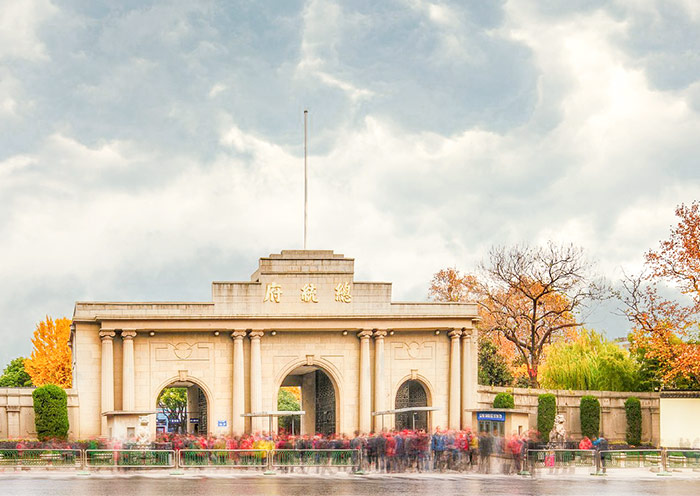
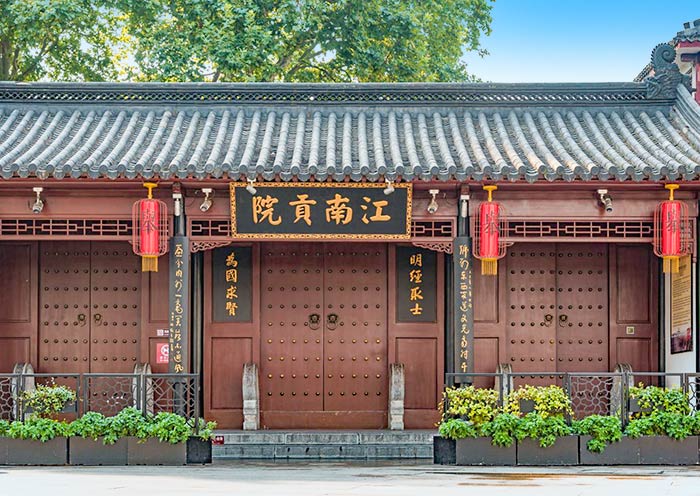
In the afternoon, head back to the city to visit the Presidential Palace. This complex served as the official headquarters of the Republic of China government and has a layered history spanning over 600 years, from the Ming and Qing dynasties to the Taiping Heavenly Kingdom and the Nationalist government. You will tour the blend of classical Chinese gardens and Western-style offices, feeling the weight of the many pivotal moments in modern Chinese history that unfolded within its walls.

 +852 5394 6901
 Take China Group Tours in 2026/2027 to enjoy 30% discount compared to private tour. Same Experience & Lowest Price!






 View Destinations

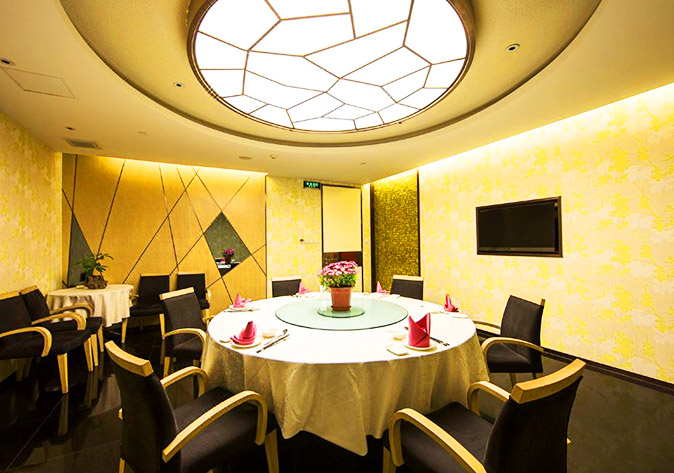
 Dining:
 Accommodation:








 Gallery





 Data in submission...







 Nanjing