+852 5394 6901
 Take China Group Tours in 2026/2027 to enjoy 30% discount compared to private tour. Same Experience & Lowest Price!

Why China Rainbow Mountains are So Colorful?
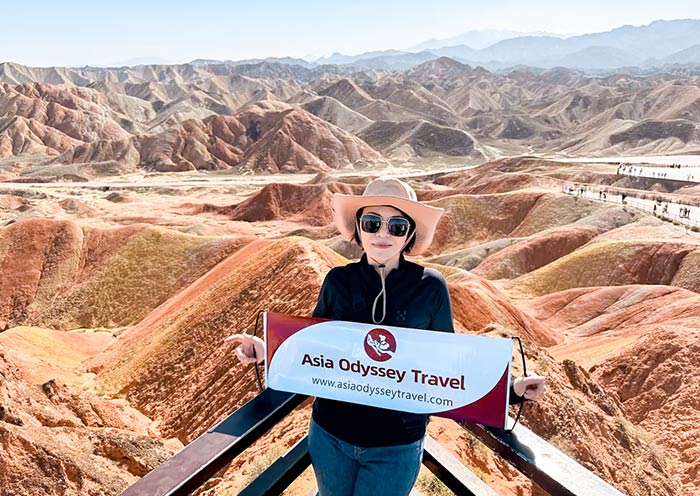
Three ingredients combined to create Zhangye's masterpiece: ancient sediments provided the canvas, iron chemistry painted the colors, and wind & water sculpted the final form.
The story begins 135 million years ago, when this now-arid region was a basin of rivers and lakes. Layer upon layer of mud, sand, and silt accumulated on the bottom—rich with iron and manganese minerals. Think of it as nature stacking colored paper, one sheet at a time, over millions of years.
The magic happened underground. As groundwater flowed through these buried layers, iron oxidized like rust. But here's the twist: different oxidation levels create different colors. Hematite turns rocks red and orange. Limonite paints them yellow and brown. Reduced iron produces greens and grays. Each stripe you see is a snapshot of ancient chemistry frozen in stone.
Then came the drama. When India crashed into Asia 50 million years ago, the force rippled across the continent, tilting and fracturing these flat layers like a giant pushing up a rug. Finally, wind and water carved the scene—wind smoothing contours, rare but violent rains slicing canyons along weaknesses, eroding soft stone while leaving hard ridges standing.
The result? A 322-square-kilometer canvas where 135 million years of Earth's history lies exposed in plain sight, painted in colors so vivid they seem painted by hand.
China Rainbow Mountain vs Peru
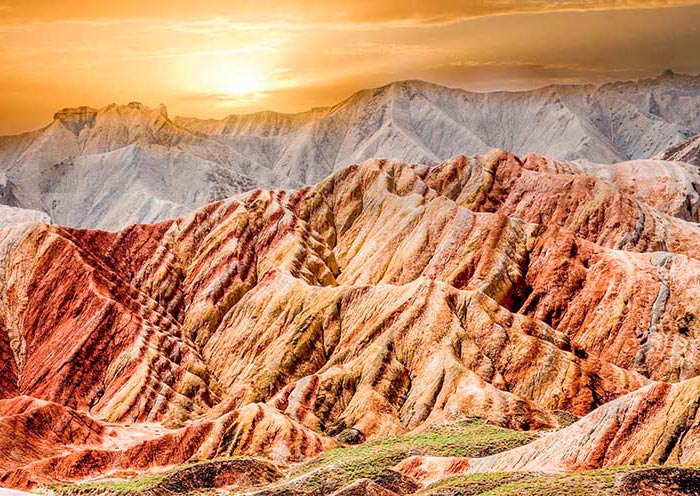
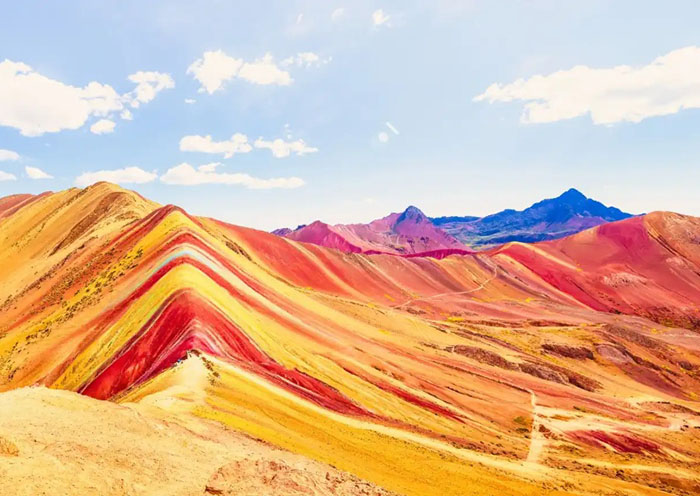
If Zhangye Danxia has a rival in the rainbow mountain category, it's Vinicunca in Peru—and the two could hardly be more different.
Peru's Vinicunca sits at a punishing 5,200 meters (17,000+ feet) in the Andes. To see it, you'll need to trek 3–4 hours from base camp, battling altitude sickness with every step. Its colors—red, yellow, green, even blue and purple—come from mineral deposits exposed only recently as glaciers melted due to climate change. The experience is raw, rugged, and physically demanding.
China's Zhangye Danxia, by contrast, sits at a comfortable 1,800–2,000 meters (5,900–6,500 feet). Instead of a punishing hike, you walk along well-maintained boardwalks to multiple viewing platforms. The colors here are smoother, more layered, and visible year-round thanks to the arid climate. It's accessible to all ages and fitness levels—a place you can experience without spending days acclimatizing or recovering.
Why Zhangye National Geopark Should Be on Your China Itinerary
A Landscape the World Celebrates
The world has taken notice of Zhangye Danxia—again and again.
In 2005, Chinese National Geography and 34 major media outlets named it one of "China's 7 Most Beautiful Danxia Landscapes."
In 2011, National Geographic honored it as one of the "World's Top 10 Wonderfully Spectacular Geographical Wonders."
In 2015, a coalition of leading Chinese websites selected it among the "World's 25 Dreamiest Travel Destinations," placing it alongside Germany's Neuschwanstein Castle, New Zealand's Glowworm Caves, and Cambodia's Angkor Wat.
In 2017, Zhangye Danxia received the "Most Beautiful Filming Location in China" award at the Venice Film Festival.
In 2023, the International Tourism Federation named it "Most Beautiful Chinese Scenic Area."
And in October 2025, CNN included Zhangye Danxia in its "24 Most Unusual Landscapes in the World"—the only site in China to make the list.
The Hexi Corridor: Where History Meets Geology
Zhangye Danxia National Geological Park lies within the Hexi Corridor—the historic Silk Road passage that once connected empires. For two millennia, merchants, monks, and messengers traveled this route, carrying silk, faith, and dreams between East and West.
When you finally stand before the Rainbow Mountains, you'll understand why Silk Road travelers paused here—and why you've crossed oceans to witness this view. Every layer of color tells a story far older than the Silk Road itself, written long before humans ever walked this earth.
More than Photography—Walk Through It. Fly Above It. Ride Across It.
You don't just admire the Rainbow Mountains from a distance—you step inside them. Well-maintained boardwalks wind through the park, leading you past layered ridges and hidden valleys, each turn revealing a new shade of earth's oldest palette.
For a different kind of journey, climb atop a camel and trace ancient Silk Road routes at a leisurely pace. The gentle sway of the camel train against rainbow-striped hills creates images that feel plucked from another century—a 15-minute ride that carries you through landscapes that once hosted Marco Polo's imagination.
If speed calls your name, nearby desert camps offer all-terrain vehicles. Tear across the dunes with the engine roaring and the wind in your face, tasting the Gobi's wild heart on two or four wheels.
And for those who dream of taking to the skies, the park offers three ways up. Watch the colored bands unfold beneath you like a living map from a helicopter. Drift above it all in a hot air balloon as morning light ignites the reds layer by layer. Or for the truly adventurous, a powered paraglider lets you soar like a bird through canyons painted in technicolor.
However you choose to experience it—by foot, by camel, by ATV, or by air—135 million years of geological history spreads out before you. And for one moment, you become part of it.
| Different Ways to Explore China Rainbow Mountain | Price | Duration | Route(s) | Operating Hours | Age & Weight Restrictions |
|---|---|---|---|---|---|
| Leisure walking & Sightseeing bus | CNY 108/person for classic route while CNY 388 for an in-depth exploration | 2-4 hours | Option 1: Platform 2→3→4→5→1 Option 2: Platform 1→5→4→3→2 Option 3: Platform 1→2→3→5→4→6→7→8→9 |
08:00-17:00 | / |
| Silkroad Camel Experience | CNY 100/person | 15 minutes | No. 5 Platform | 08:00-17:00 | No strict weight limit, but children under 1.2m must be accompanied by an adult; not recommended for children under 3 |
| Hot Air Balloon | CNY 200/adult, CNY 150/child (1.2m–1.4m) | 6–8 minutes | No. 4 Platform | 6:30–9:30, 16:30–17:00 (weather-dependent) | No strict weight limit, but children under 1.2m must be accompanied by an adult; not recommended for children under 3 |
| Helicopter | CNY 880/person | 8–10 minutes | Departs from Platform 2, flies over four main platforms and Wohu Gorge | roughly 5:30 AM – 7:00 PM in summer, shorter in winter | Maximum 100kg per passenger (for safety and balance); Children under 3 not permitted; children 3–12 must be accompanied by an adult |
| Paraglider (Powered Paraglider) | CNY 480–680/person | 5 minutes | No. 4 Platform | Generally operates in the early morning (around 7:30 AM) and early evening (around 7:30 PM) when winds are calmest | Minimum 40kg, maximum 90kg (tandem flight with professional pilot) Minimum age 6; under 12 must be accompanied by an adult; not recommended for seniors over 65 due to physical demands |
Pregnant women and those with heart conditions, severe acrophobia, or recent surgeries should avoid all aerial activities.
Zhangye National Geopark Layout & Sightseeing Platforms
The Zhangye Danxia National Geological Park features 3 entrances in total: the West Entrance, North Entrance, and East Entrance. Most visitors enter through the West Entrance, as it's the most commonly used access point and offers convenient access to the main viewing platforms. For sunset chasers who arrive late, you can also enter from the North Entrance, which is closer to Platform 4 for stunning sunset views.
The park contains a total of 9 sightseeing spots, but the core experience revolves around Platforms 1 through 5. These 5 platforms showcase the most iconic and visually stunning sections of the Rainbow Mountains, each offering a unique perspective on the colorful landscape.
Your standard ticket (approximately CNY 108) grants you access to Platforms 1, 2, 3, 4, and 5 via the hop-on, hop-off sightseeing buses. The bus service is included in your ticket price, allowing you to move freely between these main platforms throughout your visit.
If you wish to explore beyond these core platforms and visit additional viewing areas, you'll need to purchase a Deep Tour ticket (starting from CNY 328). This upgraded experience unlocks access to restricted areas and provides a more exclusive, in-depth exploration of the park.
| Platforms | Chinese | Features | What You'll See | Tips |
|---|---|---|---|---|
| No.1 | 七彩云海台 | The largest and highest platform in the park. Best for sunrise sightseeing. |
Panoramic views of S-curve road, Zhangye Danxia & stunning sunrises. | A gentle uphill hike is required |
| No.2 | 七彩仙缘台 | An intimate view & helicopter experience | Rainbow mountains in front of you with amazing intricate striations . | The platform is almost in the valley. |
| No.3 | 七彩屏 | Close to No.1 sightseeing platform & relatively small | Marble pork belly patterns | No extra bus required from No.1 platform. |
| No.4 | 七彩虹霞台 | Most popular platform with aerial activities like hot air balloon and powered paraglider. The sunset view here is amazing. |
The most iconic Rainbow Mountain vistas. | Too popular may come with crowds. |
| No.5 | 七彩锦绣台 | Camel Riding. | Panoramic views from a different perspective. | The scenery here may not rival the grandeur of Platform 1. |
| No.6,7,8,9 | 七彩敖河台, 桃花沟,万象土林谷... | unveil off-limits with less crowds. | Wohu Gorge (卧虎峡) , Qicai Aohe Tai (七彩敖河台) , and the Earth Forest Valley (万象土林谷) ... | The deep exploration ticket charges CNY 348, which is valid for 2 days (an extra bus ticket is required for the second day). |
No. 1 Sightseeing Platform—The largest platform in the park & Stunning Sunrise
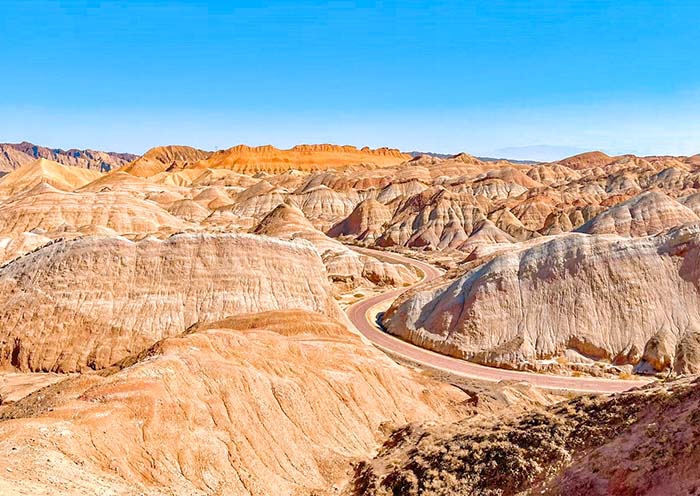
As the first stop from the West Entrance and the largest platform in the park, this is your grand introduction to the Danxia landscape. After getting off the sightseeing bus, you'll need to walk approximately 15 minutes uphill along the boardwalk to reach the main viewing areas—a gentle warm-up that rewards you with ever-expanding views.
Once reaching this elevated vantage platform, unfolding before you is the famous S-curve road, winding like a ribbon through the landscape, flanked on both sides by undulating rainbow mountains that rise and fall in waves of red-yellow-white color.
True to its name "Colorful Sea of Clouds Platform," this spot truly comes alive after sunrise—when sunlight shifts unpredictably across the landscape, illuminating the rolling hills and creating a spectacular sea of colorful clouds that shift and shimmer with the changing light. It is widely considered the best location in the park for watching the sunrise.
No. 2 Sightseeing Platform—An intimate view & Helicopter Experience
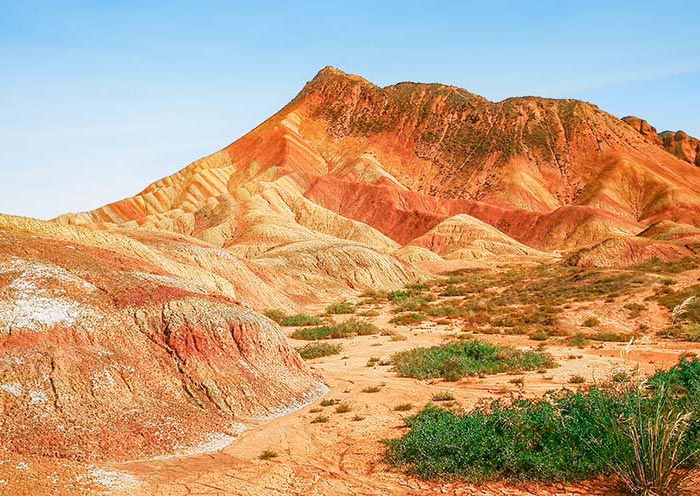
Unlike the sweeping views from higher vantage points, Platform 2 offers a completely different perspective. Here, you experience Zhangye Danxia at eye level and from below, looking up at the colorful formations that rise around you.
Without the commanding scale of higher platforms, you instead gain an intimate view—getting closer to the folds and textures of the rainbow hills and Danxia landforms, where you can trace the intricate striations with your eyes.
This is the main location in the park where you can start your helicopter experience. For CNY 880 per person, you can take an 8–10 minute flight that lifts you above the rainbow hills for a completely different vantage point.
No. 3 Sightseeing Platform—Close to No.1 Platform
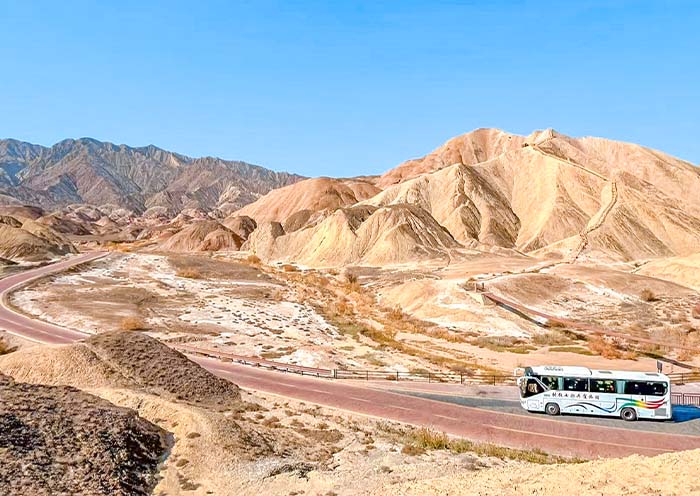
Located just a short walk from Platform 1, Platform 3 is often mentioned together with its neighbor in guidebooks. In fact, when many travel guides refer to the park's "four core viewing platforms," they are counting Platforms 1, 2, 4, and 5—leaving out Platform 3 entirely.
After exploring Platform 1, a few minutes' walk uphill brings you to this smaller but rewarding spot.
True to its name, this platform showcases a striking formation that resembles a vibrant, layered screen—a wall of rock striped in rich reds, oranges, and yellows that stands out against the surrounding landscape. The colors here are particularly intense, with some sections displaying a "marble pork belly" pattern—swirls of pink, white, and reddish-brown that strikingly resemble raw meat.
No. 4 Sightseeing Platform—Hot Air Balloon Activities & Amazing Sunset
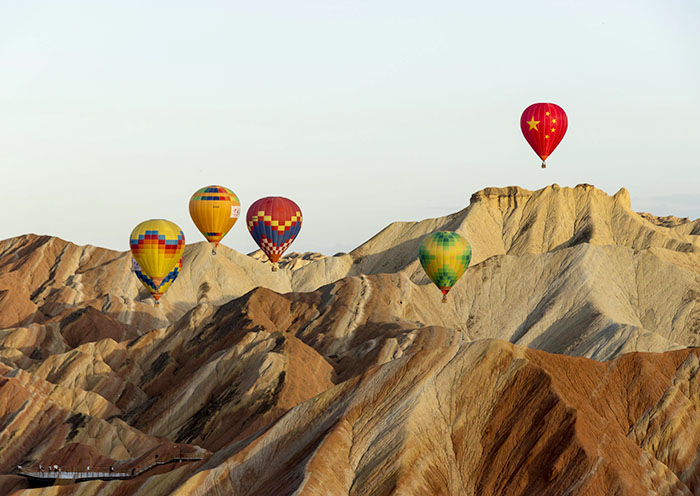
This is the most famous and most stunning platform in the park. Built on a ridge, it offers spectacular views in every direction, making it the absolute best place for sunset.
The landscape here is often described as a "palette dropped from heaven" —a breathtaking panorama of color that shifts with the fading light.
This platform is the center for aerial activities. You can take off in a hot air balloon (CNY 200 adults, tethered flight) or a powered paraglider (CNY 480–680) for a bird's-eye view of the technicolor landscape. (Note: Helicopter rides depart from Platform 2, not here.)
No. 5 Sightseeing Platform—Camel Riding
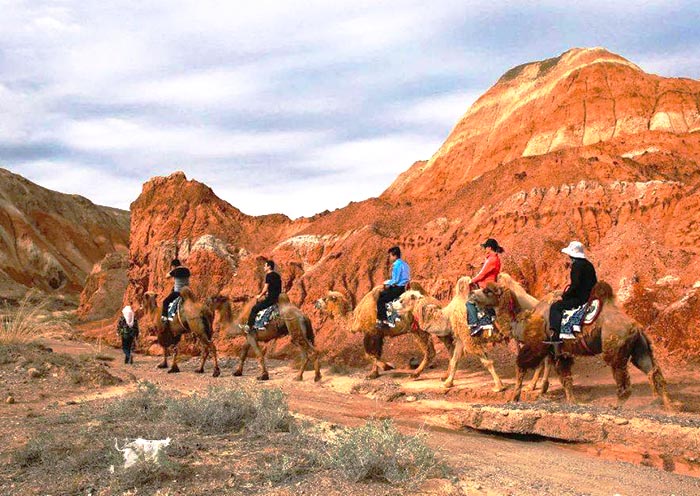
Unlike the others where you board and exit the sightseeing bus at the same spot, Platform 5 follows a one-way route: you get off at Point A, walk the entire length of the boardwalk, and board the bus again at Point B to continue to the next platform.
This platform is where you can embark on a camel ride (approx. CNY 100 for 15–20 minutes), offering a unique, slow-paced Silk Road experience through the colorful terrain.
While the scenery here may not rival the grandeur of Platform 1, it offers its own quiet charm. The colors here are softer, reminiscent of the palette at Platform 1, but the ridge-top vantage point provides a unique sense of walking along the spine of the rainbow hills.
This platform is home to one of the park's most intriguing man-made landmarks—the Mazi Noodle House, which is served as the primary set for a Chinese film.
No. 6,7,8,9 Sightseeing Platform—The Deep Tour Experience
Located near the East Entrance, Platforms 6 through 9 are part of the park's exclusive deep tour zone. These platforms are not accessible with the standard ticket—you'll need to purchase a deep tour ticket (approximately CNY 348), which requires a minimum of three people to book.
Unlike the standard hop-on-hop-off format, deep tour visitors enjoy guided service with a dedicated interpreter, plus access to a private rest area with complimentary refreshments. The tour operates in small groups, ensuring a quieter, more intimate encounter with the landscape.
China Rainbow Mountain Photography Tips
Capturing the perfect shot of Zhangye's Rainbow Mountains requires more than just pointing your camera—it's about light, timing, and knowing where to stand. The single most important factor for Danxia photography is light. The colors change dramatically throughout the day, and knowing when to shoot makes all the difference.
| Best Photography Timing | Recommended Platform(s) | Tips |
|---|---|---|
| Sunset (1 hour before) | No.4 Platform | A lightweight tripod |
| Sunrise (6:30–7:30) | No.1 Platform | A lightweight tripod |
| After rain | Any platforms | Extra memory cards, fully charged batteries (cold weather drains them faster) |
Drones are strictly prohibited for personal use throughout the Zhangye Danxia National Geological Park.
Where is China Rainbow Mountain (Zhangye Danxia) & How to Get There?
China Rainbow Mountain, or called Zhangye Danxia Geological Park, is located in Nijiaying Nantaizi village, Linze County, Zhangye City 734200, China (张掖市临泽县倪家营南台子村). The park sits in the northern foothills of the Qilian Mountains, approximately 30–50 kilometers west of downtown Zhangye, depending on which entrance you use.
Getting to Zhangye City
Before you can reach the Rainbow Mountains, you first need to get to Zhangye city. Here are your options.
| Transport Mode | Details | Travel Time |
|---|---|---|
| By Air | Fly to Zhangye Ganzhou Airport (YZY) from major cities like Beijing, Xi'an, Lanzhou, Chengdu, or Dunhuang, etc. | The airport is about 24–30 km from downtown Zhangye. A taxi costs about CNY 60 and takes 30–40 minutes. |
| By High-Speed Train | Zhangye's main high-speed rail station is Zhangye West Station (Zhangyexi). Frequent trains from Lanzhou West Station take around 3 hours (CNY150). Direct trains are also available from Xi'an and Urumqi, etc. | Lanzhou (6–10 hrs) |
From Zhangye City to the Geopark
Once you've arrived in Zhangye, you have several options to reach the park entrance (about 40–50 km away):
| Option | Details | Cost | Travel Time |
|---|---|---|---|
| Public Bus | Direct shuttle buses depart from Zhangye West Bus Station (Zhangye Xizhan) to the park's west/north entrance. Buses run frequently (every 30–60 minutes) from around 7:30 AM to 5:00 PM. | CNY 10–15 one-way | A hour around |
| Taxi or Didi | A flexible, comfortable option. Taxis can be hired for a round trip, with drivers often waiting at the park entrance. | CNY 100–200 one-way; round-trip negotiable | 45–60 minutes |
| Private Transfer | Ideal for sunrise/sunset photography when public buses aren't running. Your driver adjusts to your schedule. | CNY 200–300 round-trip | 45–60 minutes |
No private cars are allowed inside the park. All visitors must use the park's sightseeing buses, which are included in the ticket price and run on a hop-on, hop-off basis between the main viewing platforms.
How to Plan a Zhangye Danxia Geological Park Tour?
A visit to Zhangye Rainbow Mountain is the key that unlocks Zhangye City, just as Zhangye itself is a vital chapter in the epic story of the Hexi Corridor—the ancient lifeline of the Silk Road.
Most travelers experience the Rainbow Mountains as part of a classic Gansu corridor loop—Zhangye to Jiayuguan to Dunhuang, or the reverse.
This is the heart of the Hexi Corridor experience, best savored over 5-6 days: 3 cities, each a chapter of history unfolding across desert, oasis, and mountain. Whether you start in Zhangye and head west or begin in Dunhuang and journey east depends on where you're coming from and which story you want to tell yourself first—the slow reveal of the rainbow hills as a grand finale, or the moment you step off the train and straight into nature's painted canvas.
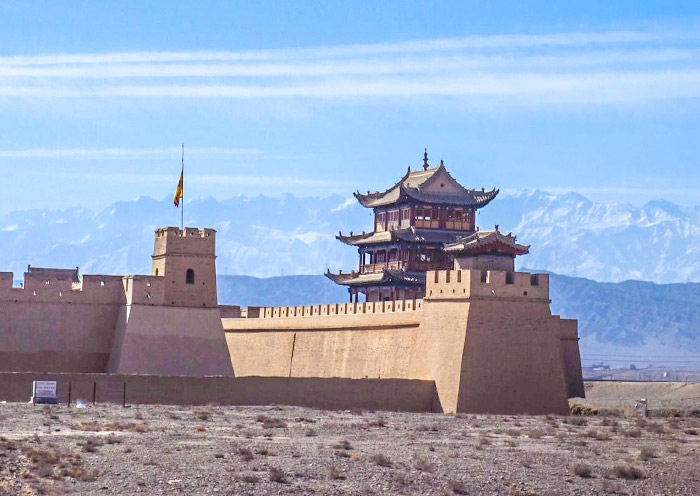
6 Days Best Gansu Tour from Dunhuang to Jiayuguan & Zhangye
Dunhuang - Jiayuguan - Zhangye
 6 Days
 3 Places
Beyond this core loop, the Silk Road stretches in both directions, inviting you to follow its ancient path further.
Heading north, the desert calls in a different voice. From Zhangye, venture into Inner Mongolia to discover the Badain Jaran Desert—a landscape of towering megadunes, some rising 500 meters against the sky, with hidden lakes scattered between them like scattered pearls. Here, you can trek across the world's highest sand dunes, camp under stars undimmed by city lights, and witness a silence so deep you can hear your own heartbeat.
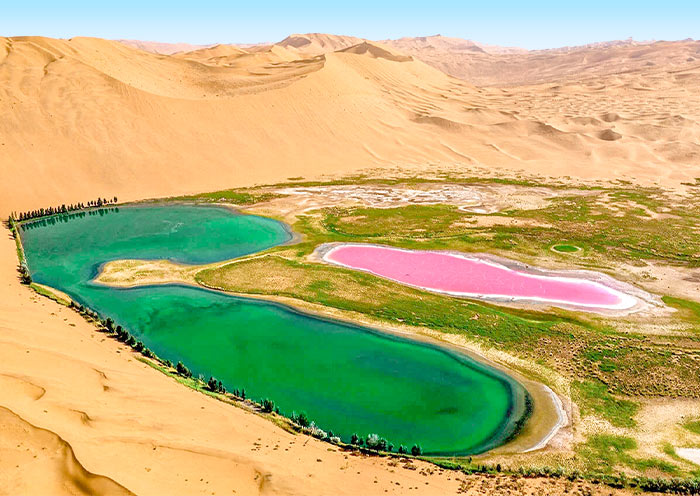
5 Days Badain Jaran Desert Tour from Zhangye - Gansu to Inner Mongalia
Zhangye - Badain Jaran Desert - Zhangye
Heading west, the road leads into Xinjiang. From Dunhuang, you can continue to Turpan, where the Flaming Mountains burn red beneath the desert sun and the Karez irrigation system still waters the oasis after 2,000 years. Further still lies Urumqi, the vibrant crossroads of Central Asian cultures, and for those with time and spirit for adventure, the legendary city of Kashgar awaits—where the old Silk Road bazaars still pulse with life.
9 Days Northwest China Tour from Xinjiang to Gansu by High-speed Train
Urumqi - Turpan - Dunhuang - Jiayuguan - Zhangye - Lanzhou
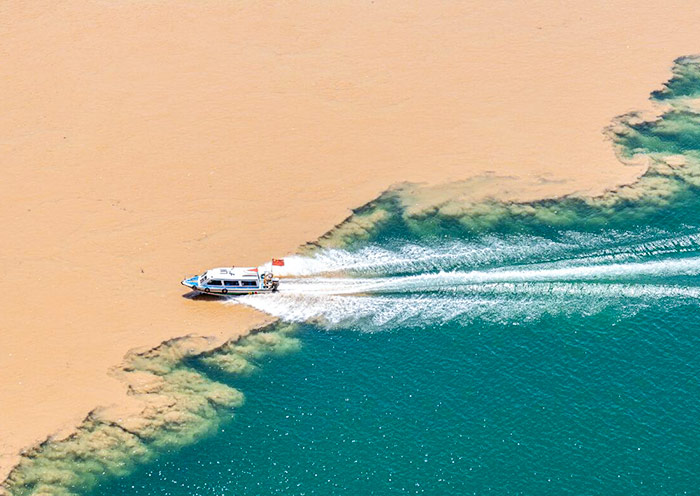
Heading east, the path returns you to China's heartland. A short high-speed train brings you to Lanzhou, the Yellow River city where you can watch the muddy waters flow beneath the Iron Bridge. From there, Xi'an calls—the ancient capital where the Terracotta Army stands guard over the First Emperor's tomb, and where the Silk Road itself began.
9 Days China Hexi Corridor Tour from Xian by High-speed Train
Xian - Tianshui - Lanzhou - Zhangye - Jiayuguan - Dunhuang
Heading south, the landscape rises. From Zhangye, you can travel to Xining, the gateway to the Tibetan Plateau. Here, Qinghai Lake stretches across the horizon like an inland sea, its vast blue waters offering a serene counterpoint to the desert's drama. Continue to Chaka Salt Lake, where the sky mirrors itself on liquid silver, and Ta'er Monastery awaits with its golden roofs and whispering prayer wheels.
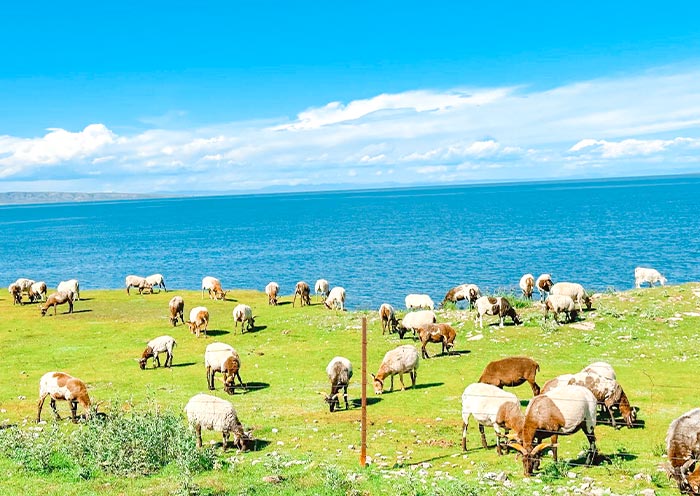
7 Days Qinghai Gansu Classic Tour: Nature & Legendary Silk Road Legacies
Xining - Qinghai Lake - Chaka Lake - Xining - Zhangye - Dunhuang
And for those who dream of connecting both ends—and more—longer routes await. The full Gansu-Xinjiang arc weaves the Hexi Corridor together with Turpan, Urumqi, and Kashgar in an 11-day journey from Lanzhou to the westernmost edge of China.
The even more ambitious traveler can trace the Silk Road from Xi'an all the way to Uzbekistan over 19 days, crossing borders and millennia.
Or combine the desert highways with the roof of the world: a 21-day odyssey that links Beijing's Forbidden City with Tibet's Everest Base Camp, threading the rainbow hills between them like a colorful bead on an ancient string.
For those blessed with a full month, the journey can continue east again—from the high plateaus down to Chengdu's pandas, Yunnan's rice terraces, Guilin's karst peaks, and Shanghai's glittering skyline, closing the loop on a circuit that reveals China in all its impossible diversity.
11 Days Silk Road Tour from Lanzhou to Kashgar (Gansu Xinjiang In-Depth)
19-Day Legendary Silk Road Tour: from China’s Xian to Uzbekistan (Core Route)





 Data in submission...