+852 5394 6901
 Take China Group Tours in 2026/2027 to enjoy 30% discount compared to private tour. Same Experience & Lowest Price!

Why Dengfeng Shaolin Temple?
Yes, you can find a Shaolin Kung Fu school in almost any country today. You can learn the kicks, the punches, and the forms without ever leaving your home country.
So why make the trip all the way to Dengfeng?
Because learning the moves is not the same as experiencing the source.
The Shaolin Temple in Dengfeng is where it all began. This is the actual birthplace of both Shaolin Kung Fu and Chan (Zen) Buddhism. When you walk through these ancient gates, you are walking where the legends walked over 1,500 years ago.
It is about the atmosphere. You can feel it when you stand in the training hall and see the deep, worn pits in the stone floor—footprints left by millions of hours of practice over centuries. You can sense it in the quiet of the Pagoda Forest, where generations of great monks rest. You can hear it in the echo of chants from the surrounding Songshan Mountains.
A local school can teach you the shape of Kung Fu. But only a visit to Dengfeng can show you its heart and soul.
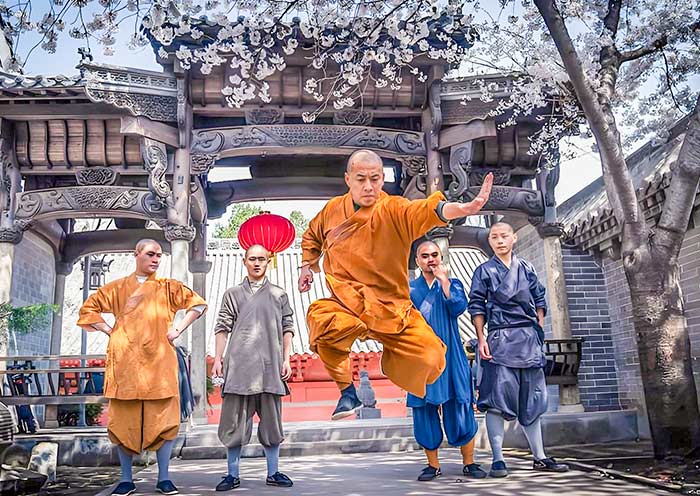
1 Day Shaolin Temple Tour & Kung Fu Experience from Luoyang
Luoyang - Shaolin Temple - Luoyang
 1 Day
1 Day 3 Places
9 Things to Do in Shaolin Temple
Once you pay the entrance fee, you can watch the legendary kung fu performance and explore the ancient halls and pagoda forest—almost all without reaching for your wallet again. An extra fee is charged if you want to try vegetarian meals in the temple or watch the Zen Music Ritual. See the specific things to do below.
1. Watch a Live Kung Fu Performance
The show takes place in the Martial Arts Hall, a short walk from the main temple. Multiple times each day, you can watch the monks demonstrate their incredible skills.
You will see "hard qigong"—masters using their heads to bend steel spears or smash stone slabs. You will witness animal-style boxing, where performers move exactly like tigers, snakes, and mantises. And you will see lightning-fast weapons demonstrations with staffs and swords.
Halfway through, the master invites volunteers from the audience to come on stage. If you are not shy, this is your chance! They will teach you a simple move, and you will try to copy them.
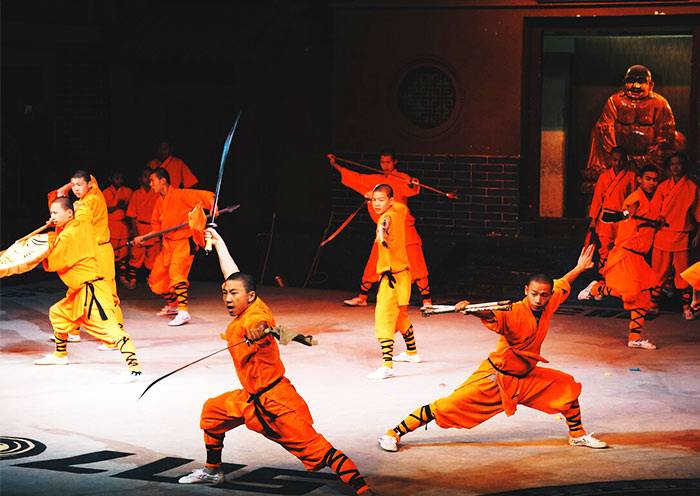
Regular performances are held at 9:30, 10:30, 11:30 in the morning and 14:00, 15:00, 16:00 in the afternoon. However, schedules can change based on the season or special events, so it is always a good idea to check the times posted at the ticket office when you arrive.
2. Explore the Pagoda Forest (Ta Lin)
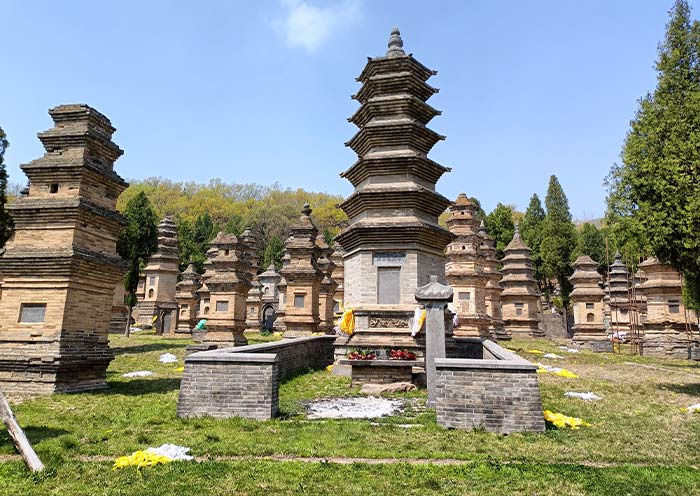
A short walk west of the main temple complex lies one of the most sacred and photogenic sites in Shaolin: the Pagoda Forest.
This is not just a collection of towers; it is the cemetery for abbots and eminent monks of Shaolin. Spanning over 1,000 years from the Tang, Song, Yuan, Ming, and Qing dynasties, there are over 240 pagodas of various sizes.
The number of storeys in a pagoda indicates the monk's spiritual attainment, status, and contribution to Buddhism. The more storeys, the higher the status. The shapes and carvings also vary by dynasty, making it an open-air museum of ancient architecture.
Walking among these ancient, moss-covered stone structures with the Songshan Mountains as a backdrop is a solemn and deeply historic experience.
On August 1, 2010, the Pagoda Forest—along with other historic monuments in the area—was officially inscribed on the UNESCO World Heritage List as part of the "Historic Monuments of Dengfeng in 'The Centre of Heaven and Earth'."
3. Tour the Main Temple Halls (Changyuan Courtyard)
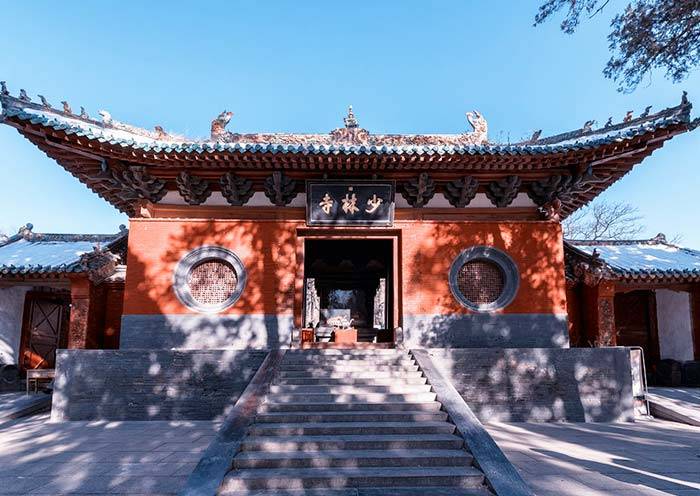
The core of the Shaolin Temple, the Changyuan Courtyard, is a series of buildings along a central axis that you can walk through.
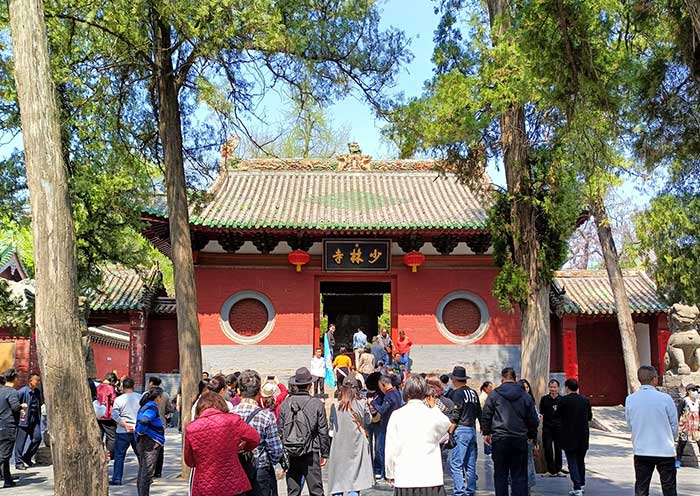
- Gate of the Temple (Shanmen): Your journey begins here. This is the main entrance, and it's common to see the famous "Thirteen Warriors Save the King" murals inside.
- Hall of Heavenly Kings (Tianwang Dian): Inside, you'll find statues of the four Heavenly Kings, each representing a cardinal direction and protector of the Buddhist faith.
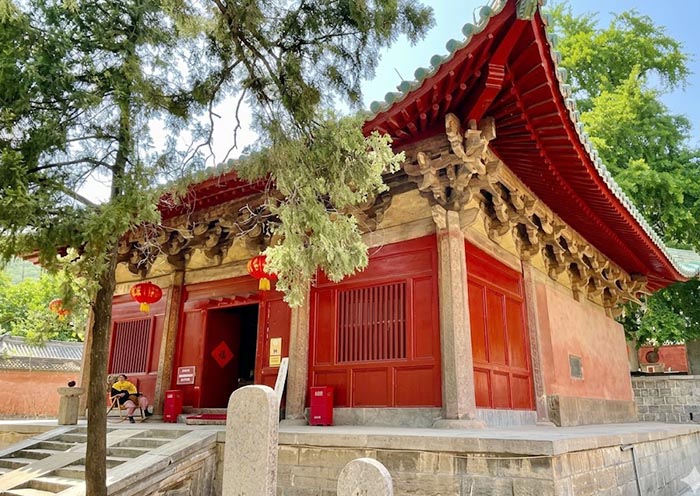
- Mahavira Hall (Daxiong Baodian): This is the main hall for Buddhist activities. You will see the statues of the Sakyamuni Buddha, and the floor is marked with deep depressions—these are said to be footprints left by generations of monks practicing Kung Fu over the centuries.
- Pavilion of the Standing Sutra (Lixue Ting): Located at the very back, this pavilion holds a famous stele and a painting of the thirteen monks who rescued the Tang emperor Li Shimin. Note the pits in the ground here as well, evidence of the monks' continuous martial arts practice.
4. Experience Zen Culture at Chuzu Temple
Located about 2 km northwest of the main Shaolin Temple, on Wuru Peak, this is a quieter, more spiritual site.
This smaller temple was built to honor Bodhidharma (Da Mo), the legendary Indian monk who founded Zen (Chan) Buddhism and is credited with bringing what would become Shaolin Kung Fu to the temple.
Just a short but steep hike above the Chuzu Temple is the Dharma Cave. Legend holds that Bodhidharma meditated facing a wall in this cave for nine years. It is said that his intense concentration wore a hole in the stone. Visiting here gives a profound sense of the origins of Zen discipline.
5. Take a Kung Fu Class
Just 700 meters east of the main temple—about a 10-minute walk—you will find the Shaolin Martial Arts Hall. This is the best place to get a real taste of kung fu training.
You can book a one-hour introductory session led by a master instructor. They will teach you proper stances, basic punches, and simple kicks. You will sweat. And you will quickly discover that the moves the monks make look effortless are actually incredibly difficult.
It is a fun, hands-on way to connect with the art. No experience needed—just show up ready to try. After an hour, you will walk away with sore muscles and a whole new level of respect for anyone who practices kung fu.
You can often arrange these classes through your hotel or at the visitor center.
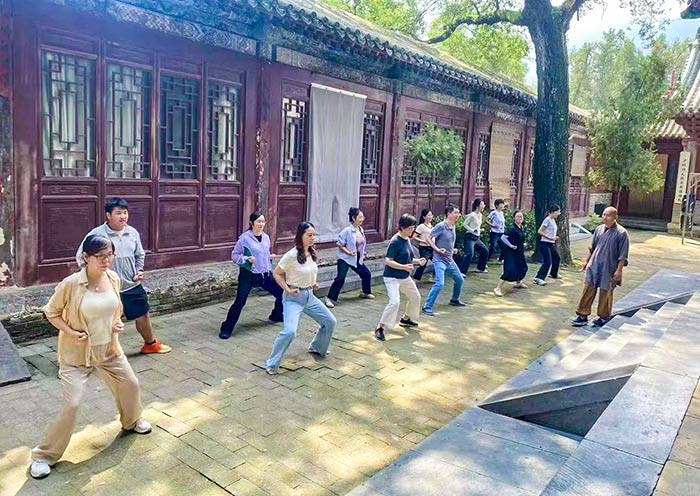
For serious students who want real trainings, look into the martial arts schools surrounding the temple. Programs range from one week to one year, with costs starting around CNY1,800–2,800 per month depending on the school and accommodation type. You train daily, live simply, and follow the same rhythm as the students who dedicate their lives to the art.
6. Enjoy A Vegetarian Meal with the Monks
Right inside the temple complex, you can experience a true Shaolin vegetarian meal. This is not just lunch—it is part of the practice.
The food follows Buddhist principles: no meat, simple natural ingredients. You will eat tofu, mushrooms, seasonal greens, and wheat gluten dishes—many cleverly prepared to look and taste like meat, without using any.
Head to the temple's vegetarian restaurant, located near the main halls. A set meal costs 36 RMB and includes two dishes, one soup, and rice. It is the standard monk's meal—simple, filling, and completely authentic. No fancy menu, no upselling. Just show up, pay, and eat like a monk.
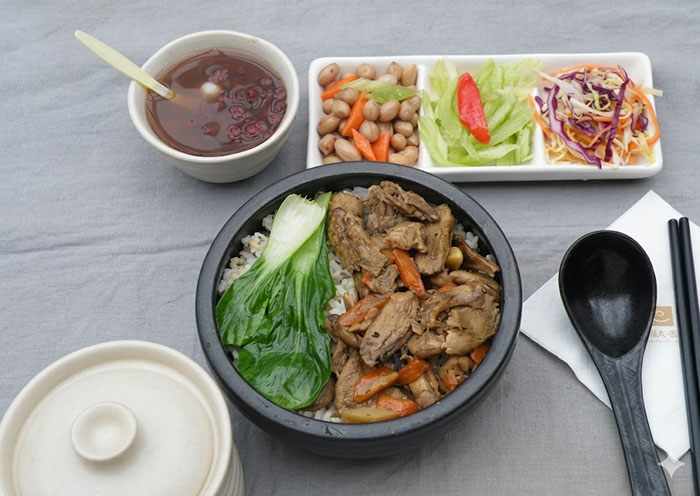
11:00 AM to 1:00 PM. Go a bit earlier if you can—it gets busy and lines form fast. No fancy menu, no upselling. Just show up, pay, and eat like a monk.
7. Hike to Sanhuang Village (Take the Cable Car)
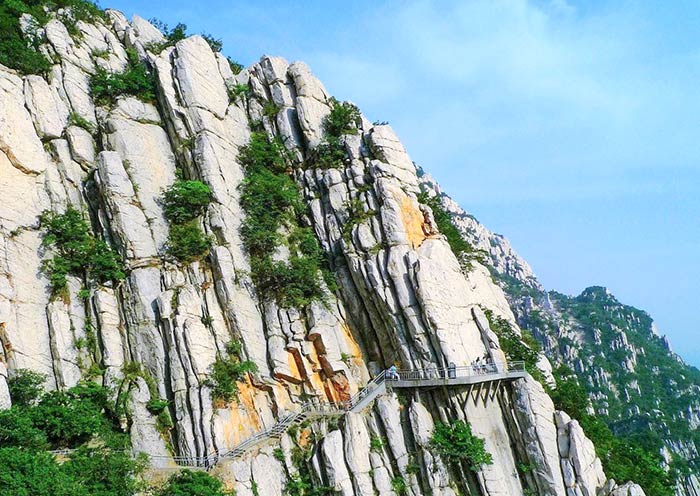
Behind the temple, a cable car waits to take you up into the mountains. The destination is Sanhuang Village—a scenic area known as the "Natural Geological Museum," with dramatic cliffs, pine trees, and cliffside plank walks.
Once at the top, you can hike along the suspended plank roads carved into the cliffs. The views are stunning—a complete contrast to the temple below. Allow at least 2–3 hours to explore if you want to do the full loop.
Price: CNY 100 for a round-trip ticket (one-way also available).
Operating hours: 8:00 AM to 5:00 PM (summer); 9:00 AM to 4:00 PM (winter).
Ride time: About 18 minutes each way.
Note: Services may stop in bad weather (heavy rain or snow), so check conditions before heading up.
8. Watch the Zen Music Ritual
In the warmer months (typically April to October), an unforgettable outdoor performance takes place in a natural mountain valley about 7 kilometers from the temple, at Daixian Valley Scenic Area.
This is a massive, open-air spectacle staged in a natural mountain valley with a huge stage built over a river. It's a truly grand production.
Combining elements of Zen (Chan) Buddhism, classical music, modern dance, and, of course, Shaolin martial arts, the show is a visually stunning meditation on the relationship between martial arts and spiritual peace. Over 600 performers take part, using lights, sound, and special effects to create a magical atmosphere under the night sky.
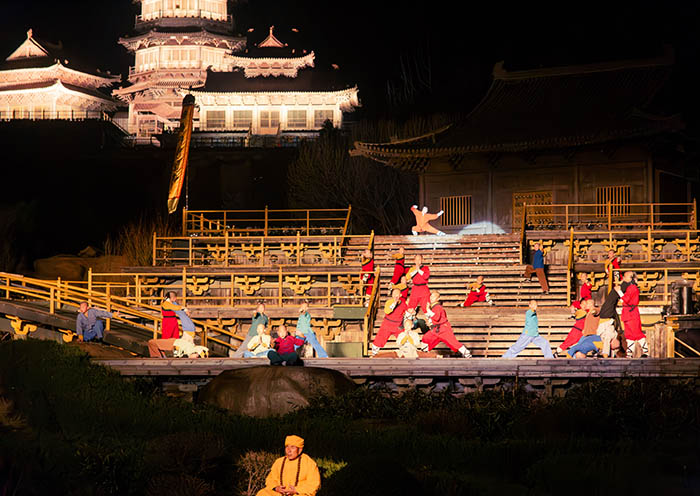
Time: 8:00 PM to 9:20 PM nightly.
Location: Daixian Valley Scenic Area (about 15 minutes by car from the temple).
Tickets: Range from 199 RMB to 980 RMB per person, depending on seat location.
Note: The show only runs during warmer months and may be canceled in bad weather. Check ahead before planning your evening.
9. Copy Sutras or Practice Qigong at a Zen Guesthouse
Just steps from the temple entrance, several Zen-style guesthouses offer immersive cultural experiences that go beyond sightseeing. These aren't just places to sleep—they are designed for guests to live within Shaolin culture.
At places like the Chanju Resort (a 5-minute walk from the main entrance), you can:
- Copy sutras by hand – Sit quietly in a peaceful room, light an incense stick, and carefully trace Buddhist scriptures. It is a meditative practice that calms the mind and connects you with the temple's spiritual roots.
- Practice Baduanjin Qigong with a master – Join an early morning session in the courtyard, learning this gentle "eight brocades" exercise from a skilled instructor. Breathe in the mountain air and move with intention as monks have done for centuries.
- Try traditional crafts – Some guesthouses offer rubbing experiences where you can make your own "Zen" character print to take home.
- Borrow Hanfu for photos – Dress in traditional Chinese clothing and capture stunning images against the temple's ancient architecture.
Cost: Many of these experiences are free for guests staying overnight. Day visitors can often join activities for a small fee—check with the front desk.
Even if you are not staying overnight, it is worth walking over to explore these guesthouses. Their tea houses and book bars are open to visitors, and flipping through a century-old martial arts manual while sipping Zen tea is a memorable way to end your temple day.
Where is Shaolin Temple & How to Get There?
Shaolin Temple is located at the foot of Songshan Mountain, about 15 kilometers northwest of Dengfeng City, Zhengzhou, Henan Province, China. Normally, tourists visit Shaolin Temple from Dengfeng downtown or nearby Zhengzhou or Luoyang. Getting from Luoyang is the most popular, because Luoyang is also home to the gorgeous Longman Grottoes. Visitors who coming from Luoyang side can combine a visit to Longmen Grottes and Shaolin Temple together.
| From | Distance | Why from here |
|---|---|---|
| Luoyang | 60-70 km, about a 70-minute drive | Luoyang is one of China's Four Ancient Capitals. The famous Longmen Grottoes is also here. It can be easily accessed by high-speed train from Zhengzhou (40 mins), Xi'an (about 2.5 hrs), Beijing (about 3.5 hrs), Shanghai (about 5 hrs), etc. |
| Dengfeng | 16 km & about 20 minutes by car | The closest city area to Shaolin Temple. Dengfeng is at present not accessible by high speed train or flight. Visitors typically arrive at Zhengzhou or Luoyang first, and then transfer to Dengfeng. |
| Zhengzhou | 92 km, about 1.5-2 hours by car | Zhengzhou is the capital of Henan Province. It can be easily accessed by high speed train from Beijing (about 3 hrs), Xian (about 2.5 hrs), Luoyang (40 mins), etc. |
Get to Shaolin Temple from Dengfeng
Shaolin Temple is right located in Dengfeng City, however, not in the downtown area but the mountain areas. To get from Dengfeng dowtown to Shaolin Temple, you can ride No.8 bus or a private car.
- Bus No. 8: Take Bus No. 8 from Dengfeng West Bus Station directly to Shaolin Temple. Fare is 2 RMB, and the ride takes about 30 minutes.
- Private Car/Taxi: About 16 km & a 20-minute drive.
Get to Shaolin Temple from Luoyang
- Bus: Take a bus from Luoyang Long-distance Bus Station to Dengfeng or directly to Shaolin Temple. Buses run frequently, cost about 20–30 RMB, and take about 1.5–2 hours.
- Private Car/Taxi: The fastest and most convenient option, especially when you are traveling with lots of baggage. The whole way is about 60-70km and 70 minutes by car.
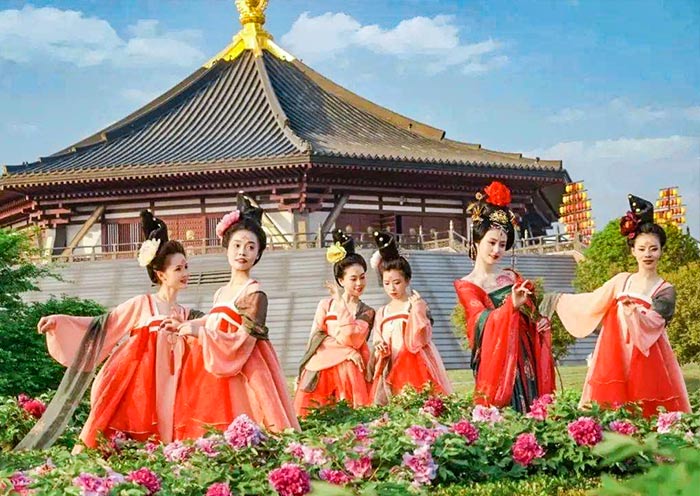
2 Days Luoyang Essential Tour: Ancient Capital, Grottoes & Shaolin Kung Fu
Luoyang - Longmen Grottoes - Shaolin Temple - Luoyang
Get to Shaolin Temple from Zhengzhou
- Direct Bus (Easiest & Cheapest): Take a direct bus from Zhengzhou Central Bus Station (opposite Zhengzhou Railway Station) to Shaolin Temple. Buses depart frequently from around 7:00 AM to 5:00 PM, cost 25–35 RMB, and take about 1.5–2 hours. The bus drops you at the Shaolin Temple parking lot, a short walk from the entrance.
- Private Car/Taxi: The fastest and most convenient option, especially when you are traveling with lots of baggage. The whole way is about 92km and 1.5-2 hours by car.
- High-Speed Train + Taxi (Not Recommended): This involves multiple transfers and takes longer than the direct bus. Take a high-speed train from Zhengzhou to Gongyi South Station (30 minutes), then a taxi to Shaolin Temple (1 hour).
How to Get to Shaolin Temple from Zhengzhou >>
How to Plan a Shaolin Temple Tour?
Planning a trip to the birthplace of Chan Buddhism and Shaolin Kung Fu is an exciting adventure. Your journey will typically start from a nearby major city, either Luoyang (about a 70-minute drive away) or Zhengzhou (about a 1.5-2 hour drive away), both of which are well-connected by high-speed trains and flights.
One-Day vs. Two-Day Itinerary for Shaolin Temple
Normally, one day is enough for most Shaolin Temple visitors. You can watch the kung fu performance, explore the main temple halls, and walk through the Pagoda Forest—all in a comfortable day trip.
So, should you add a second day? It depends on two things: whether you want to experience real kung fu training, and whether you want to explore the highlights of the nearby city you are traveling from.
Shaolin is not accessible by direct transport. You have to transfer from a nearby city like Luoyang or Zhengzhou, especially Luoyang. Since you are already making the journey, spending a little more time in the nearby city is also a good choice.
One-day Itinerary with Shaolin Temple
For your one-day journey from Luoyang, you can choose between two distinct paths: the "Heritage & Kung Fu" Express, which pairs the breathtaking cliff carvings of the Longmen Grottoes with the highlights of the Shaolin Temple, or the "Immersive Warrior" Experience, a deep dive into Shaolin that goes beyond sightseeing to include a 1-hour private Kung Fu lesson—transforming your visit from a simple tour into a hands-on "discipleship" session with a master.
Optional 1: Longmen Grottoes + Shaolin Temple Essentials
- Morning – Explore Tang Dynasty Art at Longmen Grottoes
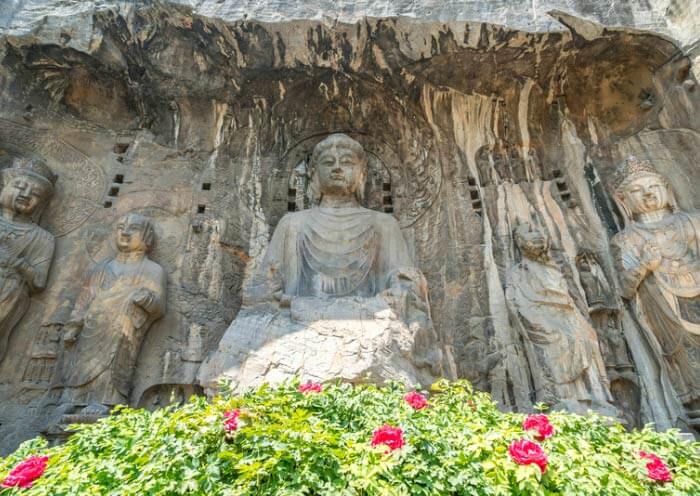
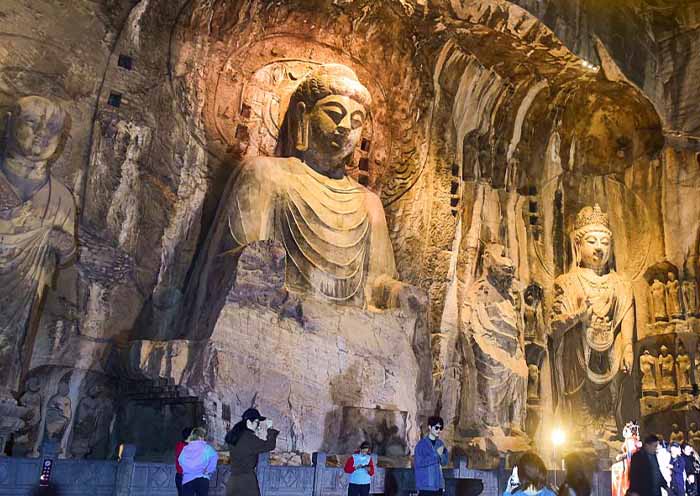
Begin your day south of Luoyang at the breathtaking Longmen Grottoes. Walk along the Yi River to marvel at over 110,000 Buddhist statues. The highlight is the Fengxian Temple, where the 17-meter-tall Vairocana Buddha radiates a serene smile.
- Noon – Quick Lunch & Scenic Transfer to Dengfeng
Enjoy a local lunch before a comfortable 70-minute drive to Dengfeng. As you leave the "City of Peonies" and head toward the "Cradle of Kung Fu," take this time to rest and recharge.
- Early Afternoon – Watch Kung Fu Performance & Explore Ancient Halls
Arrive at the Shaolin Temple for a 30-minute high-energy Kung Fu performance. Afterward, explore the main temple complex. Inside the Mahavira Hall, look for the deep pits in the stone floor—permanent footprints left by generations of monks.
- Late Afternoon – Wander Through the Pagoda Forest & Departure
Wander through the Pagoda Forest, a serene cemetery of over 240 stone pagodas. Spend your final moments soaking in the spiritual atmosphere before your evening transfer back to Luoyang.
Optional 2: Deep Shaolin Exploration with 1-Hour Private Kung Fu Lesson
- Morning – Depart from Luoyang & Arrive and Watch the Kung Fu Performance
Start your day early by catching a direct bus or hiring a driver from Luoyang to Shaolin Temple. Walk to the Martial Arts Hall for the performance featuring "hard qigong" and animal-style boxing.
- Late Morning – Explore the Main Temple Complex
After the performance, walk through the ancient halls including Shanmen, the Hall of Heavenly Kings, and the Mahavira Hall. Observe the stone floor pits left by practicing monks.
- Noon – Vegetarian Lunch at the Temple
Head to the temple's vegetarian restaurant. A set meal costs 36 RMB and follows Buddhist principles—simple, natural, and surprisingly flavorful. Serving hours are 11:00 AM to 1:00 PM.
- Afternoon – Visit the Pagoda Forest & Kung Fu Training Experience
Reach the Pagoda Forest, the cemetery for generations of Shaolin monks. Then, walk to the Shaolin Martial Arts Hall for a one-hour introductory class with a master instructor to learn stances, punches, and kicks.
- Late Afternoon – Free Time or Departure
Browse the shops near the entrance for kung fu gear, tea, or souvenirs. Then meet your driver or catch the bus back to Luoyang. The last buses usually leave around 5:00–6:00 PM.
Two-day Itinerary with Shaolin Temple
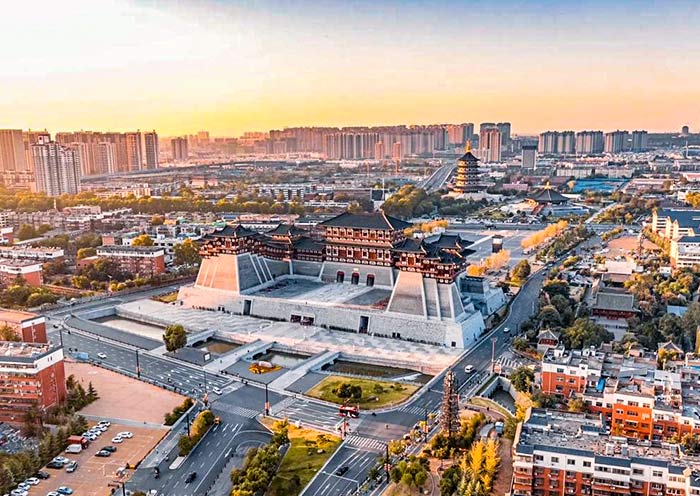
Compared to Zhengzhou, Luoyang is more popular as a gateway city to Shaolin Temple. And a 2-day itinerary with Shaolin Temple can thus also include Luoyang highlights.
Day 1: Arrival in Luoyang & The Longmen Grottoes
- Morning – Travel to Luoyang
Start your journey by taking a high-speed train from cities like Xi'an (1.5 hours), Zhengzhou (40 minutes), or Beijing (3.5 hours) to Luoyang. Upon arrival, meet your guide or transfer to your hotel to drop off luggage.
- Late Morning – Explore the Longmen Grottoes
Drive south of the city to the Longmen Grottoes, a UNESCO World Heritage site and one of China's four greatest grotto complexes. Over 2,300 caves and 110,000 Buddhist statues are carved into limestone cliffs stretching 1 kilometer along the Yi River.
Your visit will focus on the Western Hill, where the highlights are concentrated. The centerpiece is Fengxian Temple, featuring the majestic 17-meter-tall Vairocana Buddha, said to be carved with the likeness of Empress Wu Zetian. You'll also see Wanfo Cave (with 15,000 tiny Buddha carvings), the Three Bingyang Caves, and Guyang Cave. Allow 2–3 hours to explore.
- Afternoon – Luoyang Old Town & Lijing Gate
After the grottoes, head to Luoyang Old Town. The iconic Lijing Gate marks the entrance to a lively area filled with traditional architecture, food stalls, and souvenir shops. Stroll through the streets, try local snacks like water banquets or spicy soup, and soak in the atmosphere of ancient China.
- Evening – Overnight in Luoyang
Check into your hotel in Luoyang and rest for the next day's adventure.
Day 2: Shaolin Temple – Kung Fu, Training & History
- Morning – Transfer to Shaolin Temple
After breakfast, depart Luoyang for the Shaolin Temple in Dengfeng. The drive is about 70 minutes (74 km).
- Late Morning – Kung Fu Performance & Temple Exploration
Arrive and head straight to the Martial Arts Hall to catch a 30-minute kung fu performance. Afterward, explore the main temple complex. Walk through the Shanmen (Mountain Gate) , the Hall of Heavenly Kings, and the Mahavira Hall, where you'll see the famous practice pits—depressions in the stone floor worn by centuries of monk training. Continue to the Pagoda Forest, a cemetery with over 240 ancient pagodas dating from the Tang to Qing dynasties.
- Noon – Vegetarian Lunch
Enjoy a simple, authentic vegetarian meal at the temple's restaurant (36 RMB set meal, served 11:00 AM–1:00 PM).
- Afternoon – One-Hour Kung Fu Training Class
This is the highlight for many. Walk 700 meters east of the temple to a local professional martial arts school (like the Shaolin Martial Arts Hall). Here, you'll join a one-hour introductory kung fu class led by a master instructor. You'll learn basic stances, punches, and kicks—and quickly discover how challenging even the simplest moves can be. No experience is needed.
- Late Afternoon – Departure
After training, your guide will transfer you back to Luoyang for your onward journey. You can catch a high-speed train or flight in the evening, or extend your stay.





 Data in submission...