
 +852 5394 6901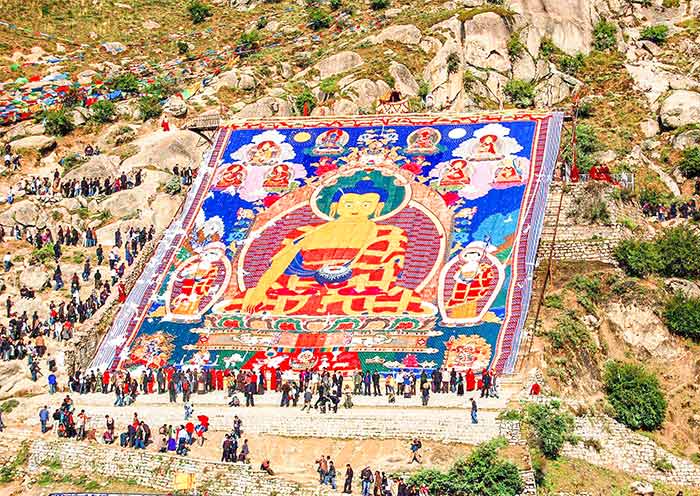
 See More

 Take China Group Tours in 2026/2027 to enjoy 30% discount compared to private tour. Same Experience & Lowest Price! Check China Group Deals >>


 See More
Good news for travelers who love festivals and local cultures! The 2026 Tibetan Shoton Festival will fall on August 10, 2026. If you wish to experience the grand annual celebration in Tibet, join us on our 9-day Tibet group tour for the most joyful and culturally rich festivals.
3 Days of Celebration in Lhasa:
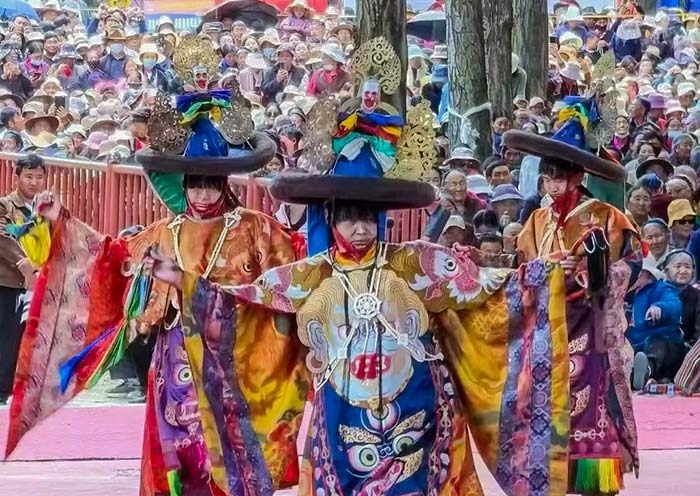
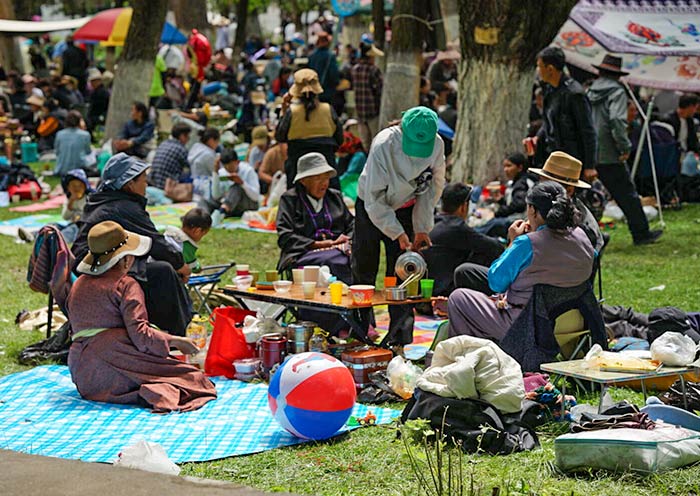
Catch the spirit! Experience the heart of Shoton Festival at Drepung Monastery, where the magnificent giant Buddha Thangka is unveiled at the Thangka Platform. Witness pilgrims offering khatas and scattering blessed tsampa powder in deep devotion. Continue to Norbulingka and enjoy Tibetan opera. You may even join local Tibetan families for picnic, enjoying yogurt, butter tea - a rare chance to truly blend into Tibetan life. Your group will also explore Lhasa’s classic landmarks, including the Potala Palace, Jokhang Temple, Barkhor Street, and Sera Monastery with its famous monks’ debate.
Holy Lakes & EBC Extension:
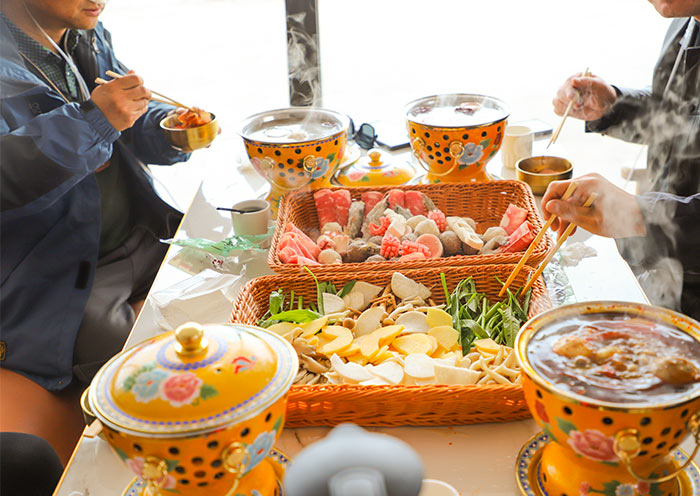
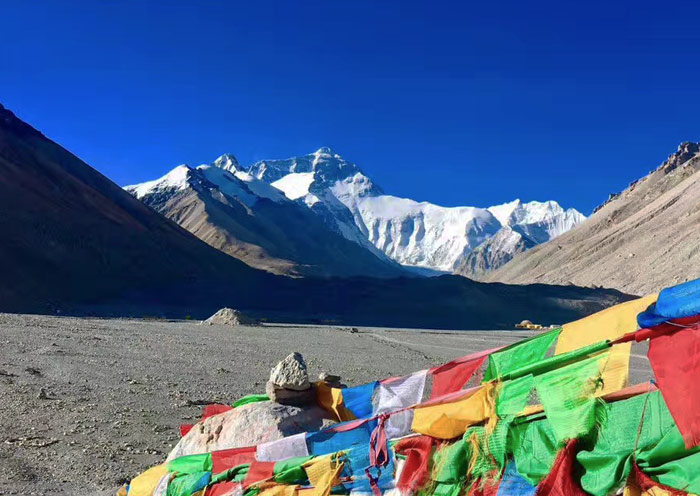
After three vibrant festival days, travel west toward Yamdrok Lake, Shigatse, and onward to Everest Base Camp (5,200 m), where you’ll spend the night at the foot of the world’s highest peak - complete with a warm hot-pot dinner.
The Shoton Festival happens only ONCE A YEAR - join us in Tibet in August 2026! Let’s celebrate yogurt festival together!

 View Destinations

| Day | Place | Highlights |
|---|---|---|
| 1-4 | Lhasa | Jokhang Temple, Barkhor Street, Tibetan Cultural Experience, Drepung Monastery, Sera Monastery, Potala Palace, Norbulinka |
| 5 | Shigatse | Yamdrok Lake, Karola Glacier |
| 6-7 | Qomolangma National Nature Preserve | Gyawu La Pass, Rongbuk Monastery, Mt. Everest Base Camp |
| 8 | Shigatse | Tashilunpo Monastery |
| 9 | Lhasa | Departure |
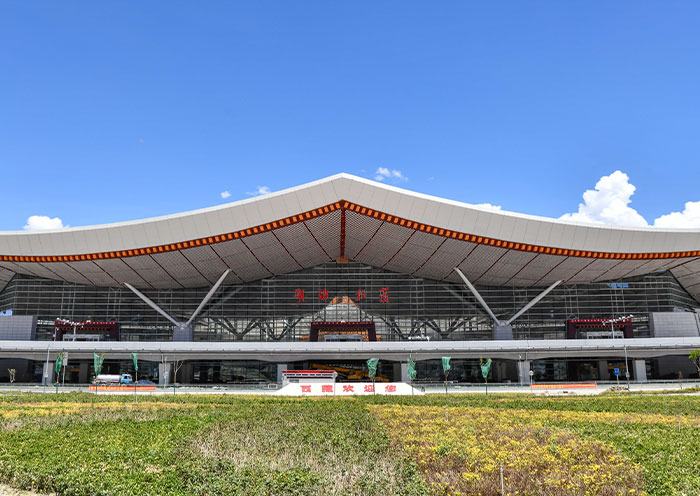
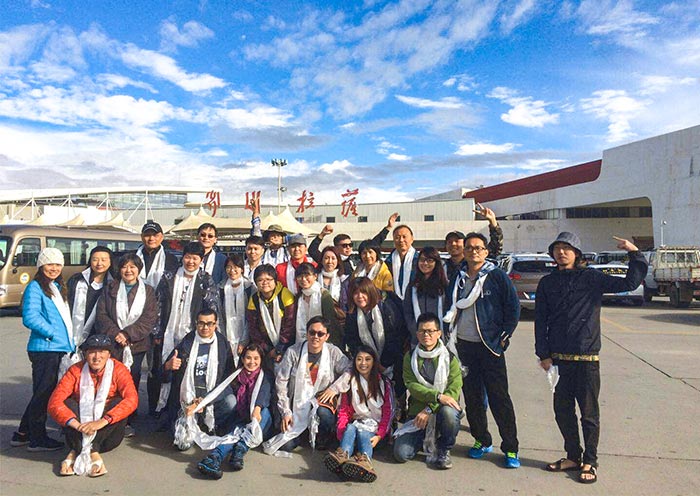
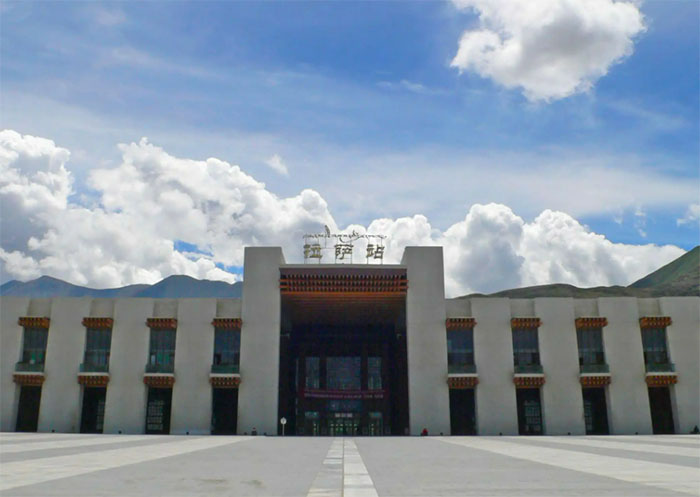
Tashi Delek! Welcome to Lhasa, the capital of the Tibet Autonomous Region! Upon arrival at Lhasa Gonggar International Airport or Lhasa Railway Station, our friendly Tibetan guide will greet you with a Hada (a traditional white silk scarf) and warm blessings. (Tip: Please let us know your mode of transportation and arrival time in advance.)
After that, our guide and driver will escort you to your hotel in downtown Lhasa. (Tip: The airport is located about 60 km southeast of the city, 1-1.5 hours’ drive.)
After check-in, take the rest of the day to relax and acclimatize to Lhasa’s high altitude (3,650 m). It’s important to allow your body to adjust before beginning your exciting journey through Tibet.
Flight Booking Suggestion for Day 1:
Since you will need to wake up very early the next morning to attend the Drepung Monastery Thangka-Unveiling Ceremony, we highly recommend booking a flight that arrives in Lhasa in the morning on Day 1. This will allow you to rest well and save your energy for the next day’s activities.
Helpful Reminders for Your First Day in Lhasa

Attractions

Transportation

Dining
None

Accommodation
Lhasa
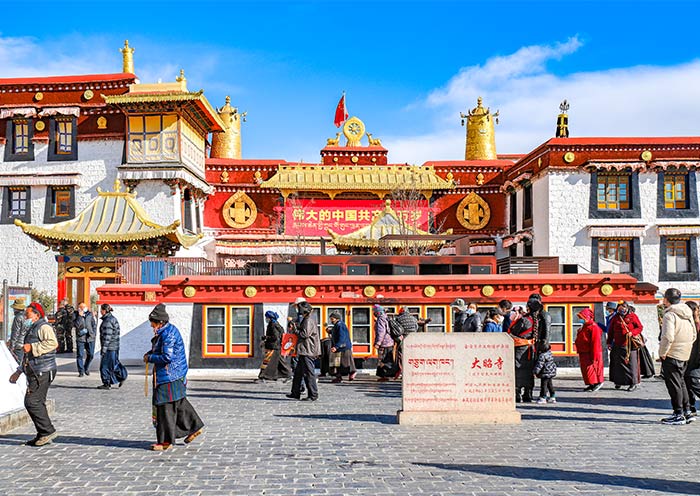
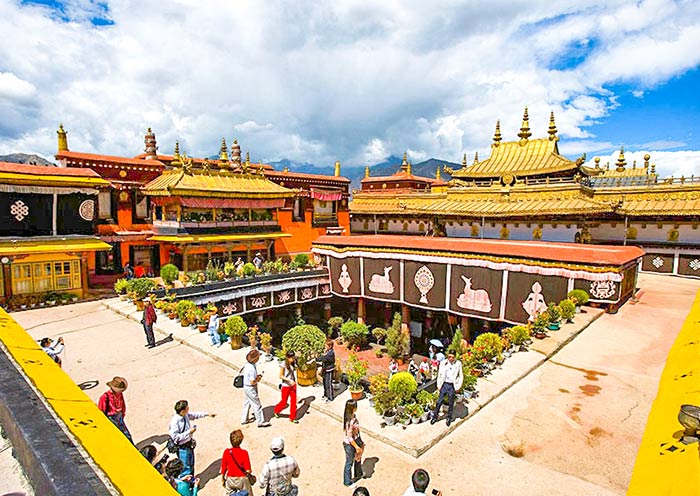
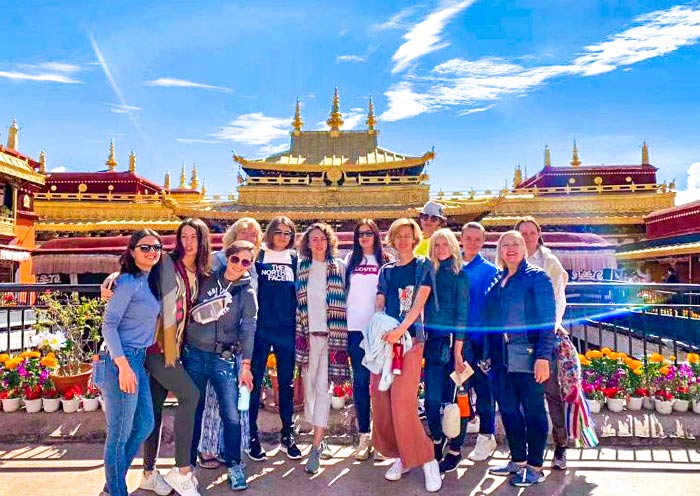
After breakfast, your group will visit Jokhang Temple, the spiritual heart of Lhasa with a history of more than 1,300 years. From afar, you’ll see countless devoted pilgrims prostrating in front of the temple. Stop for a while to witness this moving sight and the unwavering faith of Tibetan Buddhists. This will be a moment to touch your soul.
According to legend, Jokhang Temple was built by King Songtsen Gampo for his two brides - Princess Wencheng of China and Princess Bhrikuti of Nepal. The name Jokhang means “House of the Buddha,” and the temple enshrines a life-sized statue of the 12-year-old Sakyamuni, one of the most sacred treasures in the Buddhist world. This makes Jokhang Temple the holiest pilgrimage site in Tibet.
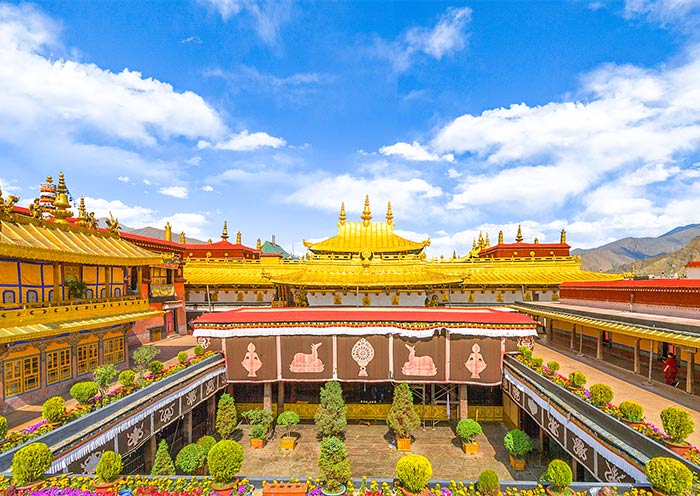
Take time to explore the temple’s intricate architecture - admire the colorful murals, ornate decorations, and fine carvings that showcase the essence of Tibetan craftsmanship. From the second floor, you can enjoy a panoramic view of the bustling Barkhor Street below.
Visiting Tips for Jokhang Temple:
After the visit, step outside to Barkhor Street, once the traditional kora (pilgrimage circuit) around the temple. Today, it’s a lively place filled with the scent of incense and the sounds of chanting pilgrims. You can sip yak butter tea at a teahouse, dress in Tibetan attire for photos, or shop for unique handicrafts and souvenirs from Tibet, Nepal, and India.
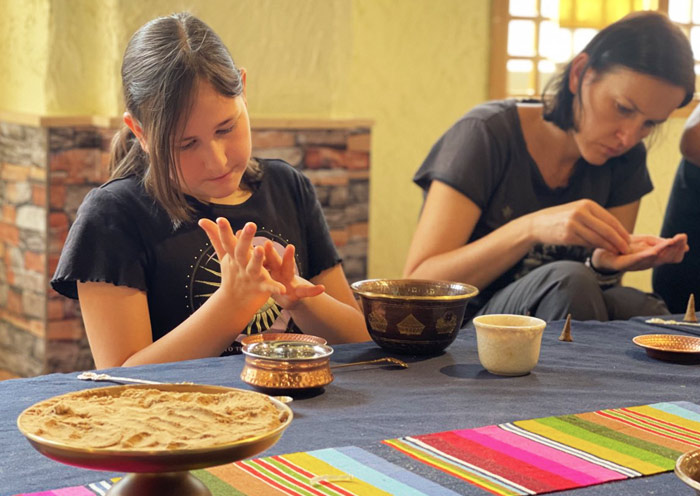
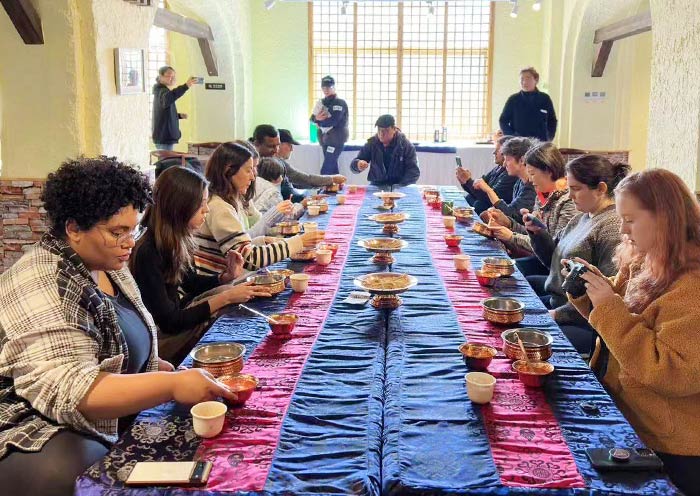
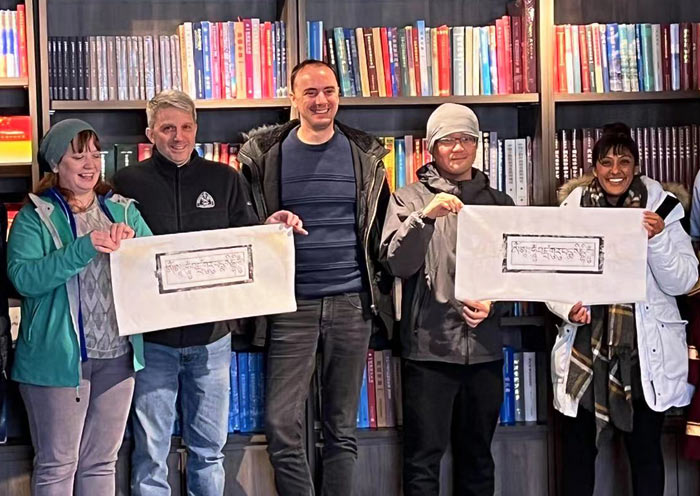
This afternoon, immerse yourself in traditional Tibetan arts at the Lhasa Traditional Handicraft Art Center. Take part in making Tibetan incense, practicing Tibetan calligraphy, and learning the secrets of traditional woodblock printing.
Tibetan incense is commonly burned as an offering during Buddhist ceremonies and rituals. Its ingredients often include juniper, sandalwood, cedarwood, cinnamon, cloves, and a variety of medicinal herbs.
In addition to crafting incense, you can observe the full process demonstrated by the local artisan, who will teach you Tibetan calligraphy and help you write your own name or blessing in the Tibetan script. This makes for a meaningful keepsake to bring home as a memory.
After the tour, be escorted back to your hotel in Lhasa.
Attractions
Transportation
Dining
Breakfast
Accommodation
Lhasa
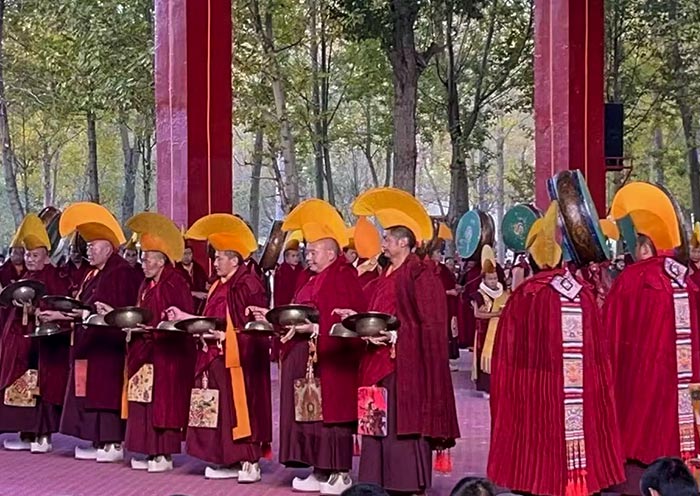
Today is the most important day of the Shoton Festival. You will need to rise very early to join the crowd heading up the mountain path behind Drepung Monastery to the Thangka Unveiling Platform. Experience the powerful atmosphere of pilgrimage as thousands of devotees from across Tibet make their way toward the monastery, prayer wheels in hand, softly chanting as they walk toward this sacred site.
The Thangka Unveiling Ceremony at Drepung Monastery is the highlight of every Shoton Festival and draws countless pilgrims and visitors. Before dawn breaks, streams of faithful worshippers flow into the monastery grounds, moving with deep devotion. As the first light of morning appears, the sound of chanting drifts through the monastery. Monks in deep crimson robes solemnly carry out a massive Thangka of Buddha Shakyamuni from the monastery’s treasure chamber. Despite its age, the Thangka remains vivid and exquisite, each stroke reflecting generations of craftsmanship and faith.
With coordinated effort, monks pull the ropes to gradually unfold the enormous Thangka across the steep hillside behind the monastery. People of all ages gather together in this holy moment, offering prayers for good fortune, harmony, and well-being. The Drepung Shoton Thangka Unveiling is more than a religious ritual - it is a vivid expression of Tibetan cultural heritage and spiritual devotion, leaving a lifelong impression on all who witness it.
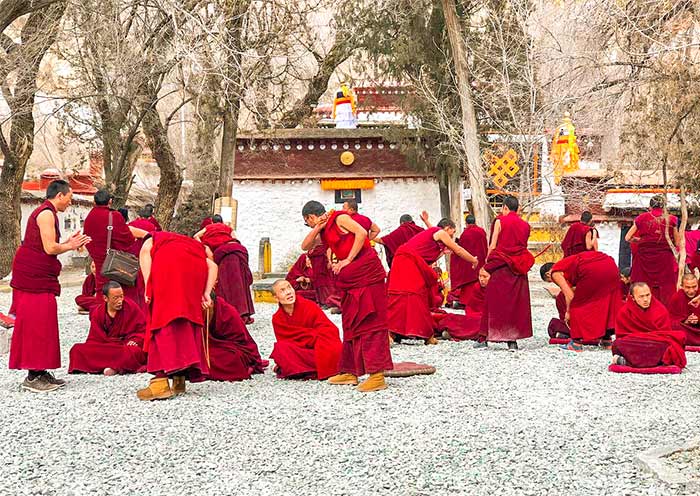
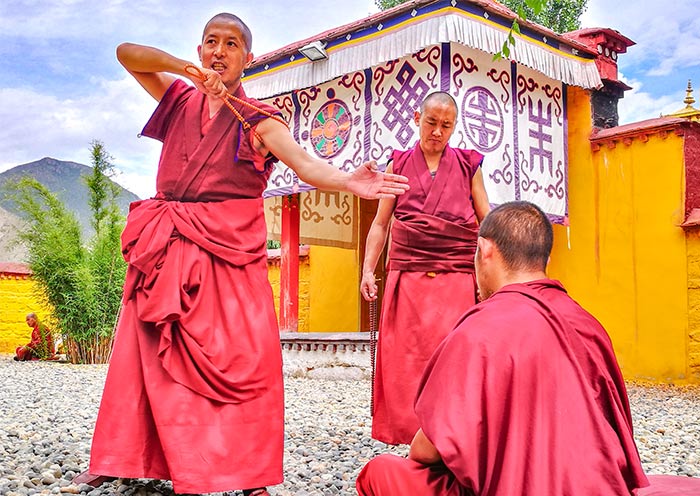
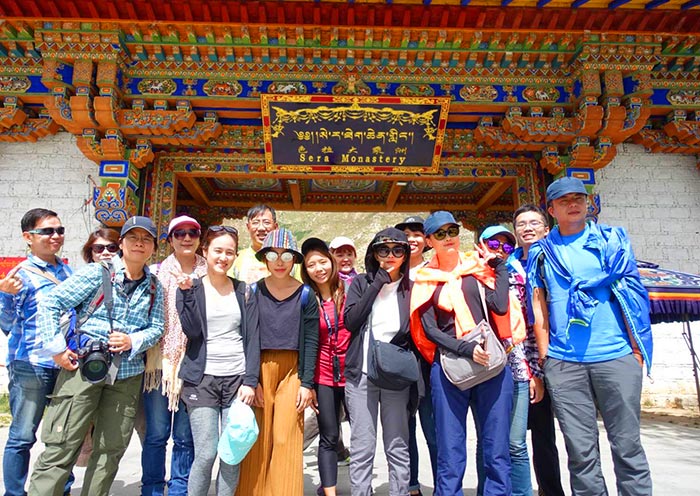
In the afternoon, take a short drive to Sera Monastery, one of the three great Gelug university monasteries of Tibet. Here, you will engage closely with Tibetan Buddhist culture. The highlight is the famous monks’ debate, held daily from around 15:00 to 17:00 (except Sundays). One monk asks questions while standing, using symbolic hand gestures such as clapping and foot-stomping to “activate wisdom,” while the seated monks respond. You may also observe prayer rituals, meditation halls, and learn more about monastic life.
Warm Reminder: If the monastery is hosting special ceremonies, the debate session may be cancelled.
After the visit, you will be transferred back to your hotel in Lhasa.
Attractions
Transportation
Dining
Breakfast
Accommodation
Lhasa
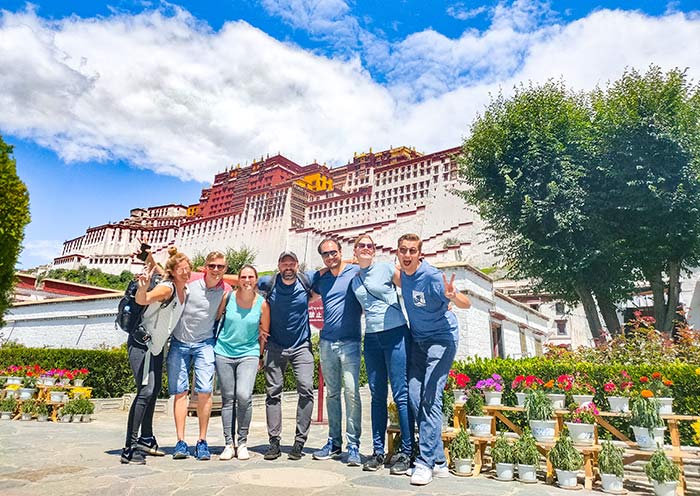
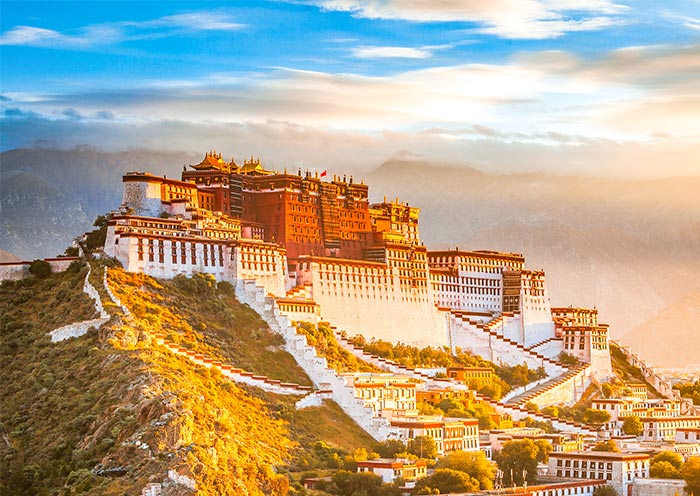
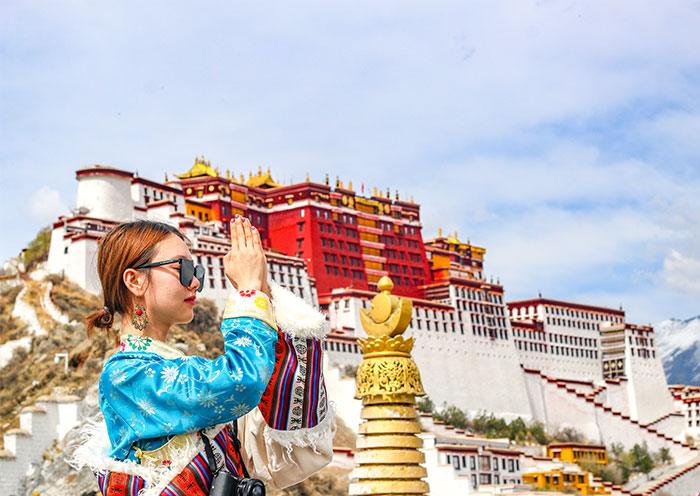
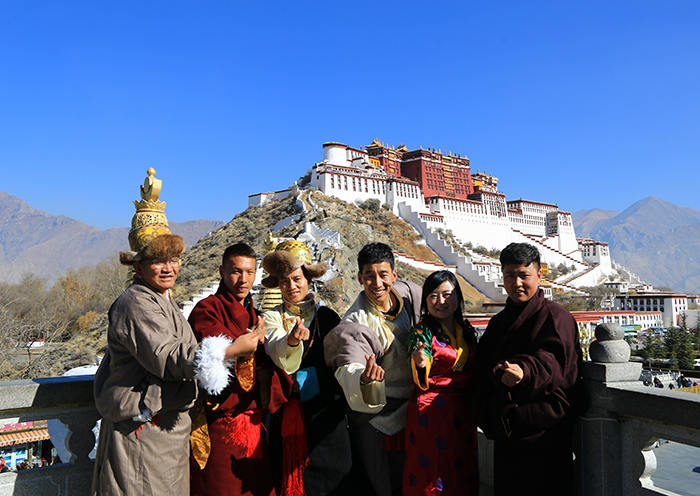
This morning, you’ll first explore the Potala Palace, the most iconic landmark of Tibet and the former winter residence of the Dalai Lamas (1649–1959). After climbing 365 stone steps from the palace gate to the Red Palace, you’ll reach the highest ancient palace in the world - standing proudly at 3,700 meters above sea level - and enjoy a stunning panoramic view of Lhasa city.
As you wander through its halls, chapels, and sacred shrines honoring past Dalai Lamas, you’ll be captivated by the intricate murals, exquisite carvings, dazzling jeweled decorations, and the profound spiritual atmosphere that fills the air. Inside the Potala Palace, countless Tibetan pilgrims can be seen bowing and praying devoutly - for many, visiting this sacred site is truly a journey of a lifetime.
Your guide will also share fascinating stories about King Songtsen Gampo, the 33rd ruler of Tibet, who originally built the Potala Palace in the 7th century to honor his marriage to Princess Wencheng of the Tang Dynasty.
Potala Palace Visiting Tips
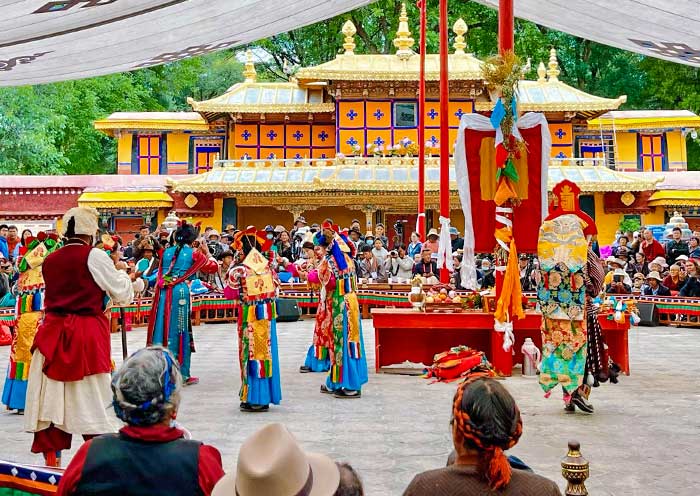
Afterward, your guide and driver will take you to the Norbulingka Summer Palace to enjoy the Tibetan Opera performances of the Shoton (Yogurt) Festival and appreciate the stunning natural landscape. Don’t forget to sample Tibetan yogurt and spend a relaxing day in Norbulingka Park, just like the local Tibetans do.
Also known as the “Jeweled Park”, Norbulingka is recognized as a UNESCO World Heritage Site. Built by the 7th Dalai Lama in 1755, it served as the summer residence of successive Dalai Lamas. The complex consists of three main parts: the courtyard in front of the palace, the palace buildings, and the surrounding forest.
With over 400 rooms of various sizes, Norbulingka is the largest, most magnificent, and best-preserved palace garden in Tibet. It blends gardening, architecture, and sculpture from Tibetan, Han, and other ethnic traditions. The well-preserved murals, mandalas, and frescoes are fascinating highlights not to be missed.
Today, Norbulingka Park is a lively hub of entertainment - filled with dancing, singing, music, and festivities, especially during the annual Shoton (Yogurt) Festival, when you can enjoy authentic Tibetan Opera performances. You can even join local Tibetans for a cheerful outdoor celebration.
Special Meal Arranged by AOT:
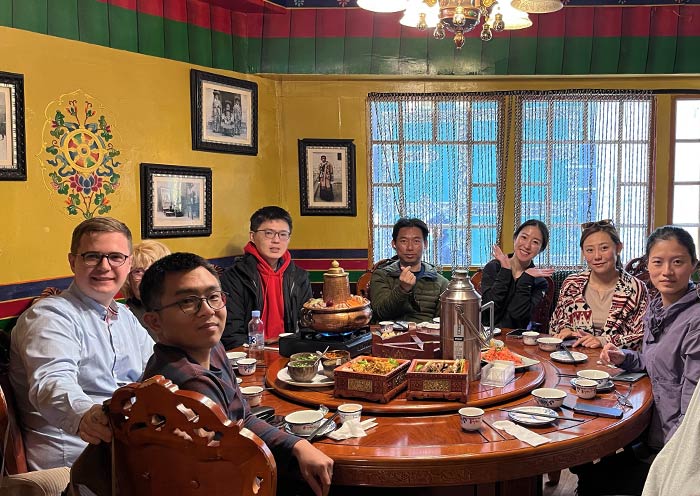
On this day, enjoy a group meal featuring delicious Tibetan or Nepalese cuisine, specially arranged by the AOT team.
Attractions
Transportation
Dining
Breakfast, Dinner
Accommodation
Lhasa
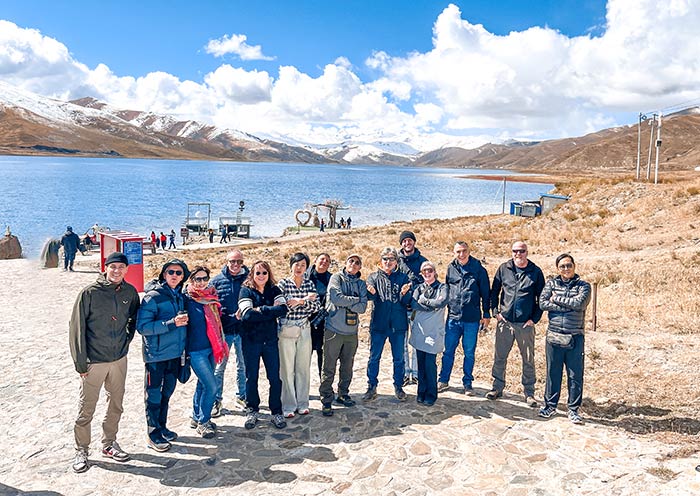
Today, you’ll embark on a scenic drive from Lhasa to Shigatse, Tibet’s second-largest city. The journey covers around 370 kilometers and takes 7 hours’ drive, with stops to admire two of Tibet’s most spectacular natural wonders - Yamdrok Lake and Karola Glacier.
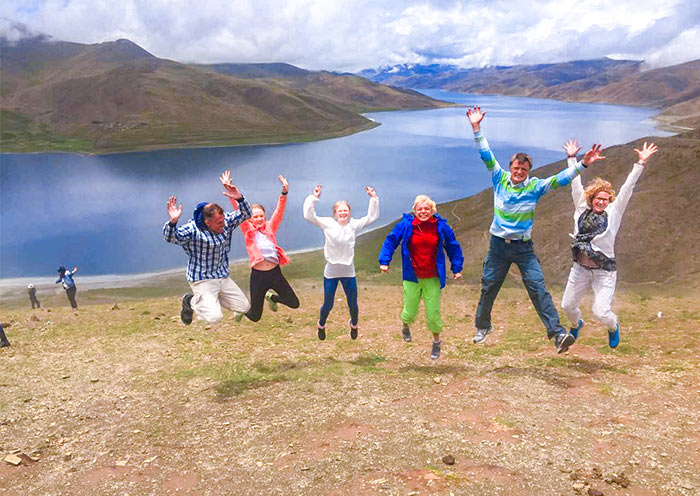
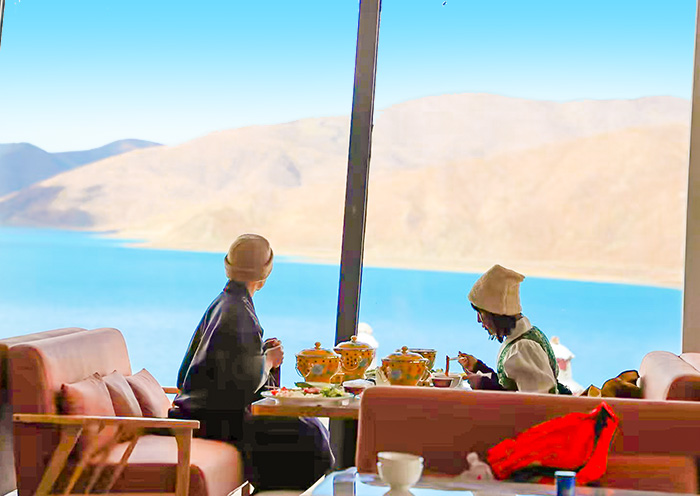
In the morning, after about 2-3 hours of driving (110 km), get your camera ready as you approach Kampala Pass (4,797 m). Here, you’ll be rewarded with a breathtaking panoramic view of Yamdrok Lake, a turquoise ribbon shimmering among snow-capped mountains. Known as one of Tibet’s four sacred lakes (along with Lhamo Latso, Manasarovar, and Namtso), Yamdrok is believed to hold spiritual power - helping Tibetans locate the reincarnated soul of the Dalai Lama. You’ll also see locals offering photo opportunities with Tibetan mastiffs, yaks, or goats dressed in traditional ornaments.
Specially Arranged Meal at Yamdrok Lake by AOT:
Take a break at Yamdrok Lake to enjoy a special Hot Pot arranged by Asia Odyssey Travel. Fresh dish, stunning lake views, totally get relaxed. Also have time to take beautiful photos before or after your meal.
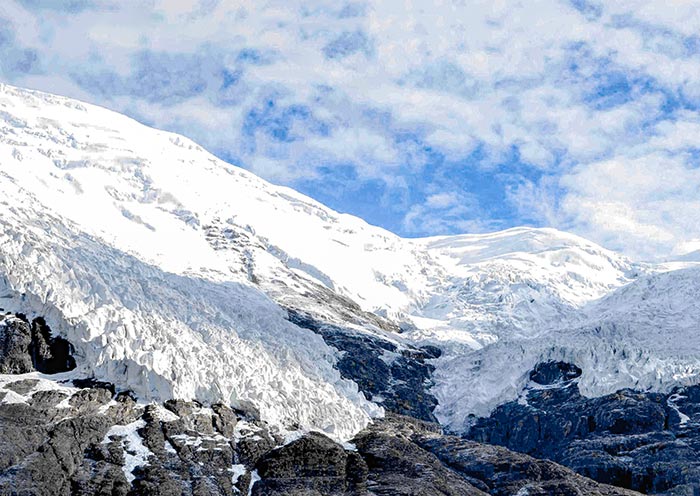
In the afternoon, continue driving for about 1.5 hours (87 km) to reach the stunning Karola Glacier (5,012 m) - one of Tibet’s three major continental glaciers and a filming site of the movie Red Valley (Hong He Gu). Backed by Naiqin Kangsang Peak (7,191 m), the glacier gleams like a frozen waterfall cascading right beside the highway. You can enjoy the view from your vehicle or take a short, easy walk to the glacier’s base. Across the road, admire the majestic snow-capped Mount Kalurong - another highlight of this alpine wonderland.
Tips for visiting Karola Glacier:
Afterward, drive about 3.5 hours (170 km) through Gyantse, aalong the wide Nianchu River Valley, passing through scenic Tibetan villages, vast barley fields, and golden rapeseed flower fields (in summer). Upon arrival in Shigatse (altitude: 3845 meters), check into your hotel and rest well.
Warm Reminder:
For foreign and Taiwan travelers, registration at the Shigatse Entry & Exit Administration Office is required. Your guide will assist with the process and may adjust the schedule accordingly - please follow their instructions and cooperate as needed.
Attractions
Transportation
Dining
Breakfast, Lunch
Accommodation
Shigatse
Today, your whole group will drive from Shigatse toward to Mount Everest (Qomolangma), the highest mountain on Earth. Along the way, admire the stunning transformation of the landscape as you ascend toward the Himalayas.
Gyawu La Pass - the Everest Viewing Platform
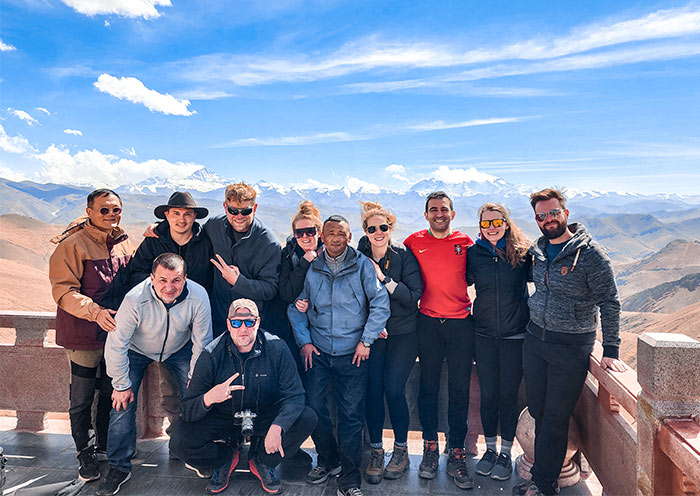
Follow the famous 108 switchbacks along the Everest Road to reach Gyawu La Pass (5210 m), also known as the Everest Viewing Platform. On clear days, this is one of the few places on Earth where you can see five of the world’s highest peaks above 8,000 meters lined up before you - Everest, Lhotse, Makalu, Cho Oyu, and Shishapangma. The panoramic view is awe-inspiring, with the mighty snow peaks stretching endlessly across the horizon.
Rongbuk Monastery - the Highest Monastery in the World
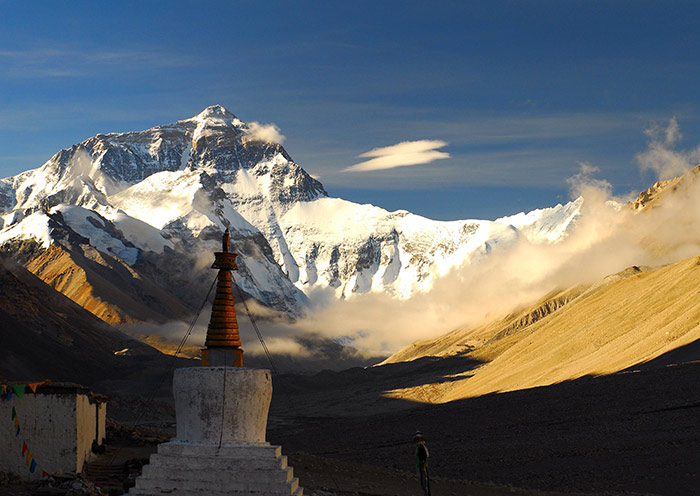
Continue to Rongbuk Monastery (5154 m), nestled at the foot of the Rongbuk Glacier. It is the highest monastery in the world, belonging to the Nyingma school of Tibetan Buddhism, and is home to both monks and nuns. The monastery is divided into old and new sections - the old one preserves meditation caves believed to have been used by Guru Padmasambhava, while the new section offers a spectacular view of Mount Everest’s north face. The white chorten and mani stones at the entrance make for iconic photo compositions - quiet, sacred, and timeless.
Everest Base Camp - Touching the Summit of the World
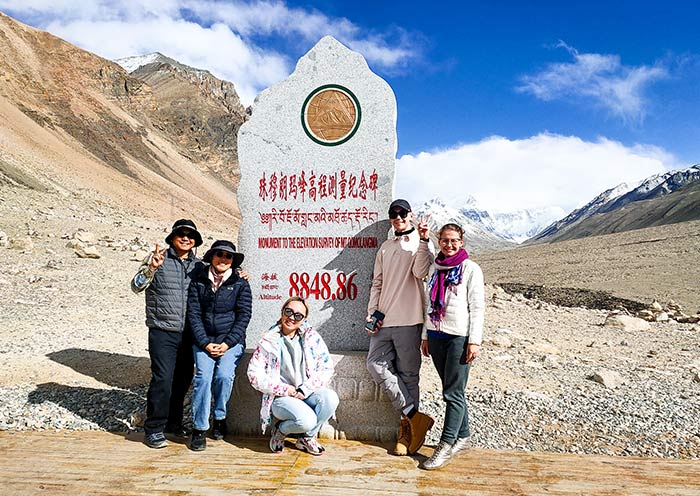
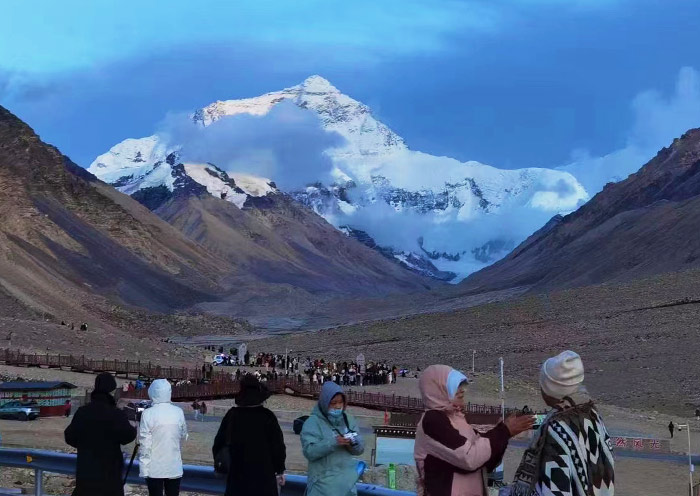
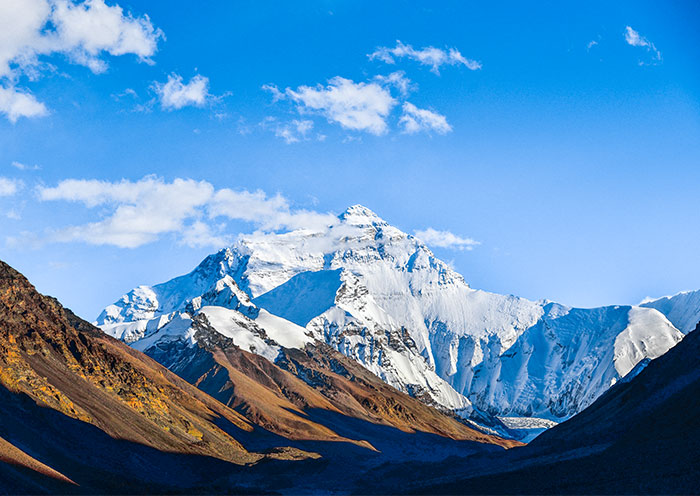
Standing at 8,848 meters, Mount Everest straddles the border between China and Nepal in the central Himalayas. The endless glaciers, hanging ice cliffs, and snow-covered ridges create a view of rare beauty and grandeur.
Then, head to Everest Base Camp (EBC, 5200 m) - the closest point ordinary travelers can get to the world’s highest peak. Surrounded by tented lodges, EBC stands just 19 km in a straight line from Mount Everest’s summit. Here, you can truly feel the majesty of the mountain - towering, powerful, and humbling. Many visitors describe this as a once-in-a-lifetime experience, with Everest’s sheer presence leaving an unforgettable impression.
Warm Tips for Visiting EBC:
Attractions
Transportation
Dining
Breakfast, Dinner
Accommodation
EBC
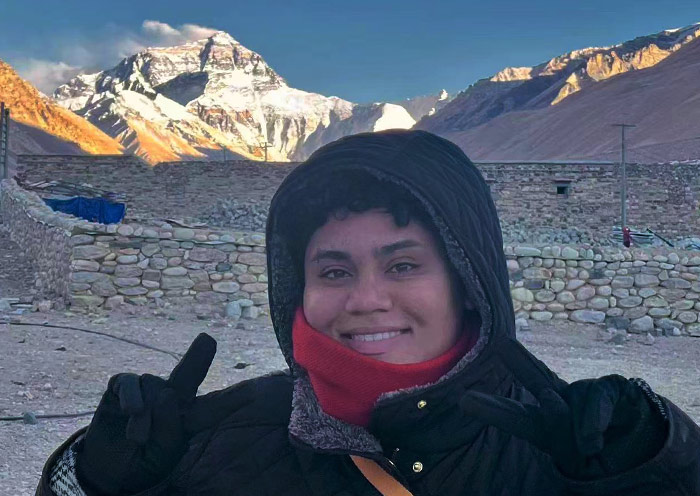
Wake up to the crisp morning air at EBC. Take a quiet moment to embrace the majesty of Mount Everest and the surrounding Himalayas. If you wish, begin your day with some gentle yoga or meditation to refresh both body and mind, or enjoy a peaceful walk around the base camp for close-up views of this extraordinary landscape.
Tip: If weather permits, you can enjoy the Golden Summit view - one of the most breathtaking sights on Earth. The best seasons are spring (April–May) and autumn (September–November), when the skies are usually clear. You’ll need to rise early and take a short hike to the viewing point to see the snowcapped peaks glowing golden in the morning light.
After a memorable morning at Everest Base Camp, start your return journey to Shigatse City. En route, make a stop at Gyatso La Pass (5,248 m) - the highest point along the Sino-Nepal Friendship Highway and part of the Mount Everest National Nature Reserve. From the viewing platform, admire the towering peaks of Mount Everest (8,848.86 m), Cho Oyu, Lhotse, and Makalu, all rising above 8,000 meters. The colorful prayer flags fluttering in the wind add a touch of sacred beauty to this spectacular panorama - a perfect spot for photos.
Continue your scenic drive back to Shigatse, check into your hotel, and enjoy a relaxing evening with a warm shower after the day’s adventure. Overnight in Shigatse.
Attractions
Transportation
Dining
Breakfast
Accommodation
Shigatse
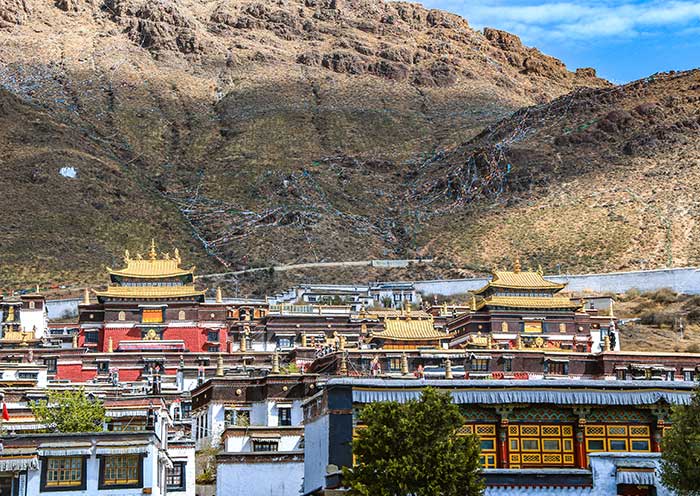
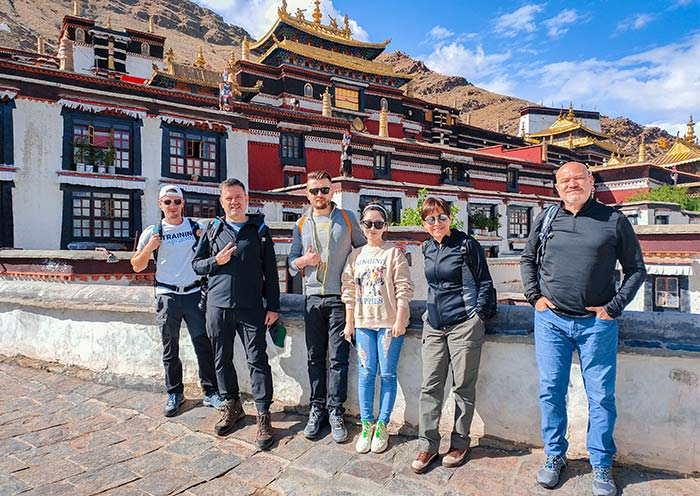
This morning, visit Tashilhunpo Monastery, the spiritual heart of Shigatse.
Founded in 1447 by Gyalwa Gedun Drup, the 1st Dalai Lama and a disciple of Tsongkhapa, Tashilhunpo Monastery is the largest monastery in Tibet’s Tsang region and one of the six great Gelug monasteries alongside Drepung, Sera, Ganden, Labrang, and Ta’er. It has long been the traditional seat of the Panchen Lamas, the second-highest incarnation lineage in Tibetan Buddhism after the Dalai Lama.
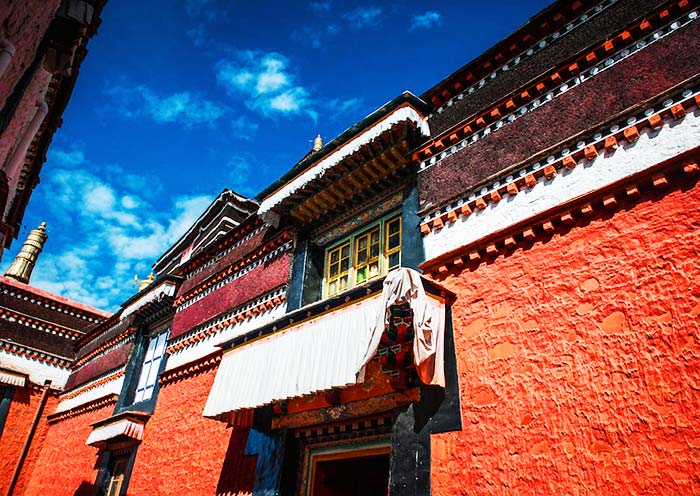
At its height, the monastery housed over 5,000 monks and included more than 3,000 rooms, 50 affiliated temples, and 30 manors and pastures. Today, you can still sense its grandeur as you explore its vast complex of prayer halls, courtyards, and golden roofs glinting under the sun.
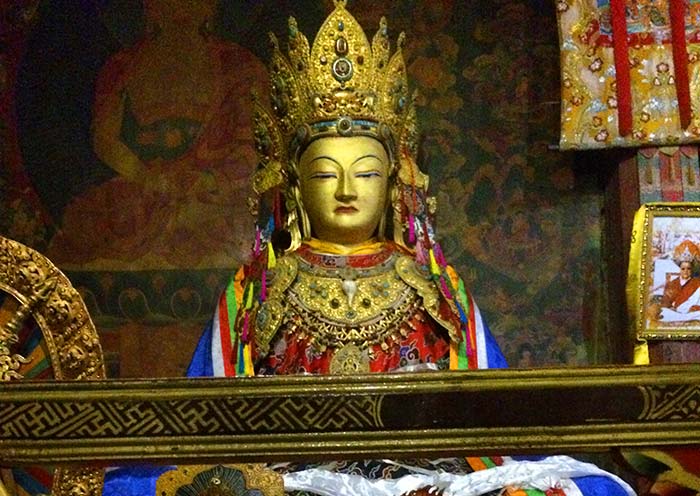
Highlights of Tashihunpo Monastery:
After visiting Tashilhunpo Monastery, drive back to Lhasa along the scenic Friendship Highway, following the Yarlung Tsangpo River. The journey takes about 4.5-5 hours (270 km). Upon arrival, check into your hotel and relax for the night.
Overnight in Lhasa.
Attractions
Transportation
Dining
Breakfast
Accommodation
Lhasa
After breakfast, it’s time to say goodbye to the holy city of Lhasa. Your guide and driver will escort you to Lhasa Gonggar Airport or Lhasa Railway Station. Take your flight or train to next destination or go home.
Travel Tips:
Thank you for choosing Asia Odyssey Travel for Tibet Group Tour. We hope to see you on your next journey!
Attractions
Transportation
Dining
Breakfast
Accommodation
/

| Month | Available Date | Price | Book The Tour |
|---|---|---|---|
| Aug (2026) | |||
| Aug | Aug.10, 2026 | from $1360 | Free Enquiry  |
| Aug (2027) | |||
| Aug | Aug.29, 2027 | from $1360 | Free Enquiry |
 Transportation Accommodation Meals Guide Service Entrance Tickets Tibet Travel Permits Travel Insurance Airport / Train Transfers Complimentary Services Service Fee
 Single Room Supplement Hotel Changes or Cancellation Loss Personal Expenses Unforeseen Circumstances Transportation to and from Tibet
In the event that you need to cancel your trip, please ensure that you submit a written cancellation request. The calculation of cancellation fees will begin from the date we receive your written request.
The cancellation fees will be calculated as follows:

All foreign travelers are required to obtain a Tibet Travel Permit to visit Tibet. The permit can only be applied for through a registered travel agency in Tibet (we are a locally based Tibet travel agency with an office in Lhasa) and is required to purchase flight or train tickets to Tibet.
The permit is necessary to enter Tibet and visit certain areas within the region, including Lhasa and Mount Everest Base Camp. Travelers should plan ahead and allow sufficient time for the permit application process, as it can take one to two weeks to obtain the necessary permits.
All foreign travelers are advised to make their bookings at least one week in advance and send the necessary documents for obtaining the permits. However, if you plan to visit Mount Kailash, it is recommended to book at least two weeks in advance, as it may take longer to obtain all required permits.
Typically, small group tours in Tibet will have 1–16 travelers, and you will have the opportunity to meet and travel with tourists from different parts of the world. This can be a great chance to make new friends and connect with people from different cultures and backgrounds.
Yes, if you are traveling with a group of friends or with your family, you can customize your own group tour. Please contact your professional travel consultant to discuss and arrange a customized group tour that meets your needs and preferences.
"B" stands for breakfast. You will have it at your hotel in the morning.
"L" stands for lunch. The restaurants we arrange are designated tourist restaurants approved by the local tourist administration bureau, with good sanitary conditions. Lunches are usually included if you have a full-day tour in one destination, and your guide will assist you with ordering dishes.
If you travel from one city to another, lunches are excluded, but you can ask your guide for suggestions about where and what to eat.
"D" means dinner. All dinners are excluded from the itinerary, allowing you to taste authentic Chinese food and local Tibetan snacks.
If you have special dietary requirements (vegetarian, halal, kosher, Indian, or gluten-free), please let us know before booking. We will try our best to take care of your needs.
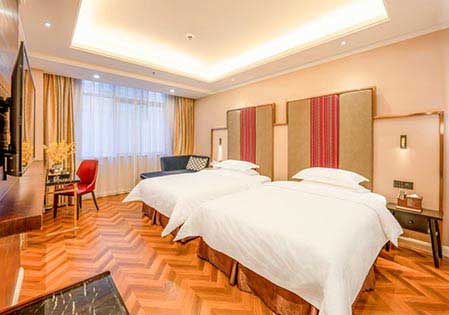
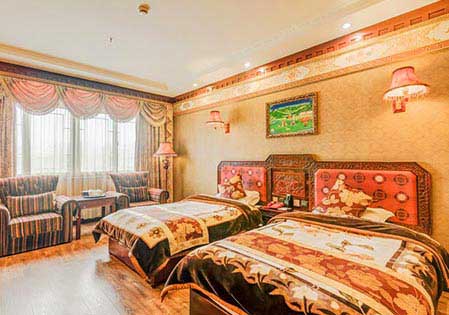
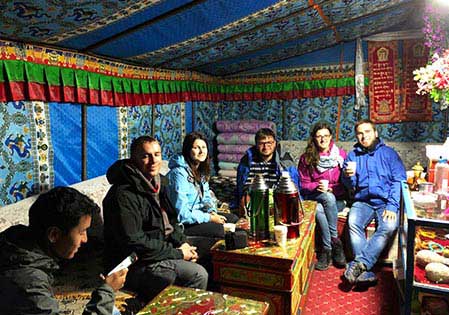
There are two main accommodation options on Tibet group tours: comfort and deluxe. In major cities such as Lhasa and Shigatse, you can expect a wide range of hotel choices. However, in remote regions — especially around Mount Everest or Mount Kailash — accommodations are simpler, typically guesthouses or tented camps. We will email you the detailed hotel list once your booking is confirmed.
If, due to gender arrangement, a single room becomes necessary, we will arrange a triple room (or a standard twin room with an extra bed). If none of these options are available, the single room supplement will need to be covered by the traveler.
| Destination | Nights | Dates | Comfort Hotels |
|---|---|---|---|
| Lhasa | 5 Nights | D1 / D2 / D3 / D4 / D8 | Lagari Snow Dragon Manor Resort, Minshan Hotel Tibet, or similar (Breakfast √ | Oxygen Supply √) |
| Shigatse | 2 Nights | D5 / D7 | Cangyu Yabu Hotel, Mulunlazong Hotel, Shunyi Starlight Hotel, Schery Hotel, or similar (Breakfast √ | Oxygen Supply √) |
| Mount Everest Area | 1 Night | D6 | Everest Base Camp Tents – Twin / Single / Triple Rooms, Shared Restroom (Breakfast √ | Oxygen Supply ×) *In winter, tented camps are replaced by a guesthouse in Everest Town: Twin Room with Private Bathroom (Breakfast √ | Oxygen Supply ×) |

Direct-from-Source Pricing
Local operations, direct-to-you pricing.

24/7 Support
We are with you every step of the way, 24/7.

Cancellation Policy
We provide a transparent and clear overview of allapplicable policies.

Travel Insurance
Travel with peace of mind. Comprehensive coverage for any unforeseen circumstances.
Discover what our customers are saying about the latest Tibet Group Tours. Browse through their recent reviews and feedback on tour arrangements, guides, transportation, attractions, dining, hotels, and detailed itineraries to plan your own unforgettable China tour. View All Customers Reviews >>
 Tripadvisor 4.9
 4.9 | 16,674 reviews


This 10 Days Chengdu & Lhasa to Kathmandu Overland Tour via Qinghai-Tibet Railway was one of the most meaningful trips of my life. Traveling across such vast landscapes—from the green valleys of Sichuan to the high plateau of Tibet and finally into the Himalayas—felt like crossing into another world. The Qinghai-Tibet Railway itself was an unforgettable experience, offering breathtaking views and a smooth, comfortable ride into Lhasa.
Every detail of the journey was thoughtfully arranged, from permits to border crossings, which could have been very complicated without a professional team. Our guide was incredibly knowledgeable and supportive, especially in helping us adjust to the altitude. Standing in front of the Potala Palace, visiting ancient monasteries, and finally reaching Kathmandu felt like completing a once-in-a-lifetime journey. I am deeply grateful for the care and professionalism of the team. This tour is truly for travelers seeking adventure, culture, and a deeper connection to the world.


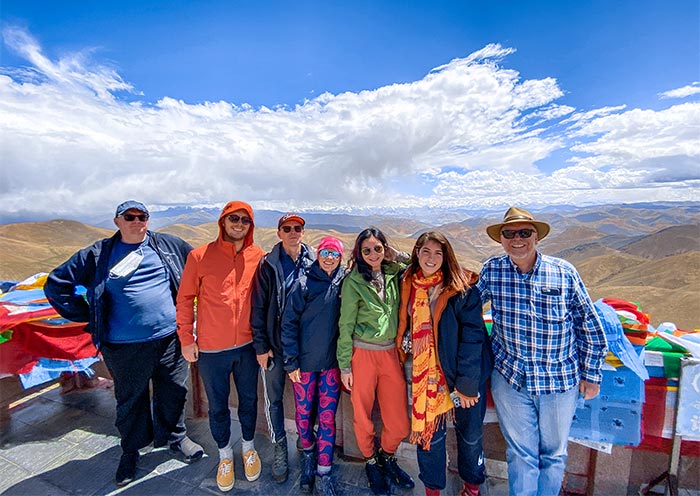
Lhasa - Yamdrok Lake - Shigatse - Mt. Everest EBC - Shigatse - Lhasa
From USD$930
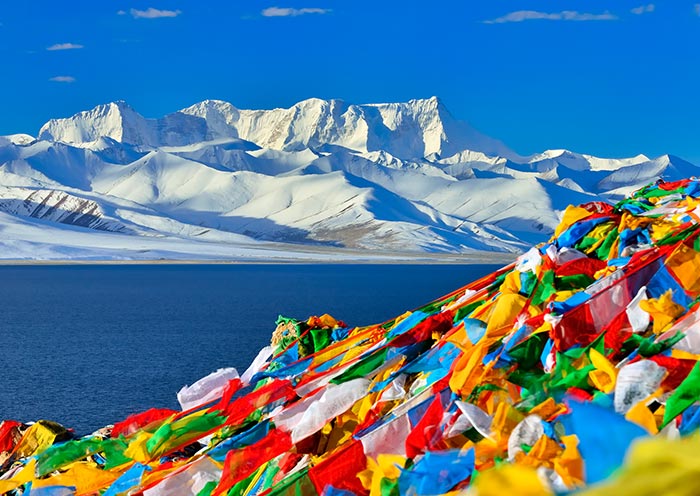
Lhasa - Yamdrok Lake - Shigatse - Mt. Everest EBC - Shigatse - Lhasa - Namtso Lake - Lhasa
From USD$1020
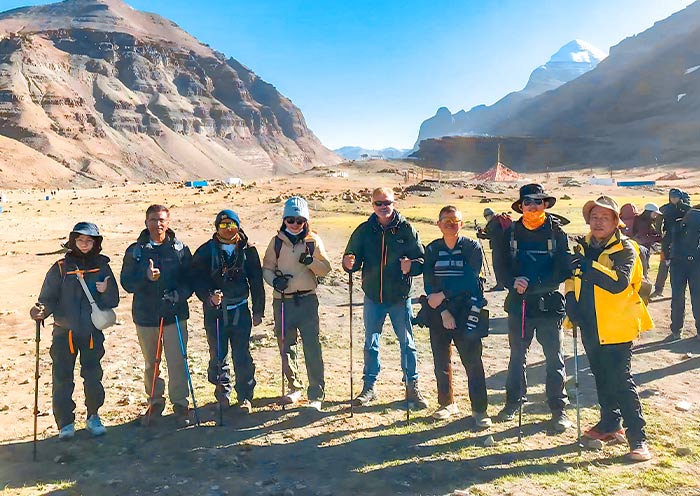
Lhasa - Yamdrok Lake - Karola Glacier - Shigatse - EBC - Saga - Darchen - Mount Kailash - Zanda - Darchen - Saga - Shigatse - Lhasa
From USD$2180
Lhasa - Yamdrok Lake - Shigatse - Mt. Everest EBC - Gyirong Town - Gyirong Border (Exit to Nepal)
From USD$1000
Lhasa - Shigatse - Saga - Darchen - Zanda - Shiquanhe - Gaize - Wenbu Nancun - Baingoin - Lhasa
From USD$2090
We were on private trip to kailash- Mansarovar through Lhasa with Asia Odyssey travel.
It was a great experience booking with Asia Odyssey travel. Asia Odyssey provided agent Rex to work with us. Rex is amazing individual who helped us through out our journey like carving itenary the way we wanted, provided good comfortable vehicle with very good driver and a very
friendly and caring tour guide. We are also satisfied with hotel stay in each city.All stays were upto the standard as he promised they would be. Thank you Rex.we are happy with the deal we got. Rex was in constant touch with us before, during and ending our journey. We requested many changes during our journey due to changed interest and flight schedule . He was there to help us every time.
I would highly recommend to travel with Asia Odyssey specially having Rex by your side.
Just one thing I would like to mentions is that the meal plans. I would suggest that if all three meals included in itenary would be great help for vegetarian travellers like us. So we didn't have to worry about food.
Overall it was a very good experience with Asia Odyssey and travel and Agent Rex. Much appreciated
Simple
Canada
This 10 Days Chengdu & Lhasa to Kathmandu Overland Tour via Qinghai-Tibet Railway was one of the most meaningful trips of my life. Traveling across such vast landscapes—from the green valleys of Sichuan to the high plateau of Tibet and finally into the Himalayas—felt like crossing into another world. The Qinghai-Tibet Railway itself was an unforgettable experience, offering breathtaking views and a smooth, comfortable ride into Lhasa.
Every detail of the journey was thoughtfully arranged, from permits to border crossings, which could have been very complicated without a professional team. Our guide was incredibly knowledgeable and supportive, especially in helping us adjust to the altitude. Standing in front of the Potala Palace, visiting ancient monasteries, and finally reaching Kathmandu felt like completing a once-in-a-lifetime journey. I am deeply grateful for the care and professionalism of the team. This tour is truly for travelers seeking adventure, culture, and a deeper connection to the world.
Our agent Chia is simply the best! She was in contact with us every step of the way from the time we committed to the Beijing - Xian - Chengdu - Lhasa - Shanghai tour. There was absolutely no stress with the entire tour ie. Pick ups, train/ plane tickets, payments. Each time Chia was able to answer any questions that we had almost immediately. The tour itself was great, met some really nice people from different parts of the world. Groups were a maximum of 12 so the guides were always very attentive - in Tibet, we only had 3 left in the group. We have travelled quite extensively but this is the first time we have engaged in a tour and it certainly did not disappoint. Highly recommended!
We had a very memorable trip in Tibet with Mt Kailash trek in September of 2025. First of all,I must say that Mr Isaac of Asia Odyssey was the most patient tour agent I have come across. Not only was he most patient with our questions, he was with us for a whole year into our preparation for this trip. Not only that, on more than one occasion,he was taking care of us as situations arose which affected our trip, like the flooding which occured at Gyirong border, the unrest in Nepal and such. The permits were applied in a timely manner and when things didn't work out for our group, Asia Odyssey made alternative arrangements as soon as possible to help our group. The guides arranged for us stayed with us till almost midnight to help us out when we had some difficulty. Most of the trip went smoothly and everything went like clockwork and hotels were good. We would definitely use Asia Odyssey for our travel plans again for this region. Asia Odyssey was outstanding and Mr Isaac was most helpful in arranging our trip and taking care of us.
I completed a 16 day Tibet tour with Asia Odyssey Travel which included Lhasa, EBC, Kailash kora and Guge kingdom, and was very satisfied with all the detailed services, transport arrangements (despite some days with long drives), and hotels provided. Our tour guide Samdrup was very attentive to the groups needs. I am grateful that the company was one of the few that was able to expedite my necessary Tibet permits within less than 2 weeks of my travel due to my last minute planning and visa delay. My travel agent Ashley communicated closely throughout the process for reassurance. All in all, it was a good experience and makes me more confident in other potential tours with this company.
Five months ago, I was amazed by the glowing reviews for Asia Odyssey Travel. Now, having just returned from our Tibet tour, I can wholeheartedly confirm every single one. They absolutely deserve their stellar reputation.
From start to finish, every detail was handled with utmost professionalism and kindness. The admin and paperwork were seamless, and our consultant, Aliny, was a tremendous help, expertly accommodating our flight delay into Lhasa due to extreme weather.
During the tour itself, the "hardware" was excellent—modern, comfortable buses and hotels. But the true highlight was the "software": the people. Our guides and drivers were not only competent and considerate but also a genuine joy to be around.
Our main guide, Daniel, was exceptional. He fostered a wonderful sense of community within our group, handled any curveballs with ease, and made us all feel truly cared for. His love for life was contagious! He’s also a gifted photographer, patiently helping us capture key moments, like the breathtaking sunset and sunrise on Mount Everest we were blessed to witness.
While Tibet's nature and architecture are stunning, it was the people—Daniel, our fellow tour members, and even the locals we met—that made this a trip of a lifetime. With AOT, you're not just booking a smooth and comfortable tour; you're signing up for genuine joy and beauty. I cannot recommend them highly enough.
Ten of my friends and I embarked on an unforgettable 3-week overland journey from Beijing to Kathmandu, travelling via Everest Base Camp and the sacred Mount Kailash. We covered approximately 7,500 kilometers by train, bus, van, and domestic flight—an epic and deeply spiritual journey that will stay with me forever.
We began with six vibrant days in Beijing, immersing ourselves in the rich history, food, and culture of China’s capital. From there, we boarded what turned out to be the most breathtaking train ride I’ve ever taken—a 30-hour, 3,750-kilometer journey from Beijing to Lhasa, crossing vast landscapes and climbing into the thin air of the Tibetan plateau.
This extraordinary trip was made possible by Asia Odyssey, and especially our dedicated agent Lea Zhang, who worked tirelessly for over a year to plan every detail. Coordinating such a complex journey remotely from mainland China—with so many moving parts and challenges—was no small feat, but Lea did it with meticulous care, professionalism, and passion.
In Tibet, we traveled through majestic Himalayan canyons, visited ancient monasteries, and stood in awe at the glowing summit of Mount Everest at sunrise from the Tibetan side base camp—a truly humbling and magical sight.
The 52-kilometer pilgrimage trek around Mount Kailash, reaching up to 5,630 meters in elevation, was the spiritual centerpiece of our journey. Though physically demanding, it was also deeply transformative—a once-in-a-lifetime experience that connected us with something far greater than ourselves.
We also had the profound privilege of visiting Lumbini, the birthplace of Buddha in Nepal, adding yet another spiritual layer to this unforgettable trip.
The local guides and drivers arranged by Lea were of the highest quality—warm, trustworthy, and knowledgeable. They became more than facilitators—they became our friends.
This journey was not just a vacation. It enriched my life in ways I couldn’t have anticipated. It was the trip of my life so far—a rare and beautiful blend of adventure, friendship, culture, and spirituality.
From the bottom of my heart, I thank Lea Zhang and Asia Odyssey for crafting and executing this extraordinary experience. I will treasure it always.
My private tour with Nor Bu was really enjoyable and engaging. After a few days of scheduled group tours, we wanted a free day to explore the city at our own pace and just relax—and Nor Bu was exactly the right guide for that. He’s incredibly knowledgeable about Buddhist culture and art, has a really laid-back and friendly personality, and knows all the best local spots where you can unwind with tea and find great souvenirs at fair prices. As a true local who’s well-connected in the community, Nor Bu knows many people around Lhasa, which gave us a genuine glimpse into daily life in the city beyond the usual tourist experience. I left Lhasa feeling like I’d not only learned so much about the culture, but had also made a real friend.
Isaac made the entire booking experience so easy! He followed up well and always kept in contact with us!
Tenzin our tour guide in Tibet was the absolute warmest and most hospitable person I've ever met. He would patiently answer all our questions and would do his best to accommodate us. He is a gem! I would highly recommend coming to Tibet just purely on the amazing people we have met here. And Tibet is wonderful, the people, the sights and the sounds were something i would keep in my heart for a long long time.





 Lhasa
Lhasa Shigatse
 Lhasa
Lhasa







 Data in submission...