+852 5394 6901
 Take China Group Tours in 2026/2027 to enjoy 30% discount compared to private tour. Same Experience & Lowest Price!

Seoul to Busan Distance & Transportation Options
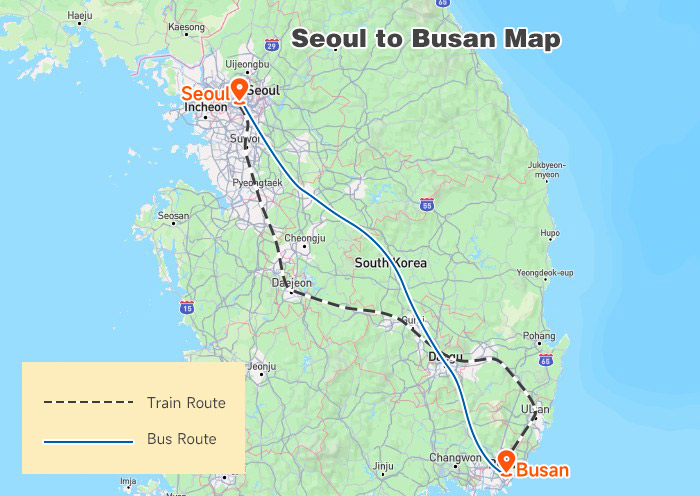
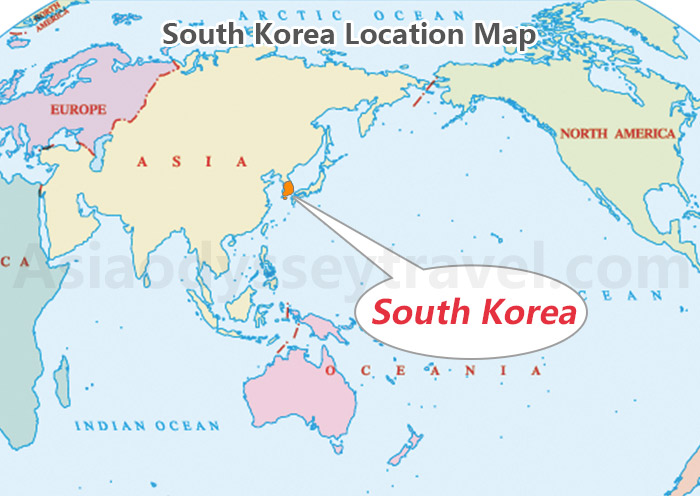
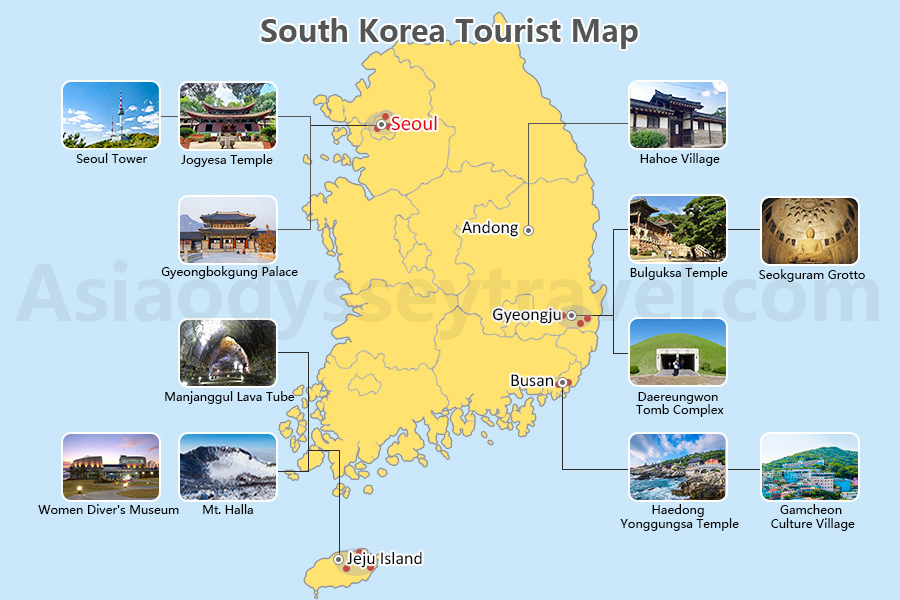
Seoul to Busan on a South Korea Map
This Google Maps screenshot clearly shows Seoul in the north and Busan in the south. They are the country's largest and most popular travel destinations, with a driving distance of about 400 km (249 miles) between them.
Fortunately, you can choose from several ways to make the trip, by the KTX train, flights, express buses, and SRT high-speed trains.
Quick Comparison of the 4 Transportation Options
| Transportation | Travel Time | Pros | Cons | Best For |
|---|---|---|---|---|
| KTX Train | ~2.5 hrs | Fast, comfortable, city center to city center | Slightly more expensive than buses | First-time visitors |
| SRT Train | ~2.5 hrs | Similar travel time to KTX | Further departure station in Seoul | Experienced travelers |
| Flight | ~1 hr flight | Can be cheap with budget airlines | Airport transfers take extra time | Connecting flights |
| Express Bus | ~4-5 hrs | Cheapest option | Much slower | Budget travelers |
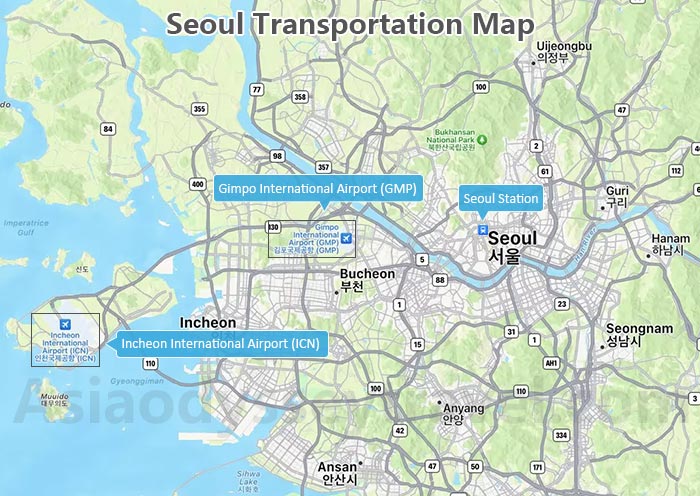
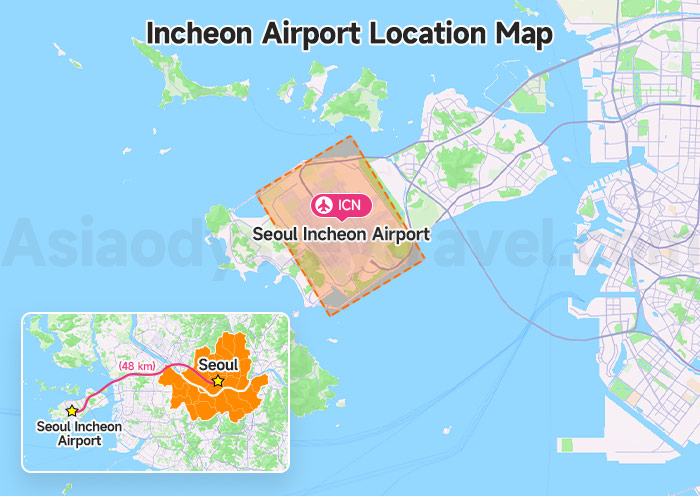
- Most Seoul–Busan flights depart from Gimpo Airport, not Incheon Airport.
- Both KTX and SRT are high-speed bullet trains with similar travel times.
- For most first-time visitors staying in areas like Myeongdong, Hongdae, or Seoul Station, the KTX is usually the more convenient choice.
Why the Bullet Train (KTX/SRT) is the Top Choice
- Efficiency
The KTX and SRT run from major hubs (Seoul Station or Suseo Station) directly to Busan Station in the heart of the city.
You save hours compared to flying, which requires travel to airports (like Gimpo or Incheon) and time spent on security and boarding.
- Convenience
There are dozens of daily departures, making it easy to fit into any itinerary. For tourists, it is also highly "English-friendly" to book via the Korail website or apps.
Is Flying Common?
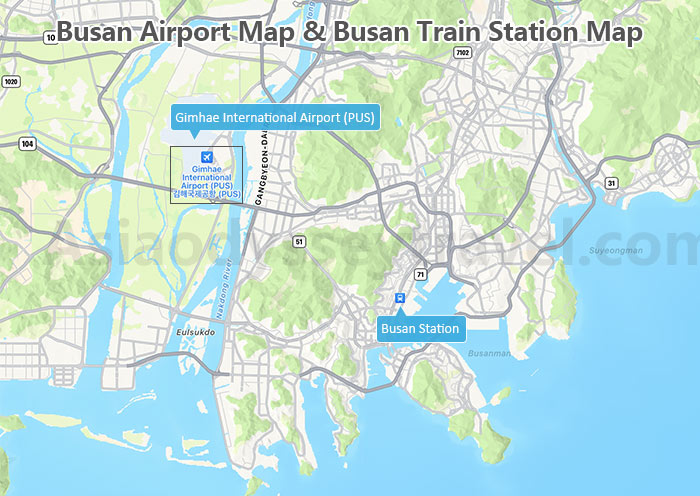
Flights between Seoul and Busan do exist, mainly from Gimpo Airport to Gimhae Airport, and they can sometimes be very cheap.
However, for most tourists, flying is usually less convenient than taking the train.
The "Hidden" Time:
Once you factor in the transit to the airport, check-in, security, and the commute from the airport in Busan into the city center, the total "door-to-door" time often exceeds the 2.5-hour train ride.
Who should uses it?
If you happen to be at the airport already for a connecting flight, or if you get a big discout flight ticket, take the Seoul to Busan flight, please.
- Domestic flights in Korea are actually quite efficient.
- Security procedures at Gimpo Airport are usually fast.
- Arriving about 1 hour before departure is normally enough.
What About the Bus?
The Express Bus is a solid alternative if you are on a strict budget.
It is significantly much cheaper than the Seoul to Busan KTX train.
"Premium" buses are surprisingly luxurious, offering wide, reclining seats and personal entertainment screens.
The downside is the travel time. It is subject to traffic, which can turn a 4-hour journey into a much longer one.
And if you carry with significant luggage, it is also not that convenient.
5 Days South Korea Essential Tour: Seoul, Gyeongju, Busan
Seoul - Gyeongju - Busan
 5 Days
 3 Places
Why KTX Is Better than SRT for First-Time Visitors
Both KTX and SRT are excellent high-speed trains, and honestly, the onboard experience feels quite similar.
The following table may offer the reason why people always prefer KTX train.
| Feature | KTX (Korea Train eXpress) | SRT (Super Rapid Train) |
|---|---|---|
| Departure Station | Seoul Station (Right at City Center) | Suseo Station (Gangnam District) |
| KR Pass | ✅ | ❌ |
| Travel Time | 2h 15min - 2h 40min | 2h 10min - 2h 20min |
| Convenience | Highly accessible via subway lines 1 & 4 | Accessible via subway lines 3; 50-minutes metro to Seoul Station |
| Price | Slightly higher (~$40) | Slightly cheaper (~$35) |
| Schedule | 50+ departures daily | 25+ departures daily |
| Best For | Travelers staying in Myeongdong, Hongdae, or Northern Seoul | Travelers staying in Gangnam, Seocho, or near Lotte World |
What's the Main Difference Between KTX and SRT?
Departure stations.
KTX starts from Seoul Station, sitting at the very heart of the capital.
It is easy to reach from popular tourist areas like Myeongdong, Hongdae, Dongdaemun, and Itaewon, and also connects directly with the AREX airport train from Incheon Airport.
SRT departs from Suseo Station, located in southern Seoul, near the Gangnam area (Yes, the “Gangnam Style” spot). It's about 20 km south of Seoul Station.
Unless KTX tickets are sold out, most visitors will probably find the Seoul to Busan KTX train easier and much more convenient overall.
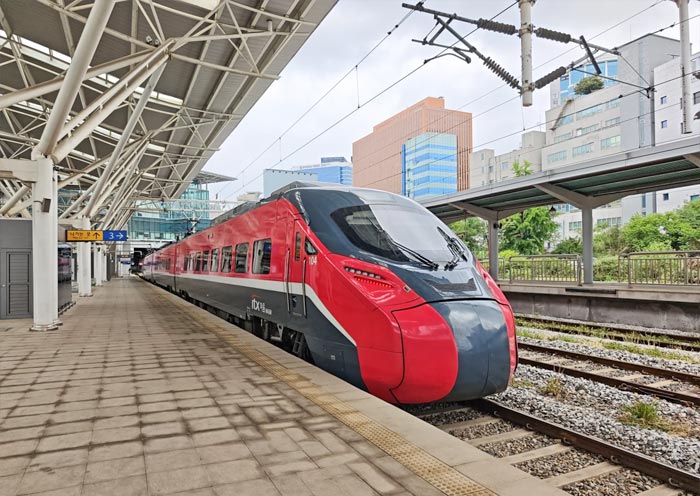
Which is Easier for Foreigners: KTX or SRT?
Both KTX and SRT are very foreigner-friendly, even if it is your first time visiting South Korea.
Station signs are clearly written in both Korean and English, and the KTX and SRT logos are highly prominent and easy to spot.
The boarding process is surprisingly simple and easy.
Boarding a Korea's high-speed trains requires neither security checks nor ticket inspections. You simply need to locate the correct platform and train number, board the designated carriage, and find your seat.
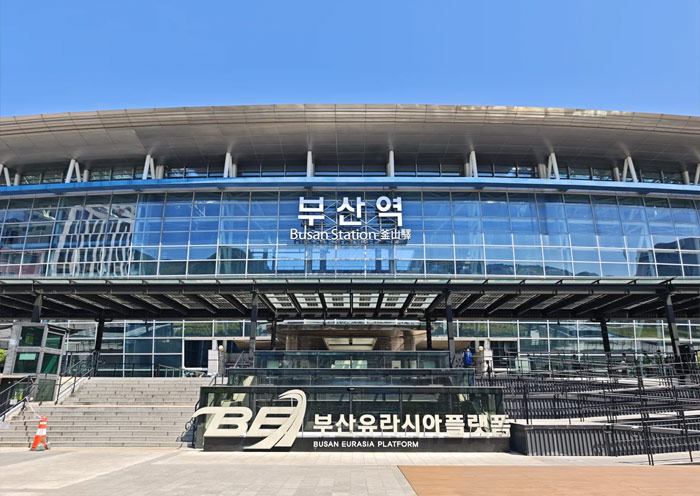
Both KTX and SRT will arrive at the same station in central Busan.
Which is More Comfortable: KTX or SRT?
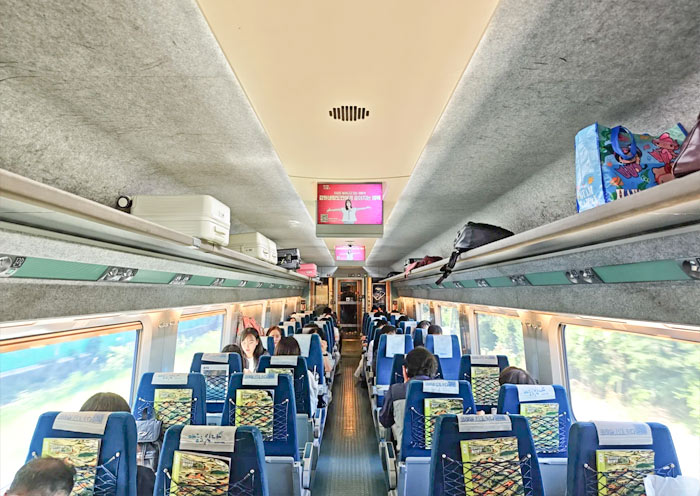
Honestly, SRT is slightly more comfortable.
On a SRT train, you have slightly more legroom, as all the seats are newer with charging port, and facing forward.
On some older KTX trains, a few seats may face backward, and power outlets are not always available at every seat.
That said, the difference is fairly small. Both trains are clean, quiet, and very comfortable for the 2.5-hour journey.
What You Should Know before Taking Seoul to Busan KTX Train?
Once you choose KTX train for your Seoul to Busan journey, there are some certain things you should know about it.
1. Seoul to Busan KTX Route
As shown on the map, the Seoul to Busan KTX train starts from Seoul Station in the north and travels all the way to Busan Station in the south, almost crossing the entire country.
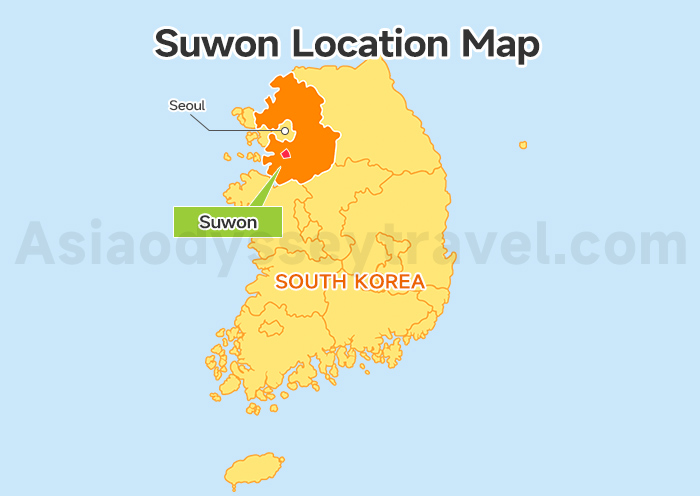
Along the route, the train passes several major cities, including Suwon, Daejeon, Daegu, and Ulsan, before finally arriving in Busan.
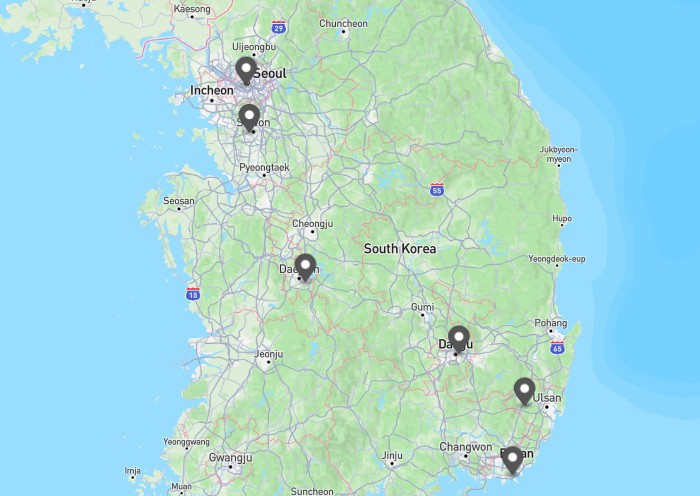
Seoul to Busan KTX Train Route Map
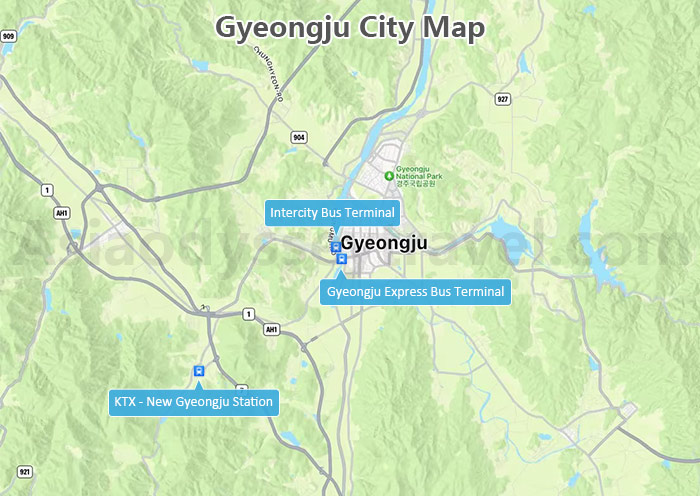
One thing worth knowing is that the main Seoul to Busan KTX line does not pass through Gyeongju, Korea's famous historical city. If you're planning to visit Gyeongju, please transfer at Dongdaegu Station or take a separate train.
2. Seoul to Busan KTX Travel Time & Schedule
The fastest Seoul to Busan KTX train takes only 2 hours 18 minutes, stopping at just Daejeon and Dongdaegu stations along the way.
Currently, there are two of these fastest services each day, departing at 8:58 AM and 3:45 PM.
Other trains make additional stops, so travel times gradually increase depending on the route. The slowest services can take up to 3 hours 25 minutes, though most KTX trains complete the journey in around 2.5 to 3 hours.
At the moment, there are around 50 daily KTX departures from Seoul to Busan.
| First train | Last train | Average frequency |
|---|---|---|
| 5:13 AM | 10:28 PM | 3–4 trains per hour |
With departures running throughout the day, you usually have plenty of flexibility when planning their trip.
7 Days Best South Korea Tour: Seoul, Gyeongju, Busan
Seoul - Gyeongju - Busan
3. How Much Does the KTX Cost?
A standard adult ticket for the Seoul to Busan KTX train usually costs around $40 USD for an Economy Class seat.
| Class | Economy Class seat | First Class Seat |
|---|---|---|
| Ticket Price | ₩59,800 (~$ 40) | ₩83,700 (~$ 56) |
The data comes from Korail official Website.
First Class seats are more spacious and quieter, but for most travelers, Economy Class is already very comfortable and completely sufficient for the 2.5-hour ride.
- Economy Class uses a 2+2 seating layout, while First Class features a more spacious 1+2 layout.
- About half of the seats face forward and the other half face backward. If you are prone to motion sickness, it is better to choose a forward-facing seat when booking.
4. What the KTX Ride Is Actually Like
The ride on the Seoul to Busan KTX train is smooth, quiet, and much more relaxing than many first-time visitors expect.
Seats are clean and comfortable, with enough legroom even in Economy Class.
You can find large luggage racks near the doors for your big suitcase. As for smaller bags, you can usually fit overhead or under your seat.
Food and drinks are also easy to manage. You can buy snacks, coffee, or lunch boxes at Seoul Station before boarding. Missing, no worry, vending machines and occasional snack carts may also be available onboard.
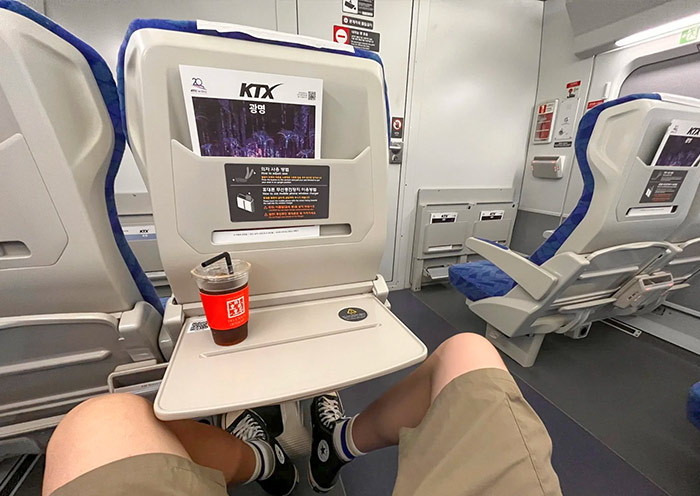
Bathrooms are also clean and easy to use. Basic amenities such as toilet paper, disposable toilet seat covers, hand soap, and hand dryers are normally provided.
On many KTX trains, the toilet flushing system and sink water are operated by foot pedals, which feels surprisingly hygienic and convenient for first-time travelers.
How to Book KTX Tickets (Easy-to-Follow for Foreigners)
Booking a Seoul to Busan KTX train is actually much easier than many first-time visitors expect. You can book online in English, reserve seats in advance, and simply show your mobile ticket before boarding.
For most travelers, there are three common ways to book KTX tickets.
Option 1: Book Directly on the Official Korail Website
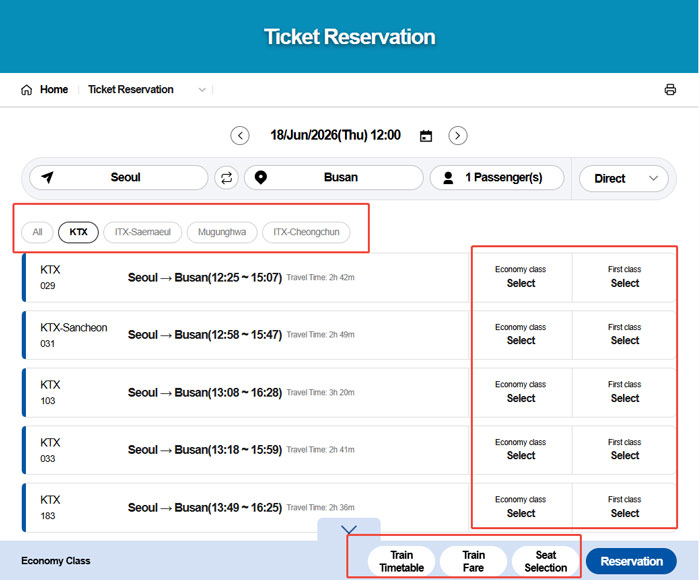
Seoul to Busan KTX Train online Booking
The official booking platform is the most direct option and usually offers the widest selection of train schedules.
It provides an English Version an is easy to follow, quite similar to booking a flight ticket online. You can normally book KTX tickets up to 30 days in advance.
You simply choose the train type, select your departure date and time, choose First Class or Economy, and reserve tickets in advance.
After payment, you will receive an e-ticket that can be shown on your phone.
For many foreign visitors, Klook is an easier way to book the Seoul to Busan bullet train.
The interface is simple, payment works smoothly with international credit cards, and the booking process feels more modern and beginner-friendly than the official Korail website.
Option 2: Buy Tickets from a Travel Agency
For those who are booking together with hotels or tours, booking Seoul to Busan bullet train tickets with a trusted travel agency is quite efficient.
Asia Odyssey Travel is the one you can choose. We can help arrange not only your KTX train tickets, but also your complete Seoul-to-Busan travel itinerary, including hotels, local transportation, guided sightseeing, and private tours along the way.
Option 3: Buy Tickets at Seoul Station
You can also buy tickets directly at Seoul Station before departure.
Ticket machines and station counters both support English, and the process is generally straightforward and easy to follow. Both cash and international credit cards are usually accepted.
- For weekdays outside peak seasons, booking 3-5 days in advance is usually enough.
- For weekends, public holidays, peak seasons, book as early as possible, especially for morning departures and forward-facing seats.
- If tickets are sold out, foreign travelers can use KR pass or your passport supplying for a standing ticket and board the train.
How to Buy and Use the KR Pass?
The KR Pass is mainly designed for foreign travelers who plan to stay in Korea for several days and take multiple KTX trains between cities.
When purchasing the pass, you can choose different durations, such as 2-day, 3-day, or 5-day flexible passes depending on your itinerary.
After purchase, you will receive a 16-digit KR Pass number by email. This number is very important because you need it to reserve your train seats on Korail before boarding.
8 Days South Korea UNESCO Tour: Seoul, Andong, Gyeongju, Busan with Jeju Island
Seoul - Andong - Gyeongju - Busan - Jeju Island
How to Board the KTX at Seoul Station for First Timers
Seoul Station is much bigger and busier than expected. Fortunately, boarding the Seoul to Busan KTX train is actually very simple and easy to follow.
It's quite smooth and stress-free, as there are no security checks, passport inspections, or complicated boarding procedures.
Step-by-Step Guide
- Arrive at the Seoul Station
- Go into the Departure Hall
- Find Your Platform on the Large Screen
- Take the Escalator Down to the Correct Platform
- Find Your Cabin and Board the Train
- Arriving about 20–30 minutes before departure is usually more than enough.
- The platform number is often announced only 15–30 minutes before boarding, so do not panic if you cannot see it immediately.
- Convenience stores and cafés inside Seoul Station are great places to buy snacks and drinks before the ride.
How to Avoid Boarding the Wrong Vehicle?
It's not that easy to board a wrong train.
The Departure Board are Scrolling the train information about train number, departure time, destination, and platform number with both Korean and English.
Before boarding, double-check that all four match your e-ticket.
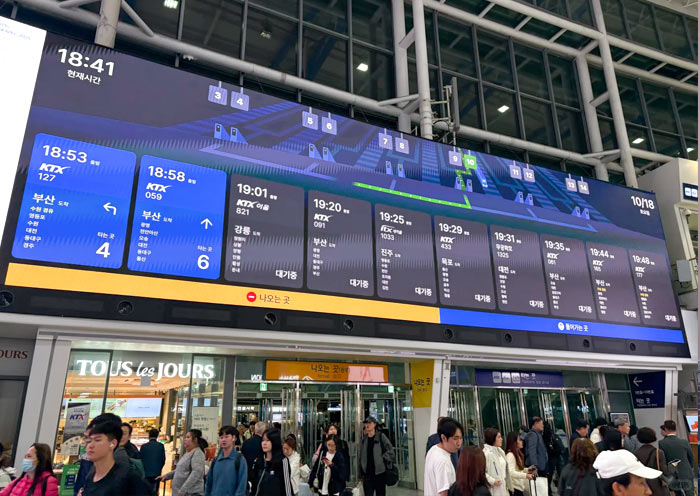
The most important thing is the train number, not just the destination. Multiple trains to Busan may depart within a short period of time, so always verify the train number shown on the platform screen and on the side of the train itself.
Once onboard, seat numbers and cabin numbers are also clearly marked in both English and Korean.
Seoul to Gyeongju: KTX, SRT or Bus to Cover 340km Distance
5 Ways from Seoul to Jeju Island: Flight vs. Train/Bus + Ferry 2026
Travel to South Korea with Asia Odyssey Travel
South Korea looks small on the map, so planning a trip should be easy, right?
Not necessarily.
While Korea's major destinations are well known—Seoul, Busan, Jeju Island, and Gyeongju—the challenge begins once you start connecting them into a practical itinerary.
Unlike many countries, Google Maps is not fully functional in South Korea and language can also be a barrier.
That's where Asia Odyssey Travel can help.
With our local Korea travel team, we help you move smoothly between Korea's top destinations without worrying about logistics.
Whether you have 3 days for Seoul, 1 week for the classic Seoul–Gyeongju–Busan route, or 2 weeks to explore Korea in depth, we can design an itinerary that makes the most of your time.
With Asia Odyssey Travel, you can enjoy:
- Flexible private and customized South Korea tours
- Experienced local guides and professional drivers
- Seamless transportation and hotel arrangements
- Carefully planned routes that maximize sightseeing time
- 24/7 travel support before and during your trip
- Local expertise that helps you travel Korea with confidence







 Data in submission...